 SUNSET:

 0
0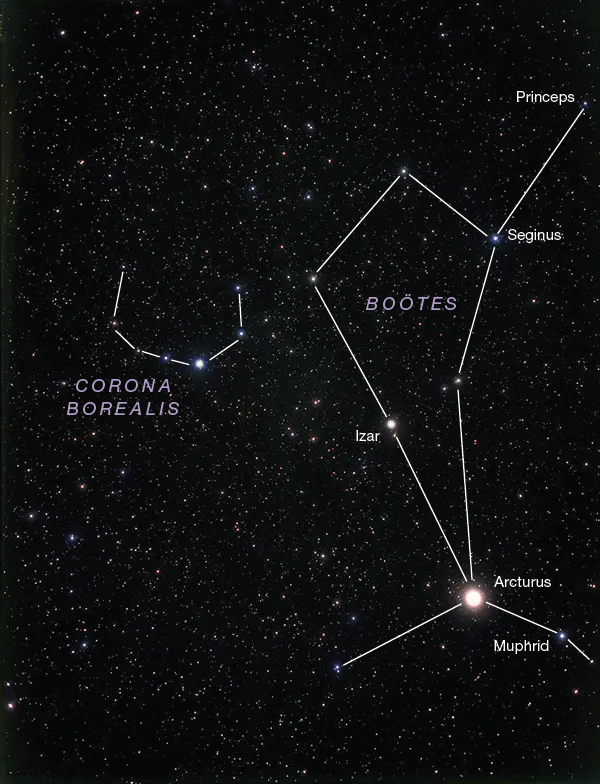
Akira Fujii
Boötes — pronounced bo-OH-teez — is one of many constellations with a pastoral connection. The night sky is teeming with farm animals such as goats, rams, bulls, dogs, horses, and peacocks, as well as human characters associated with harvests, like Virgo. Spring in the Northern Hemisphere is a prime time to go searching for Boötes, a constellation often referred to as “The Herdsman.” Representing a generic keeper of livestock, Boötes is also home to one of the most brilliant and well-known stars, Arcturus.
The Stars of Boötes
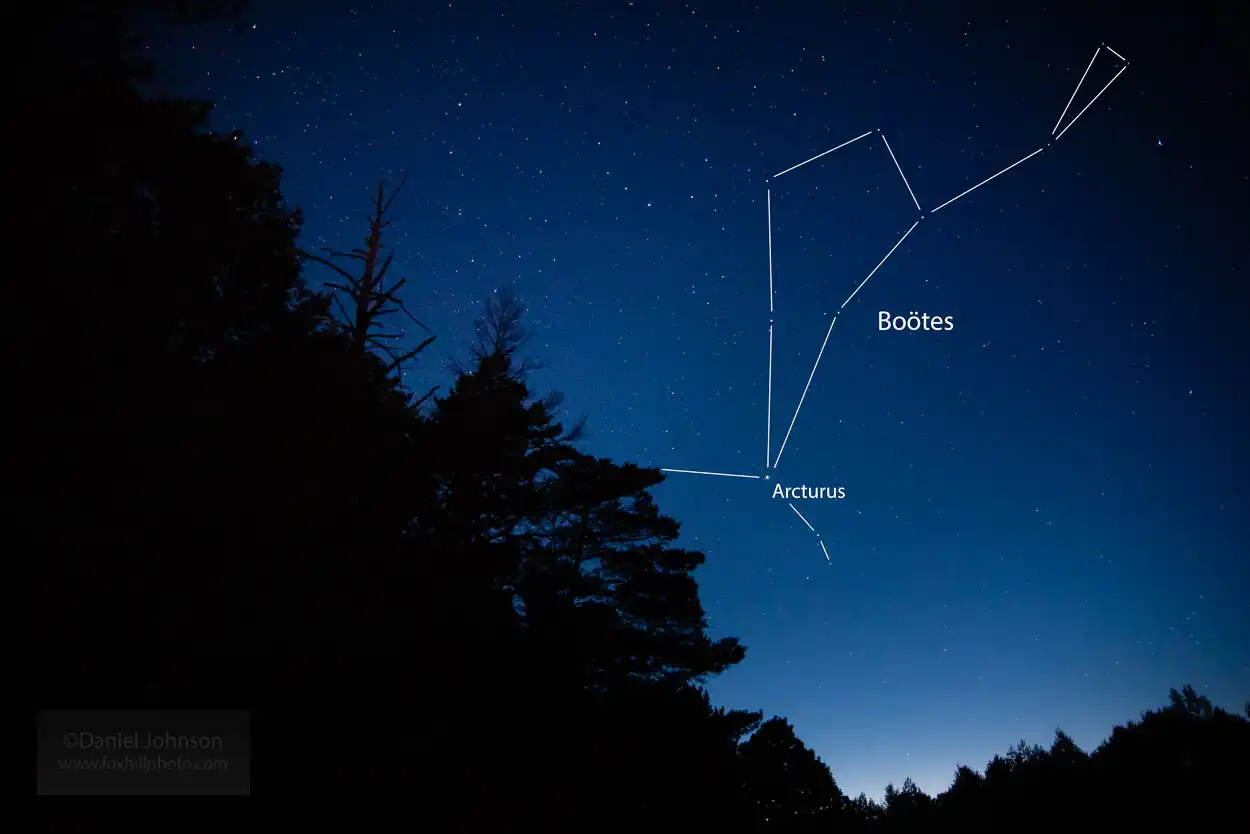
Within Boötes, you’ll find enough reasonably bright stars to form a distinct outline of the Herdsman. Many stargazers think he looks something like a kite, and this can be a useful thought to keep in mind when you attempt to trace the outline.
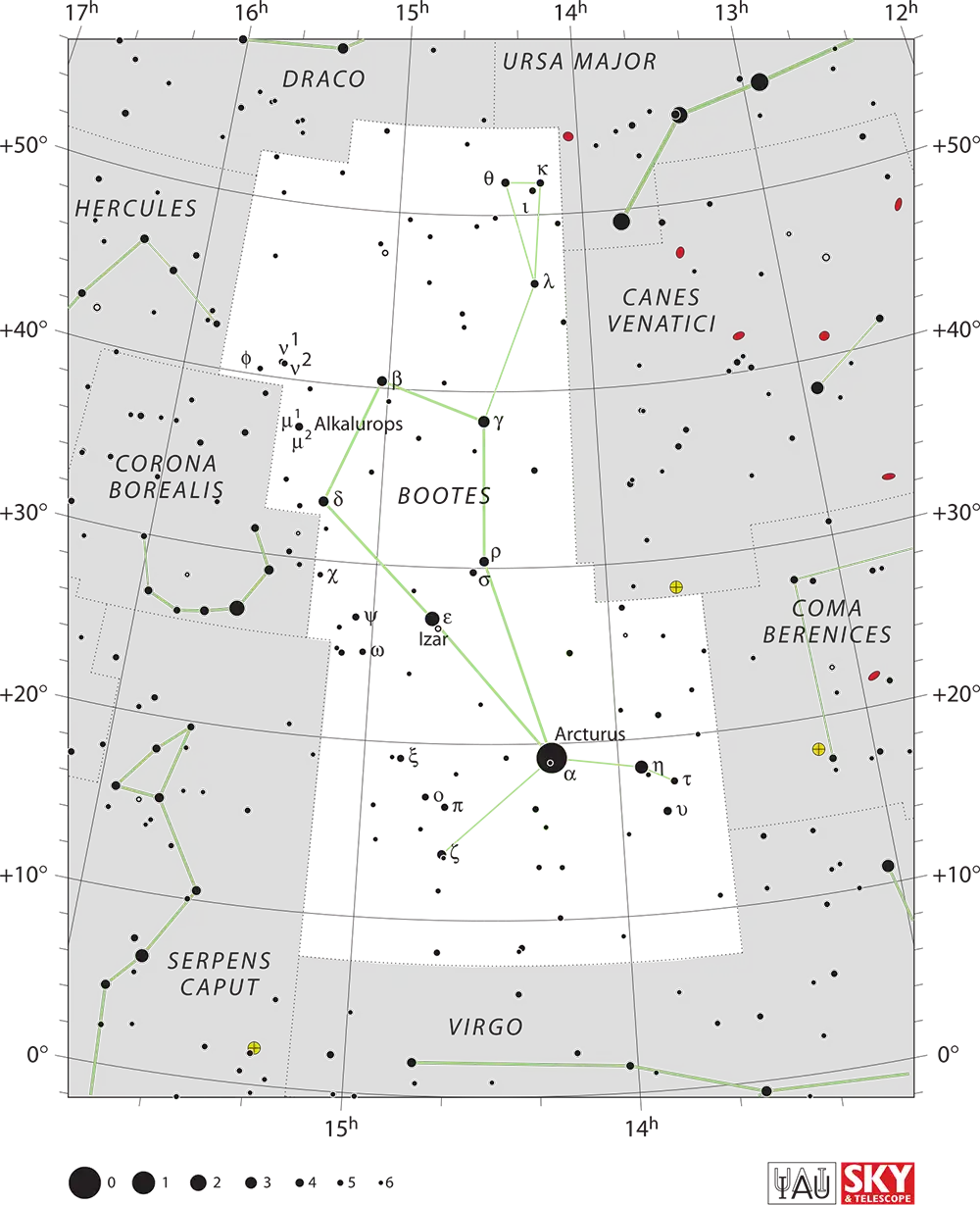
Some of the most prominent stars you’ll see include:
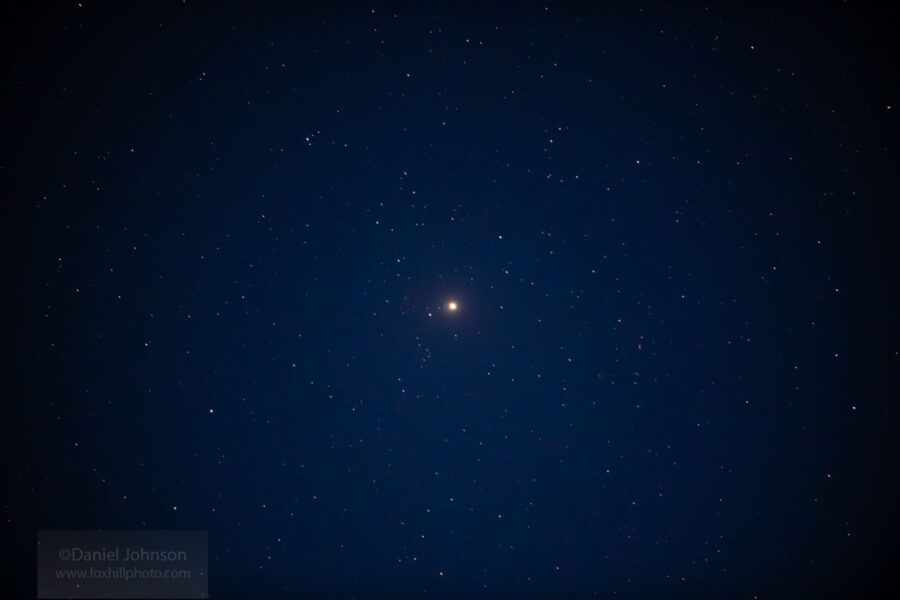
- Alpha (α) Boötis – Arcturus is one of the crown jewels of the night sky, shining at a brilliant -0.05 magnitude. It’s the fourth-brightest star in the entire night sky if you include both hemispheres; in the Northern Hemisphere alone it’s the second brightest, second only to Sirius. A classic red giant star about 25 light-years away, Arcturus’s name means “guardian of the bear,” or “bear follower,” since it — along with Boötes in general — seems to chase Ursa Major around the sky.
- Epsilon (ε) Boötis – Izar is the next brightest star in the constellation — a lovely double star that makes an excellent target for visual “splitting.” Stargazers with small to moderate telescopes can try to spot both individual members of the system. The brighter member is an orange, evolved star many times the size of the Sun, while the fainter companion is a hot, bright, main-sequence A star with a slight bluish tint.
- Eta (η) Boötis – Muphrid may also have a companion star, but this time you can’t visually split the two — it’s a suspected spectroscopic binary. Muphrid itself is a subgiant star that has just started to fuse helium into heavier elements as it ages. The tiny companion, if it exists, could be a red dwarf, or perhaps a white dwarf (a low-mass star that no longer supports itself with fusion).
- Gamma (γ) Boötis – Seginus forms one shoulder of the Herdsman. It’s a hot, blue star that dims and brightens subtly —between magnitude 3.02 and 3.07 — over a period of a few hours. This variability is not something you can see with your own eyes, but experienced astrophotographers can record the changes. Seginus is a fine example of a Delta Scuti variable star.
- Lambda (λ) Boötis – Princeps is another nice double star; the faint companion can be picked up in a small telescope or even some binoculars. The stellar pair are super close by stellar standards — about 4,000 astronomical units.
Daniel Johnson
Mythology
Oftentimes, modern constellations depict specific mythical characters — Hercules, Orion, or Cassiopeia, for example. But Boötes is named for the simpler herdsman or ox driver, the latter using his team of oxen to plow a field. In this interpretation, the nearby Big Dipper is the Herdsman’s plow. He drives his oxen team around and around the north pole of the sky — a wonderful “animated” image.
Some traditions do try to associate the Herdsman with a specific. In some Greek myths, he is the son of Zeus and Callisto. In others, Boötes invents the plow, guiding early humanity into agriculture.
Daniel Johnson
Ancient Australian traditions associate Arcturus and some of the stars around it with the wood ant. In one story, of woman named Marpeankurrk saves her village from a drought-related famine by realizing the wood ant larvae could be used as a food source. In years hence, the seasonal rising of Boötes marked the time of year when the wood ant larvae were in season.
Some Inuit traditions call Arcturus “The Old Man,” in the sense of a memorable ancestor.
Polynesian navigators utilized enormous constellations called star-lines for wayfinding; Boötes is part of a one star-line that’s shaped liked a huge lizard. (It also includes pieces of Ursa Major, Leo, and Virgo.)
How to See Boötes
The northern sky seems to spin throughout the night and throughout the seasons. The spin is centered on Polaris, which forms the tail of Ursa Minor, the Little Bear. Further away from that is the Big Dipper, and further still is Boötes. If you’re too far south, Boötes dips out of view below the horizon at certain times of the year (and night). Spring evenings in the Northern Hemisphere are one of the best times to go looking for this constellation, which is often thought of as a herald of the season.

Stellarium
Many of the stars of Boötes are bright enough to cut through average light pollution, but dim enough that they’re not obvious standouts. The exception, of course, is brilliant Arcturus, so if it’s your first time seeking out Boötes, you’ll want to start there. A stargazer favorite is to “arc to Arcturus.” To use this trick, take a good look at the handle of the Big Dipper; it has a gentle arc to it. Continue that curved line for some distance and you’ll land on (or at least close to) Arcturus.
Remember, even though the stars move with the clock and the calendar, they are always in the same positions relative to each other. So the “arc to Arcturus” trick works no matter if the Big Dipper is upside-down (as it is in the spring) or on its side.
Once you’ve found Arcturus, you can begin to trace out the rest of the shape of Boötes.
Daniel Johnson is a Wisconsin-based freelance writer and professional photographer and the co-author of over a dozen books. He’s a longtime amateur astronomer and fortunate enough to live in a rural region with excellent seeing conditions. You can view some of Dan’s photography (he does a lot of animals!) at www.foxhillphoto.com
About Daniel Johnson
Daniel Johnson is a Wisconsin-based freelance writer and professional photographer and the co-author of over a dozen books. He’s a longtime amateur astronomer and fortunate enough to live in a rural region with excellent seeing conditions. You can view some of Dan’s photography at www.foxhillphoto.com.





Comments
You must be logged in to post a comment.