 SUNSET:

 0
0VIPER, a water-seeking rover, has gotten a new lease on life, with a new launch vehicle and lander announced by NASA.
Blue Origin
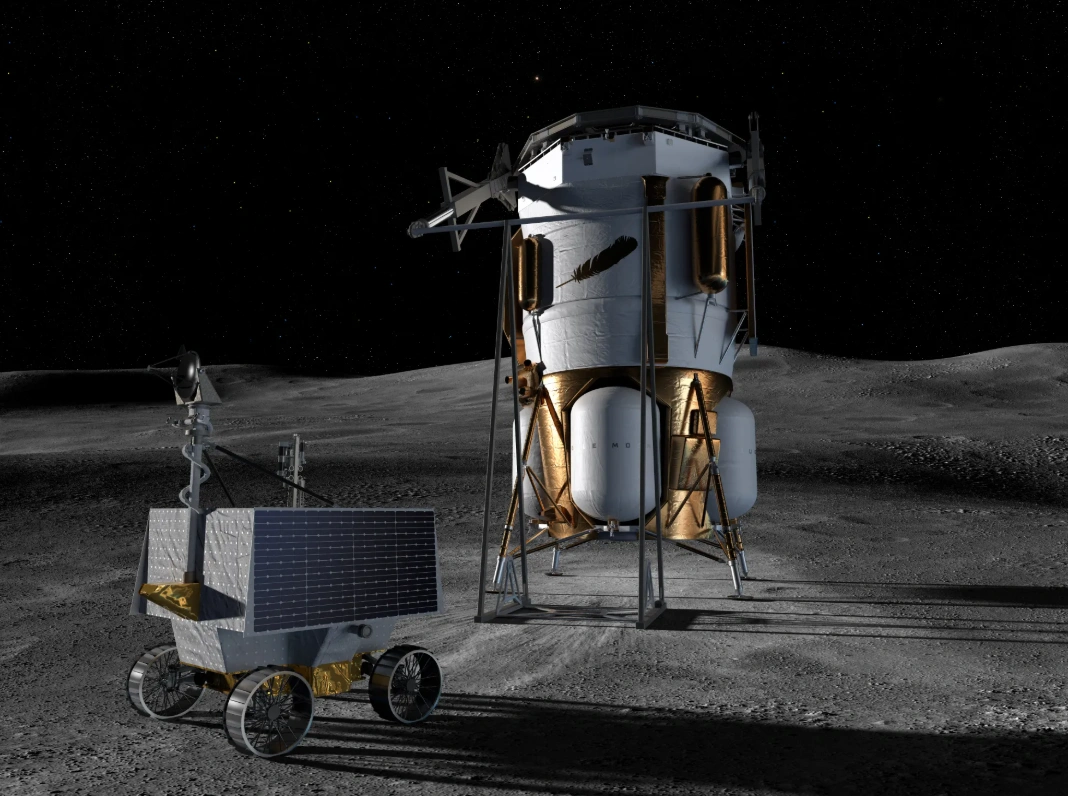
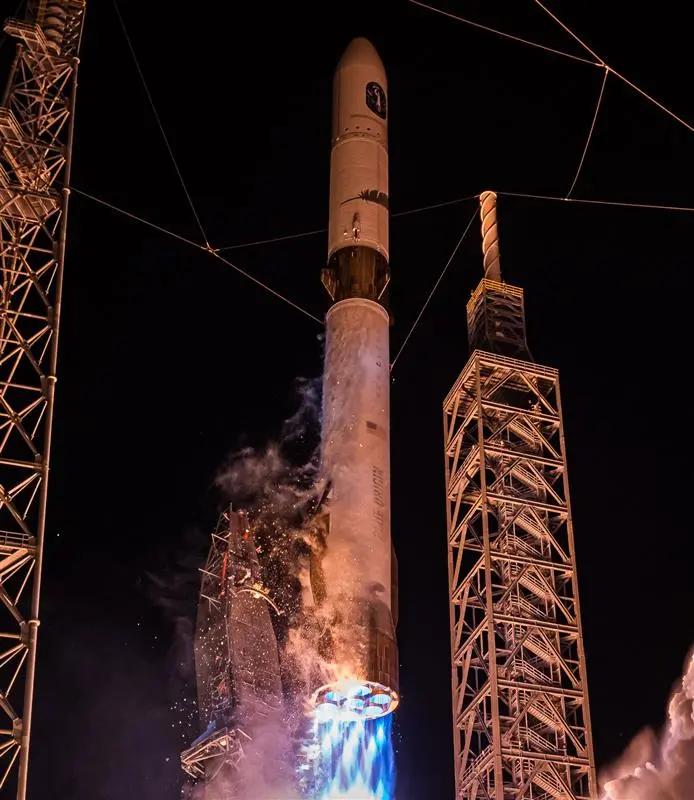
Game on: After the cancellation of an innovative lunar rover last year, it now has new life, having hitched a different ride to the Moon. NASA has awarded a contract to aerospace company Blue Origin to take the Volatiles Investigating Polar Exploration Rover (VIPER) to the Moon. The mission will fly aboard a New Glenn Rocket and the company’s Blue Moon Mark 1 (MK1) Lunar Lander will deliver the rover to the surface.
The Commercial Lunar Payload Services (CLPS) task order is worth $190 million. But it’s currently optional for NASA, contingent on the success of the company’s first pathfinder flight of its MK1 lander later this year. Blue Origin is currently prepping New Glenn for its second flight, due to set the ESCAPADE mission en route to Mars in October.
Blue Origin
VIPER's Long Path to the Moon
VIPER was originally slated to fly with Astrobotic’s Griffin lander in 2023. But cost overruns resulted in a cancellation of the mission in 2024. NASA estimated a pricetag of $250 million when it announced the mission in 2019, but those costs had climbed to more than $500 million by the time the agency announced the rover's cancellation.
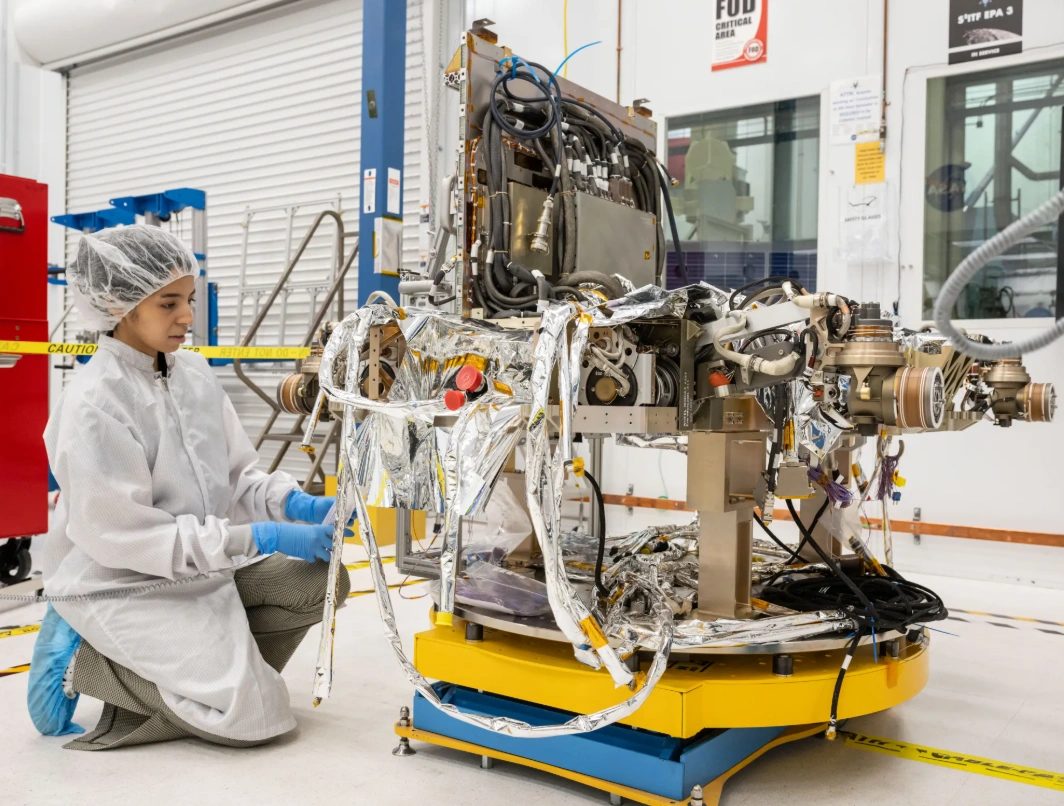
But, cost runs or no, the rover was fully built, and the planetary science community was eager to deliver it to the Moon. Despite initial plans to disassemble the rover and reuse its instruments elsewhere, NASA changed gear earlier this year to deliver VIPER as a whole rover to the lunar surface. However, the funding situation for the rover still isn't clear; with the 2024 cancellation, even the most generous science budget proposed for NASA (coming from the Senate) did not specifically provide funding for VIPER.
NASA / James Blair
NASA’s CLPS initiative, which funds commercial missions to the Moon, has seen its share of problems. To date, the lunar landings by Astrobotic and Intuitive Machines have met with limited success, either crashing or landing lopsided on the Moon. Astrobotic’s Peregrine Mission One lander failed to leave Earth orbit, burning up in the Earth’s atmosphere on January 18, 2024. Firefly Aerospace has had the only unqualified success to date, with its Blue Ghost lander earlier this year.
With the previous cancellation of VIPER, Astrobotic announced that Griffin Mission One will instead carry the Venturi Astrolab Rover. This mission is now launching no earlier than November.
VIPER will be Blue Origin’s second payload delivery to the Moon, after the company’s inaugural run of its Blue Moon MK1, which should launch later this year. That CLPS-funded mission will carry the Stereo Cameras for Lunar Plume Surface Studies instrument to the lunar surface to study the interaction between engine plumes and lunar regolith.
The mission team will need to be cautious about possible degradation in hardware due to the delay. One cautionary tale is that of the Galileo mission to Jupiter. Delayed by the 1986 Challenger disaster, the mission was shelved until finally launching in 1989. When Galileo finally got on its way, its main antenna failed to fully deploy. One possible suspect cited in a later report was increased friction from a bearing lubricant, which had degraded while Galileo was in storage. But while that nearly doomed the mission, the team came up with a workaround, sending data back to Earth through the spacecraft's low-rate, low-gain antenna.
The Science of VIPER
As a water-seeking rover, VIPER is a crucial piece of the Artemis initiative, which outlines a plan to return humans to the Moon over the next few years.
VIPER will peer into permanently shadowed regions near the Moon’s poles, looking to see what form water ice takes in the depth of those craters. As it will be searching in the dark, the rover will be the first one to carry its own illumination source, using two 190-watt NavLights and six 32-watt HazLights in its explorations. VIPER will carry several spectrometers to aid its quest in prospecting for lunar ice, and it also carries a 1-meter drill, The Regolith and Ice Drill for Exploring New Terrain (TRIDENT).
VIPER is expected to operate for 100 days (surviving several cold lunar nights), traversing 19 kilometers (12 miles) of lunar terrain. The rover operates on solar-powered batteries, so it will have to park and recharge on occasion. Although NASA has plenty of experience roving on Mars, VIPER will be the agency’s first robotic rover on the Moon.
NASA
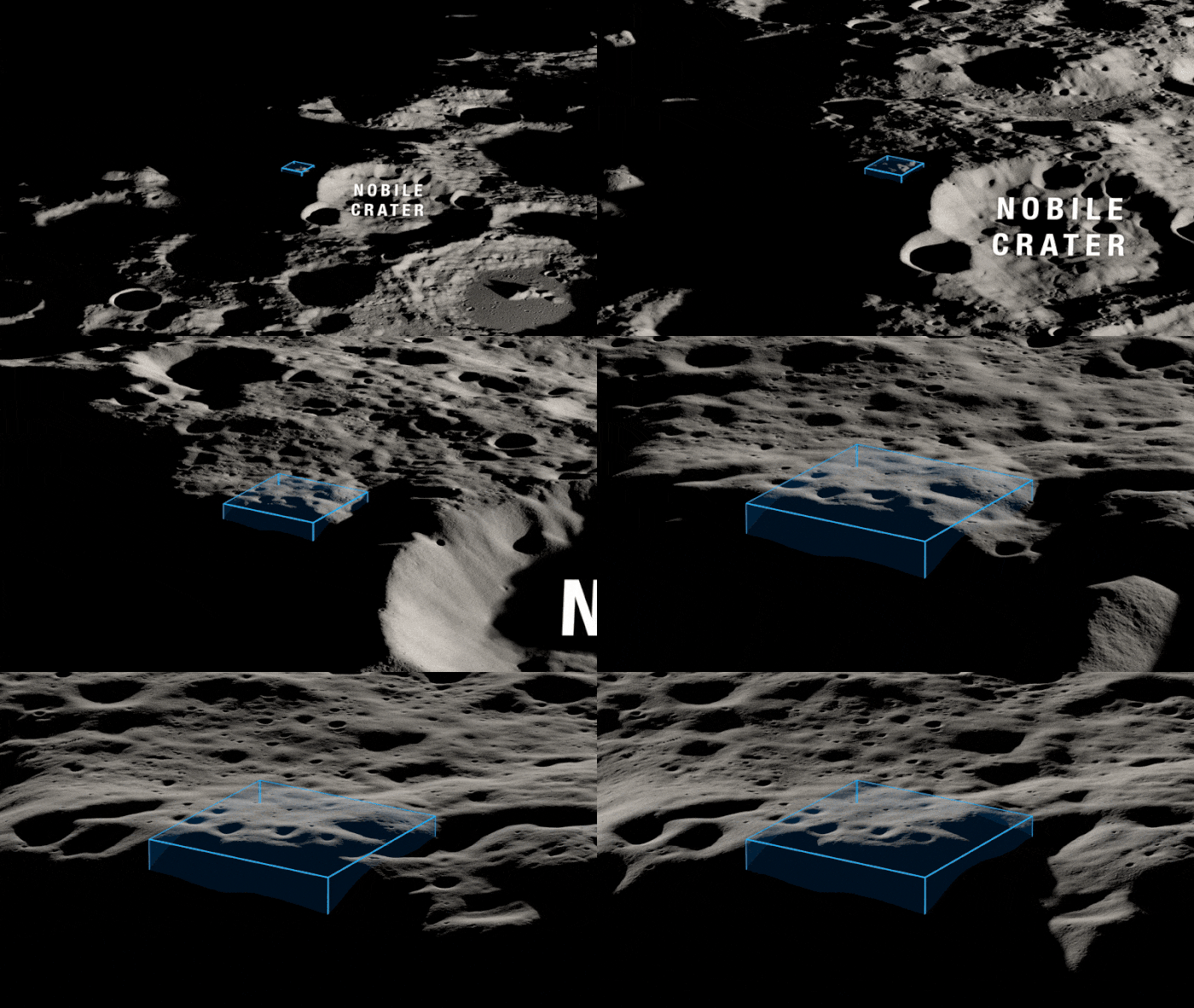
NASA's announcement states that VIPER will head to the lunar south pole in late 2027, presumably still headed toward its originally selected landing site on the western rim of Nobile Crater, in the Mons Mouton area. The launch window is crucial for operations, as the timing provides the landing region with maximum illumination to power the rover. The Moon rocks in its orbit around Earth, a phenomenon called libration, and at certain parts of this cycle, the lunar south pole is better illuminated. (This cycle of favorable librations repeats every six years.)
It has been a rocky road, but it will be exciting to see VIPER on its way to the lunar surface.
About David Dickinson
David Dickinson is a freelance science writer, high school science teacher, retired enlisted U.S. Air Force veteran and avid stargazer. He currently resides with his wife Myscha in Bristol, Tennessee. David also writes science fiction in his spare time. He posts as @AstroDave on BlueSky about space news and sky-watching worldwide.









Comments
You must be logged in to post a comment.