 SUNSET:

 20
20Reflect Orbital plans to launch gigantic satellites to reflect sunlight into regions where night has already fallen, potentially harming eyes, altering sleep, and blocking the starry sky.
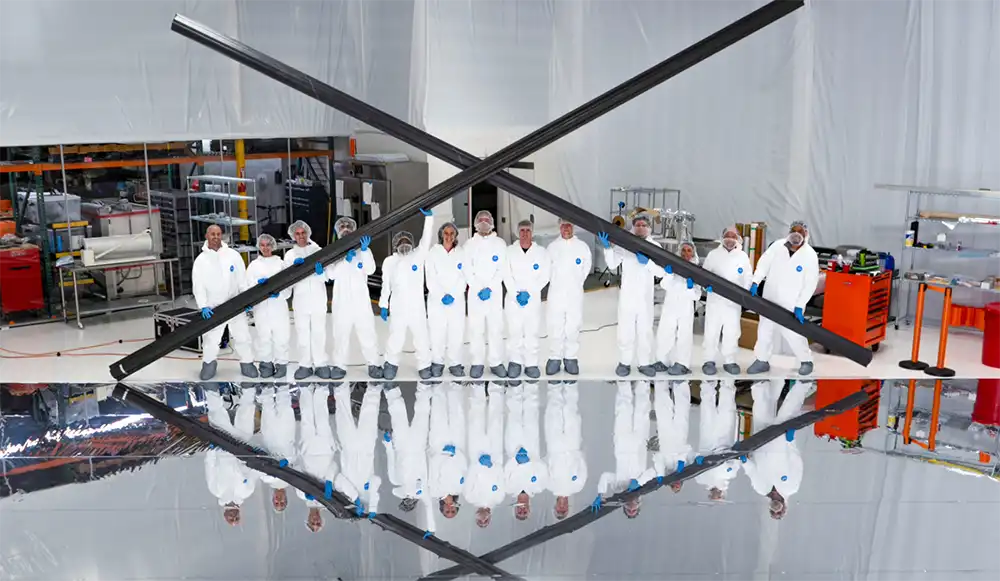
Reflect Orbital
Bright communication satellites in low-Earth orbit are beginning to interfere with astronomical observing. These constellations of spacecraft — including BlueBird, Starlink, Kuiper, Qianfan, and Guong — unintentionally reflect sunlight to observers on the ground during the hours of darkness.
Soon, a new type of satellite will intentionally beam sunlight to Earth’s surface at night. Reflect Orbital has raised $20 million in funding to begin work on their planned constellation, according to a report in PayloadSpace.com. The company intends to launch a demonstration spacecraft next year to advertise their services to potential customers. That 324-square-meter (3,488-square-foot) satellite will be about five times larger than the giant BlueBirds from AST SpaceMobile, whose luminosity can rival the brightest stars. The Reflect Orbital demo satellite would direct a beam of sunlight to spots on the ground 5 kilometers (3 miles) in diameter. A specially shaped reflective mylar film will provide illumination that rivals the full Moon.
Furthermore, the company plans to launch 4,000 much larger satellites over the next several years. (For comparison, only a few hundred BlueBirds are planned over the next few years.) Those bigger spacecraft would each cover about three-fourths of an acre and far exceed the full Moon’s brightness. Nearly all of the stars would disappear for observers within illuminated areas on the ground. Residents of municipalities and other entities that purchase illumination would be deprived of darkness at night, not to mention the beauty of the star-lit sky.
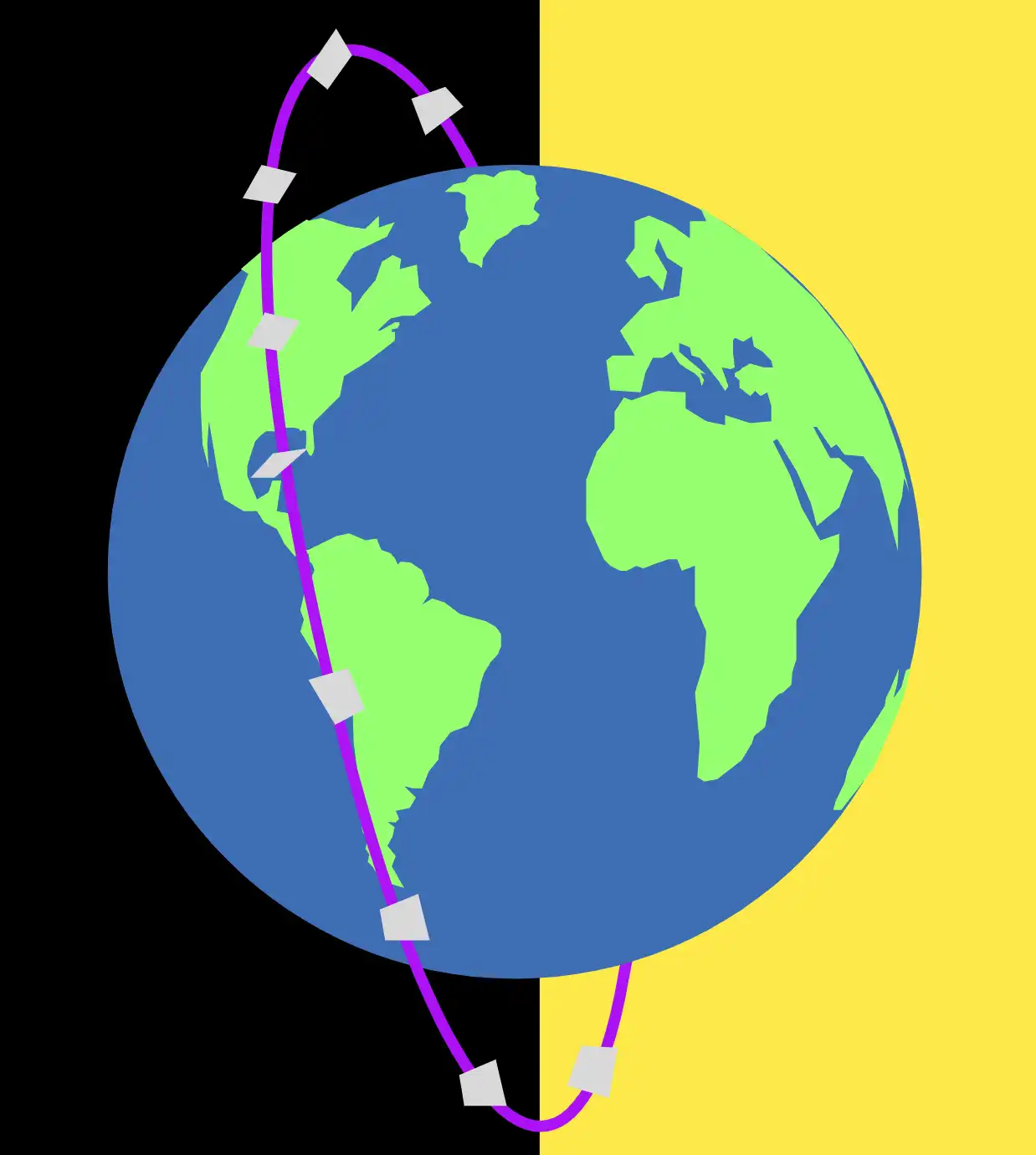
Reflect Orbital
Reflect Orbital’s motivation is to sell reflected sunlight to solar energy farms. Speaking at at the International Conference on Energy from Space, the company’s CEO, Ben Nowack, said, “It would be really great if we could get some solar energy before the Sun rises and after sunset, because then you could actually charge higher prices and make a lot more money.”
The satellites’ effect on professional astronomical observatories in remote locations is less clear. Those facilities should be outside the beams of directed sunlight, but it’s possible the spacecraft could reflect some of the light diffusely, which would be a problem for all locations. At the very least, reflected sunlight will scatter when it reaches Earth’s atmosphere, increasing night sky brightness beyond the planned size of the region on the ground.
There are safety and environmental issues as well. My colleague, Richard Cole, calculated that the Reflect Orbital spacecraft would appear as points of light with a magnitude of -15, and he questioned how the eye would respond. John Barentine of Dark Sky Consulting pointed out research on eye safety — conducted by James Laframboise (a physicist and amateur astronomer) and Ralph Chou (a professor of optometry) — which warns that Sun-reflecting satellites this large might damage the eye. The effect of Sun reflections on wildlife has raised additional concerns.
A member of the Reflect Orbital team told OrbitalToday.com, “Give us four minutes. If everyone hates it, we can turn it off.” That seems unlikely given the large sums of money already invested.
The company must be licensed by the Federal Communications Commission before they launch any satellites, though, and resistance is building. Recently, the American Astronomical Society distributed a survey to “gather input from astronomers, observatories, and night sky users worldwide regarding the potential impacts of Reflect Orbital’s proposed reflector satellites on astronomical research and night sky visibility.” The survey only takes about five minutes to complete, and Sky & Telescope encourages amateur astronomers of all stripes to respond.



Comments
Andrew James
September 10, 2025 at 5:42 am
Criminals! FCC should be sanction for crimes against humanity. Keep your junk in your own backyard, please.
You must be logged in to post a comment.
Alain Maury
September 12, 2025 at 4:45 pm
The FCC which is a USA thing and it should only deal with things related to the USA. As far as I know, the USA do not own the sky, therefore any rocket launch should be reviewed by an international panel, not an entity from a single state. This should have applied to Starlink from the start and all the other crap polluting the sky now. This is really becoming urgent, before some such bright mind start to launch any other crazy things in space.
You must be logged in to post a comment.
Enrico the Great
September 10, 2025 at 3:31 pm
This idea TOTALLY sucks. Impractical, crap thatwill mess up wildlife---and US as well.
Constituencies that will hate this idea:
ME
Astronomers
Amateur Astronomers
Hunters
Conservationists
Naturalists
People who sleep
Solar energy at NIGHT???? Ever heard of a STORAGE CELL??????
BTW---a slight modification ANYONE with the Astronomical and/or Physics knowledge of a science savvy NiNE YEAR OLD can figure out the way to turn these into nasty deadly weapons of mass destruction.
Hope this guy fails----and of he launches any of these maybe we can use them as targets for anti-satellite weapons test sand shoot them down.
You must be logged in to post a comment.
AB
October 8, 2025 at 3:34 am
"People who sleep"... right??
Entire article reads like a clown show. Including the CEO who also sounds like a nine-year-old: "It would be really great if we could make a lot more money."
Just returned from doing the survey & then probably getting myself banned from buddy's "X" page. This needs a lot more attention. S&T could help, but oh snap, paywall 🙁
You must be logged in to post a comment.
Tony Flanders
September 11, 2025 at 11:49 am
Keeping the mirror aimed at a particular spot on Earth as Earth rotates and the satellite orbits Earth seems challenging, to state the case mildly. Where's the energy to rotate the mirror going to come from? How are you going to counteract the torque the mirror exerts on the satellite -- with gyros or rockets? If the latter, where's the reaction mass going to come from?
Somehow, it's hard to believe the extra energy gained by such a mirror would be cheaper than producing the same amount of energy by adding another conventional solar panel on the ground. Not even within a factor of 100, I would guess.
You must be logged in to post a comment.
Enrico the Great
September 12, 2025 at 4:06 pm
Exactly. The effort seems too much for the potential return. What about cloud cover obscuring the satellites? Light scatter by the atmosphere? Risk of inadvertent weather modification? Solar energy except in the most cloud free climates is a nonstarter. Go nuclear----OR YOU ALL ARE STUCK WITH FOSSIL FUELS.
You must be logged in to post a comment.
Ted Swift
September 12, 2025 at 5:10 pm
[the company’s CEO, Ben Nowack, who said, “It would be really great if we could get some solar energy before the Sun rises and after sunset, because then you could actually charge higher prices and make a lot more money.”] Have these pretenders done ANY basic back-of-the-envelope calculations? The moon is 400,000 times fainter than the sun. "Higher prices" will not make up for that. So add stupidity to crimes against humans and nature to this project.
You must be logged in to post a comment.
Edward
September 13, 2025 at 1:54 am
That statement by their CEO is very telling. The purpose of this project would apparently not be to increase the amount of renewable energy produced. The purpose is apparently only to make more money by producing more energy and charging more for it, without regard to the natural and societal impacts of the project.
Suppose the company proposed to develop the old Gerard K. O'Neill solar power satellites and beam power by microwave (ignoring the potential impacts of that for now) to the Earth's surface. In that case, they might at least have some claim to trying to generate renewable energy to reduce our dependence on non-renewable and nuclear power production (while making billions of dollars). This, on the other hand, is simply greed that is not even disguised to be something else.
They can most likely be shut down in the US (in the right political climate, of course). Still, then they would probably look to develop this somewhere else that would welcome the business and potential energy gains (if there really would be any). Our best hope is for this to be a scam that one can afford to make or place in orbit. Or that is a complete failure when implemented and allowed to fall out of orbit quickly.
You must be logged in to post a comment.
Michael-Mangieri
September 12, 2025 at 8:11 pm
Absolutely stupid idea! Geez!!!!!
You must be logged in to post a comment.
Michael Newberry
September 12, 2025 at 8:53 pm
All excellent comments. The sky is a shared resource. How can it be that a handful of private corporations presume a license to destroy a resource owned by all humanity -- and devastate whole ecosystems as well? And no, I do not use low-orbit satellite internet.
You must be logged in to post a comment.
Anthony Barreiro
September 13, 2025 at 12:04 am
Making this article freely available, not just to Sky and Telescope subscribers, would help to spread the word about this concern.
You must be logged in to post a comment.
Frank-ReedNavigation.com
September 14, 2025 at 6:56 pm
Anthony, the folks who manage the S&T website appear to have made a beginners' mistake: they did not test their new system on the full range of web-browsing platforms. And, presumably, they do not know that they have effectively "paywalled" their content to a significant fraction of visitors. On many platforms, the new "subscribe reminder" is just a minor 'nag' screen, but on others it cannot be bypassed. It's another nail for the coffin of S&T unfortunately...
You must be logged in to post a comment.
Monica Young
September 15, 2025 at 9:03 am
Hi Frank, I'm so sorry to hear you are having trouble with the website. The paywall was tested prior to launch, of course, but there have been issues since launch that weren't apparent during that testing. We welcome emails at [email protected] to address any technical issues — the more details the better. We are highly motivated to have a fully functional website, and we want to help our readers!
You must be logged in to post a comment.
William-Brandenburg
September 25, 2025 at 11:28 am
Have been an S&T reader since 1953, before home computers. Now I use Windows (Cell phones are way too small for images) and browsers like EDGE and FIREFOX, the latter because of some useful features. But, just recently S&T news (Email) stopped supporting FIREFOX. I suppose there's a really good reason?
Bill Brandenburg
You must be logged in to post a comment.
Monica Young
September 25, 2025 at 1:39 pm
Hi Bill, I'm not quite sure what you mean about Firefox — I use Firefox as my regular browser and don't have a problem accessing my email or the website. However, the website has recently implemented a paywall. If you are a subscriber, you first need to make sure your website account is registered with your subscription account to get full access. Subscribers first need to register their account (https://www.skyandtelescope.org/register), then log in (https://www.skyandtelescope.org/login). If you don't know which email address is attached to your account, please use the account lookup page (https://skyandtelescope.dragonforms.com/SKY_AcctLookup). You'll only need to do this once — after that, you'll be set.
See other frequently asked questions about the paywall here: https://skyandtelescope.org/website-paywall-faq/
If you have any other questions, please contact our helpdesk at [email protected]
You must be logged in to post a comment.
AB
October 8, 2025 at 3:40 am
Please make this article publicly available. I want to share it to a large group where very few are likely to be members. I'm wrangling with the paywall (sad to see) but many won't bother.
You must be logged in to post a comment.
Monica Young
October 16, 2025 at 12:50 pm
Readers new to the site will get free articles before the paywall kicks in - share away!
You must be logged in to post a comment.
Isaacs
September 13, 2025 at 6:36 am
This idea makes no economic sense.
The numbers don't add up at all:
Solar irradiance on the upper atmosphere is 1360 W/m2, so with 324sqm they can reflect about 440 kW. But then only 75% of that will make it through the atmosphere, so lets say 330 kW reaches the surface. That's spread over a circle of diameter 5km, so an area of about 20 million square metres. So being generous we're talking about 0.02 W per square metre. That's not going to be worth anything.
You must be logged in to post a comment.
Michal
September 13, 2025 at 1:16 pm
Sign me up for any class action lawsuits that are coming soon. They're going to need that $20m for lawyers, for sure. The claimed benefit (solar energy) is just bait to get uncritical investor money.
You must be logged in to post a comment.
Enrico the Great
September 15, 2025 at 2:41 pm
I have feared the launching of extremely bright objects into orbit since the idea of microwave relay power satellites referenced above by another poster started being discussed in the 1970s. I have no problem with commercial use of Low Earth Orbit---FOR NEEDED SERVICES. But this proposal does not seem to make ANY sense at all. The so-called CEO seems to have NO UNDERSTANDING of Economics 101. Even if this was feasible---would not INCREAASING the supply of a commodity DECREASE the price? Did Not the Spanish Empire at its height flood the market with enough gold and silver from the Americas that its economy tanked? Does anyone REALLY have a need for this service? Will anyone want to pay for it? Or would they opt for more conventional, more reliable alternatives? If Starllink is a kludge THIS is a super-kludge. With the aesthetic appeal of a toilet seat. An overcomplicated solution to a problem that does not even really exist. This amounts to Starlink on steroids. It is also vandalism on a global scale. The night sky IS an aesthetic resource----and an environmental one as well. Migrating birds depend on it. Our own circadian rhythm is keyed to the day night cycle. Any reader who is in their nation's Navy serving on submarines can confirm that even on a sub they cycle the interior lighting from bright to dark on a 24 hout cycle if I am not mistaken? We want----and NEED our dark skies.
You must be logged in to post a comment.
You must be logged in to post a comment.