 SUNSET:

 0
0The 4.247-billion-year-old Moon rocks brought back from the farside of the Moon are challenging our ideas about what it was like in the early solar system.

CNSA / CLEP
The first samples from the farside of the Moon have yielded a key new insight into the formation of the solar system.
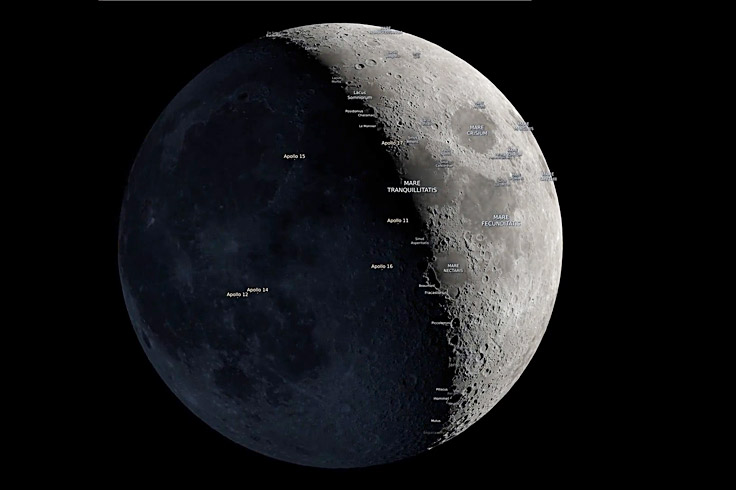
The 1.9 kilograms (4.2 pounds) of lunar regolith collected by China's Chang'e 6 robotic spacecraft in 2024 from the South Pole-Aitken Basin, and brought back to Earth, revealed pieces that are 4.247 billion years old, more ancient than most Apollo samples. These ancient pieces raise questions about the idea that a massive bombardment resurfaced the entire inner solar system 3.9 billion years ago.
The scenario called the Late Heavy Bombardment, starts with a disruption, perhaps caused by the migration of the giant planets in the outer solar system. Whatever the cause of the disruption, it sent smaller asteroids careening throughout the inner solar system well after the planets had formed, purportedly leaving a record on airless, crater-covered worlds.
Now, the Chang’e 6 data suggest the Late Heavy Bombardment never happened.
“This is a great paper with new, exciting, and challenging data and interpretation,” says Philippe Claeys (Vrije University Brussels). “It is likely to change our current view of the impact frequency on Earth and Moon in the early days of the solar system.” He doesn't think the story is over but says advocates of the idea of the Late Heavy Bombardment “have a hard job ahead of them.”
Late Heavy Bombardment

© Université Paris Diderot / Labex UnivEarthS
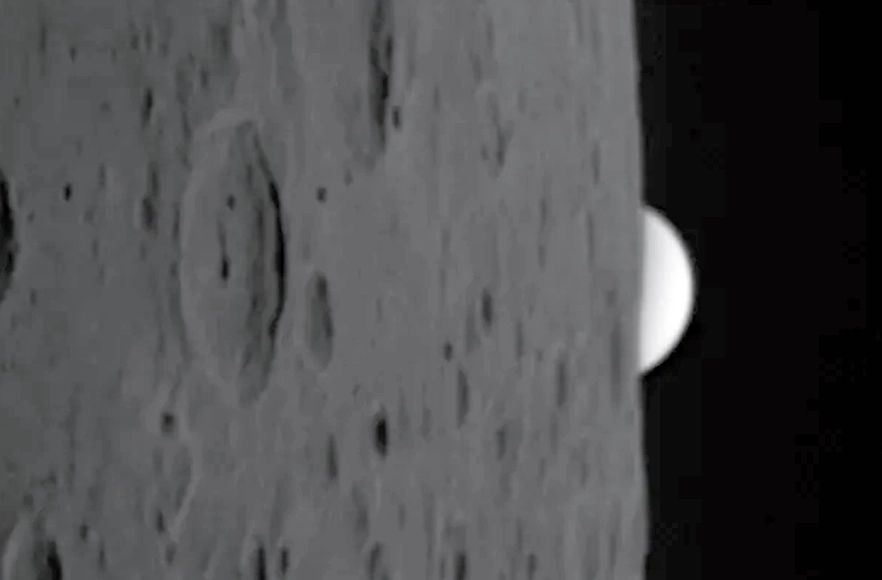
The idea of the Late Heavy Bombardment grew out of efforts to understand the Moon rocks collected by the Apollo missions. Isotopic dating techniques, which measure when a given rock solidified, showed that the ages of the Apollo rocks peaked at 3.9 billion years old. From 3.9 billion years ago to today, the number of rocks hitting the Moon gradually declined over time.
This result posed an enigma because other evidence showed the solar system had formed 4.5 billion years ago. Models of planet formation predicted that the number of objects hitting the Moon would decline gradually as the planets grew.
In 2005, four planetary scientists proposed an ingenious solution to the enigma. Outside the orbits of the giant planets was a massive disk of planetesimals, asteroids that hadn’t quite made it to planetary size. About 700 million years after the planets formed, Jupiter and Saturn suddenly migrated, interacting with the disk and hurling a torrent of planetesimals into the inner parts of the solar system. This would have caused the Late Heavy Bombardment just as the gas giants were settling into new orbits.
This scenario, called the Nice model, fit reasonably well with observations at that time. But not everyone was comfortable with it.
“That idea was wild at the time, and I remember thinking at first there was no way it could be right,” says William Bottke (Southwest Research Institute). The scenario survived the next 20 years of observations. But while Bottke listened to his colleagues, whom he respected, he nevertheless came up with his own idea.
In the alternative scenario, planetesimals began hitting the Moon as soon it formed. We don’t see those impacts despite the lack of erosion from wind and water, because the earliest craters were covered by the impacts that followed. Bottke and colleagues outlined the idea in a 2023 Icarus paper, alongside Alessandro Morbidelli (Côte d'Azur University, France), who had coauthored the Nice Model.
An important weak spot in the Nice model is that it’s based on samples from a limited area. Most of the Apollo missions landed in or close to the Imbrium basin, on the lunar nearside. “It could be that the [3.9-billion-year] age they have for the Moon is the age of that one very large basin,” Bottke says. The acid test would be to gather samples from other parts of the Moon.
What Chang’e 6 Found

CGTN
That is what the Chinese Academy of Science (CAS) did when it sent Chang’e-6 to the South Pole-Aitken basin on the farside. “We wanted to know if the farside has the same history” as the better-known nearside, says Zongyu Yue (CAS). Given that it is not only the largest and deepest basin on the Moon, but also the oldest, he had expected the probe to find samples older than 4 billion years.
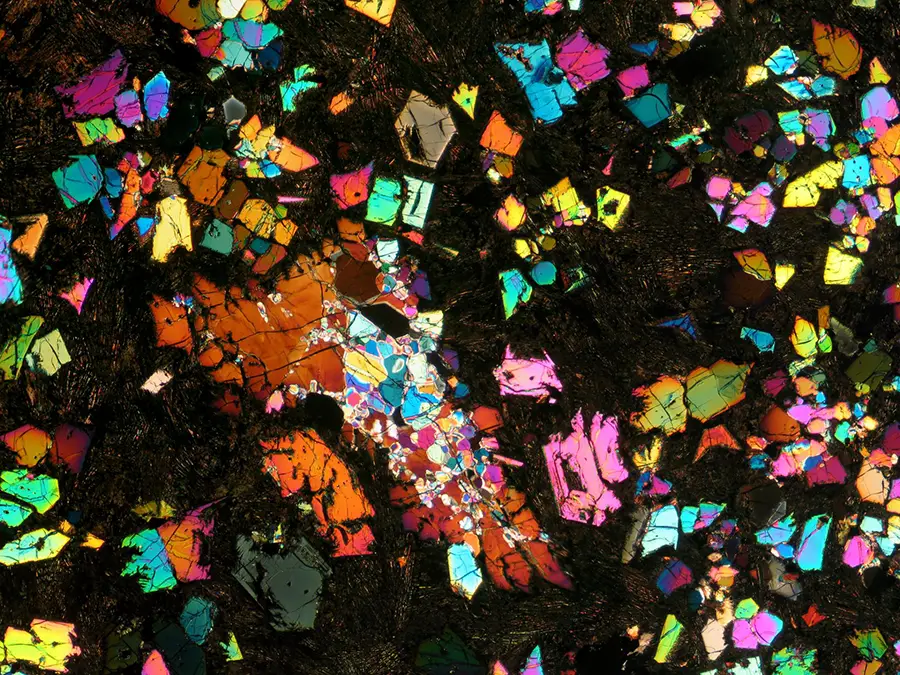
The Chang’e 6 sample contained two distinct types of rock. The most abundant were pieces that had erupted from a lunar volcano 2.807 billion years ago. But there were far older pieces, too, including fragments deposited 4.247 billion years ago by a massive impact. The results were published in Science Advances.
When Yue and his colleagues plotted the frequency of impacts, including the oldest sample yet measured, they found no evidence of the Late Heavy Bombardment, confirming skeptics’ ideas. “We are finally seeing the true, smooth evolution of our early solar system,” Yue says.
A next step, Bottke suggests, could be a rover capable of covering longer distances, such as the Endurance mission concept under study at NASA, which could collect samples from a larger area in the South Pole-Aitken area.
About Jeff Hecht
Jeff Hecht writes about science and technology, with a particular interest in all things optical. He first discovered Sky & Telescope when he was 10, and he still has the one-inch Wollensak refractor his father gave him then.


Comments
You must be logged in to post a comment.