 SUNSET:

 0
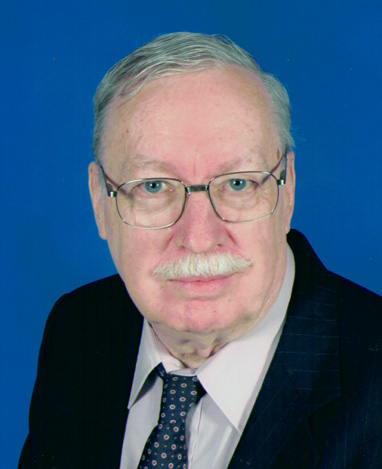
0A professional astronomer turned dark-sky champion, David L. Crawford became synonymous with the fight against light pollution around the world.
Lisa Crawford Bruhn
With the peaceful passing of David L. Crawford on July 22nd, at age 93, we have lost the person who taught the world about light pollution and warned us all of the threat it poses not only to astronomy but to the entire nocturnal environment.
Crawford hadn’t intended to become a crusader for dark skies. After getting his doctorate in astronomy from the University of Chicago, he spent time at Yerkes Observatory and Vanderbilt University before heading to Tucson, Arizona, in 1960 to join the staff of Kitt Peak National Observatory. His research focus was using photometry to probe the structure and evolution of open star clusters and galaxies.
But Crawford also demonstrated a knack for project management, and he soon found himself in charge of building two massive 4-meter telescopes — one for Kitt Peak and the other for Cerro Tololo Inter-American Observatory in Chile. (He wrote two feature articles about this effort for Sky & Telescope in 1965.) By then, Tucson had grown to a half million people — all living within 60 miles of Kitt Peak’s growing telescope complex. Crawford also managed KPNO’s dark-sky office, and the city’s leaders soon enacted outdoor-lighting regulations to protect the pristine darkness over KPNO’s facilities.
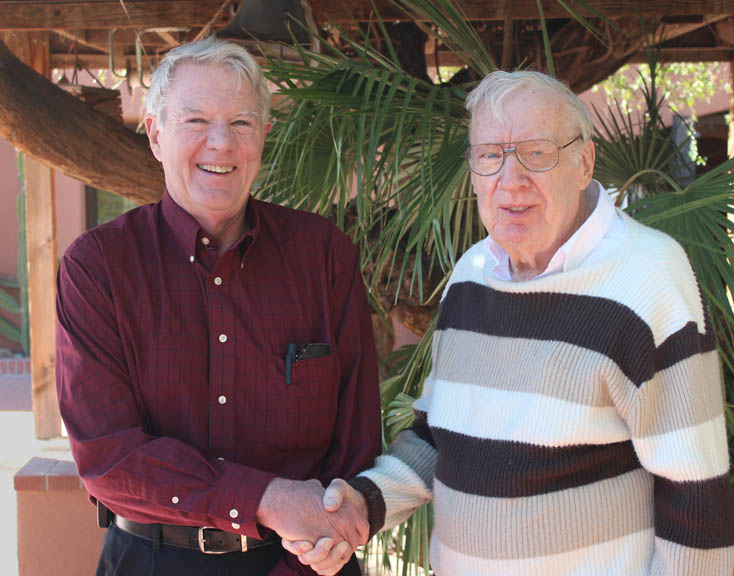
Tucson still had its share of bad lighting, and Crawford connected with Tim Hunter, a local radiologist and avid amateur astronomer who’d become concerned about newly installed lighting at the University of Arizona’s Medical Center. Together, they realized that light pollution was a growing menace to nighttime skies everywhere — and their joint “call to action” was the founding of the International Dark-Sky Association in 1988. Announcing the creation of IDA in S&T’s May 1988 issue, Crawford observed, “Lack of awareness rather than resistance to change is generally the biggest problem in controlling light pollution.”
J. Kelly Beatty
So began Crawford’s decades-long quest to change the world’s approach to nighttime illumination. He met the most resistance from lighting professionals. However, one of those willing to listen was James Benya, an influential lighting engineer known for his environmentally responsible projects. As Benya recalls, Crawford’s deep knowledge of both astronomy and the physics of light gradually won many converts to the dark-sky movement. “His legacy now lives within us, and his vision is part of our recommended practices.”
I first met “Dr. Dave” around 2001, when the initial global maps of light pollution started appearing and light pollution became part of my “beat” for Sky & Telescope. By then Crawford had retired from Kitt Peak and was devoting all his time to IDA as its unpaid executive director. He was disarmingly soft-spoken but clearly driven in his quest to save the night sky. I recall two bits of wisdom he repeated often. One was, “Make friends, not enemies” — the mantra that ultimately convinced many lighting professionals to reexamine how we light the night.
The other was, “If not you, then who? If not now, when?” It was a challenge I couldn’t refuse. Ultimately I served for a decade on IDA’s board of directors, and it’s a gauntlet I still throw down every time I speak about light pollution.
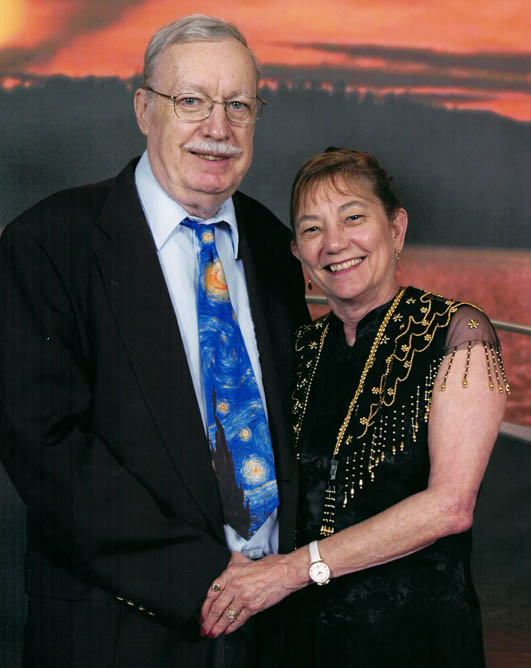
In 2008, after 20 years at the helm of IDA, Crawford retired to the San Diego area, where he and his wife, Mary, lived for many years near and with Lisa Crawford Bruhn, one of their three daughters. (Mary died in 2012.) “He lived and breathed his mission 24/7,” Bruhn says. “These past few years I would read the IDA newsletters to him, both international and local, to show him that the legacy of what he and Tim Hunter started continues on with more successes.”
Lisa Crawford Bruhn
Indeed, IDA (recently renamed DarkSky International) has grown in size, reach, and stature. Today it boasts members and advocates in all 50 U.S. states and 60 countries. With more than 80 chapters in 26 countries, DarkSky has made light pollution a recognized and debated environmental issue worldwide. “IDA has far outgrown its founders and surpassed our every hope for it,” observes Hunter. (Be amazed at what DarkSky is doing by attending its virtual global conference, a 24-hour event on November 8–9.)
Crawford long believed that to convince the lighting industry of the value of dark-sky-friendly lighting, he needed to speak on its terms. So, early on, he became a Fellow of the Illuminating Engineering Society of North America, the organization that sets standards for all types of lighting in the United States. “What started as an effort to mitigate the effects of skyglow on terrestrial telescopes has expanded into a fundamental tenet of lighting design,” notes Alan Lewis, a former IES president. “Without Dr. Crawford’s leadership, we likely wouldn’t be where we are today.”
In recognition of his decades of engagement with lighting professionals, in 2021 he was awarded the IES Medal — the society’s highest honor. (Click here to see a video of his acceptance remarks.)
In fact, Crawford’s greatest legacy is that he made everyone realize that light pollution more than just a problem for astronomers. Rather, he showed that it affects every aspect of the nocturnal environment — from fireflies and pollinators to human health. As Benya points out, “How far we have come and how much we have changed is, in the beginning, because of Dave.”
About J. Kelly Beatty
J. Kelly Beatty, S&T Senior Editor, joined the staff of Sky Publishing in 1974 and specializes in planetary science and space exploration. Learn more about him here.



Comments
You must be logged in to post a comment.