 SUNSET:

 1
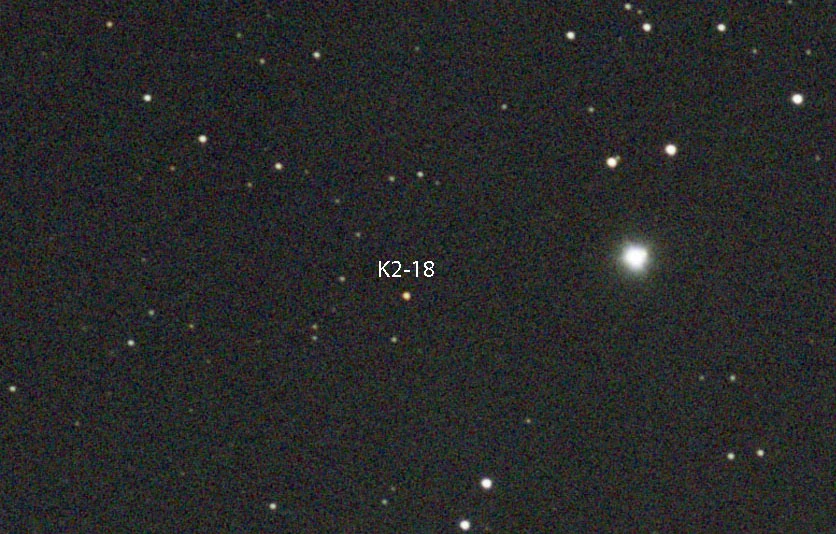
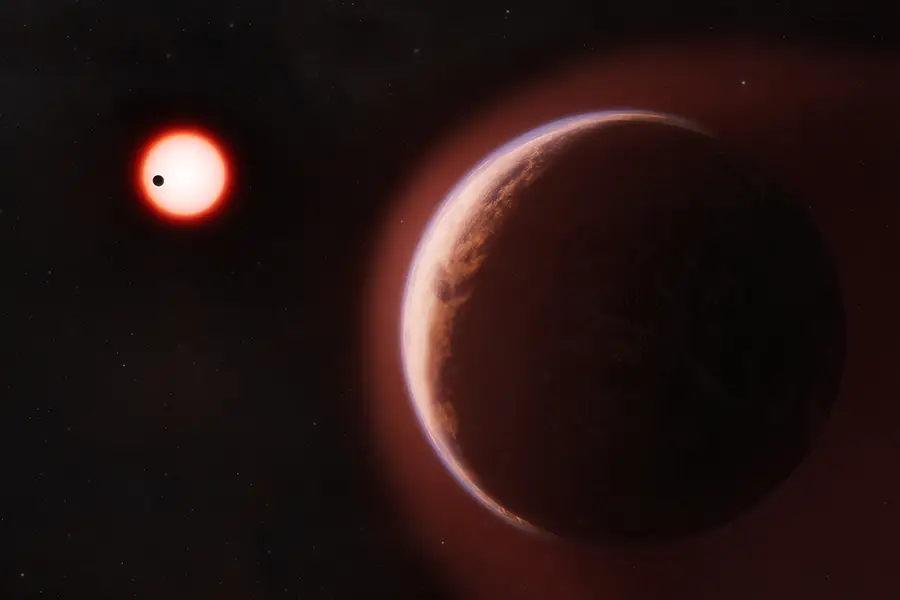
1While you won’t see a trace of this exoplanet or alien life, it’s easy to spot the red dwarf star that warms its surface.
Bob King
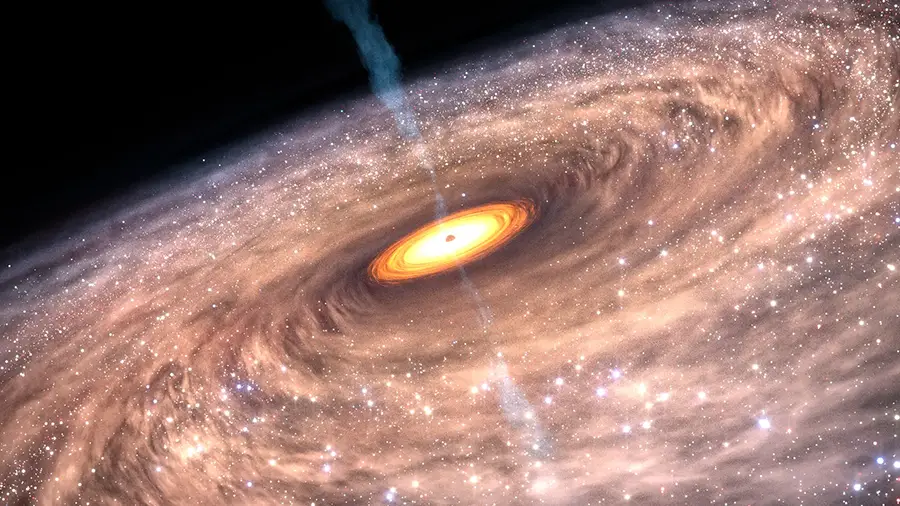
You may never come face to face with your favorite rock star, but you can attend their concerts or listen to a music recording. Celestial bodies can be like that. Amateurs can't see black holes, exoplanets, and accretion disks, but we can detect their presence by how they interact with their surroundings. At the very least we can picture them in our mind's eye.
For example, a likely exoplanet orbits the 1st-magnitude star Pollux in the Gemini twins. It even has a name — Thestias. At public events, I point to Pollux and explain that a planet twice as massive as Jupiter orbits the red giant every 590 days. When it comes to novae, including the woefully-behind-schedule T Cor Bor, it's fun to imagine the "single" star as a pair of tightly orbiting suns. One pilfers hydrogen from the other until enough material accumulates on the thief's surface to detonate in a brilliant thermonuclear explosion. Voilà — a nova!
NASA / ESA / CSA / Joseph Olmsted (STScI)
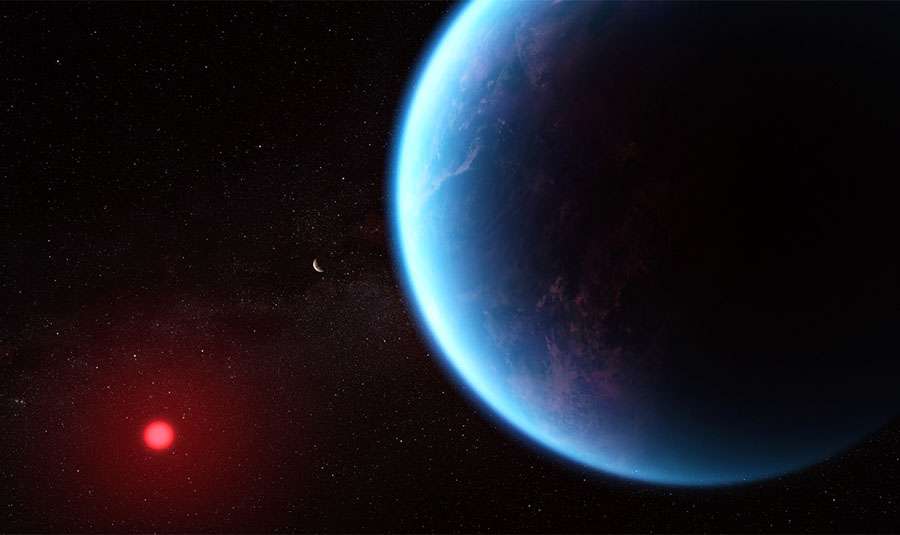
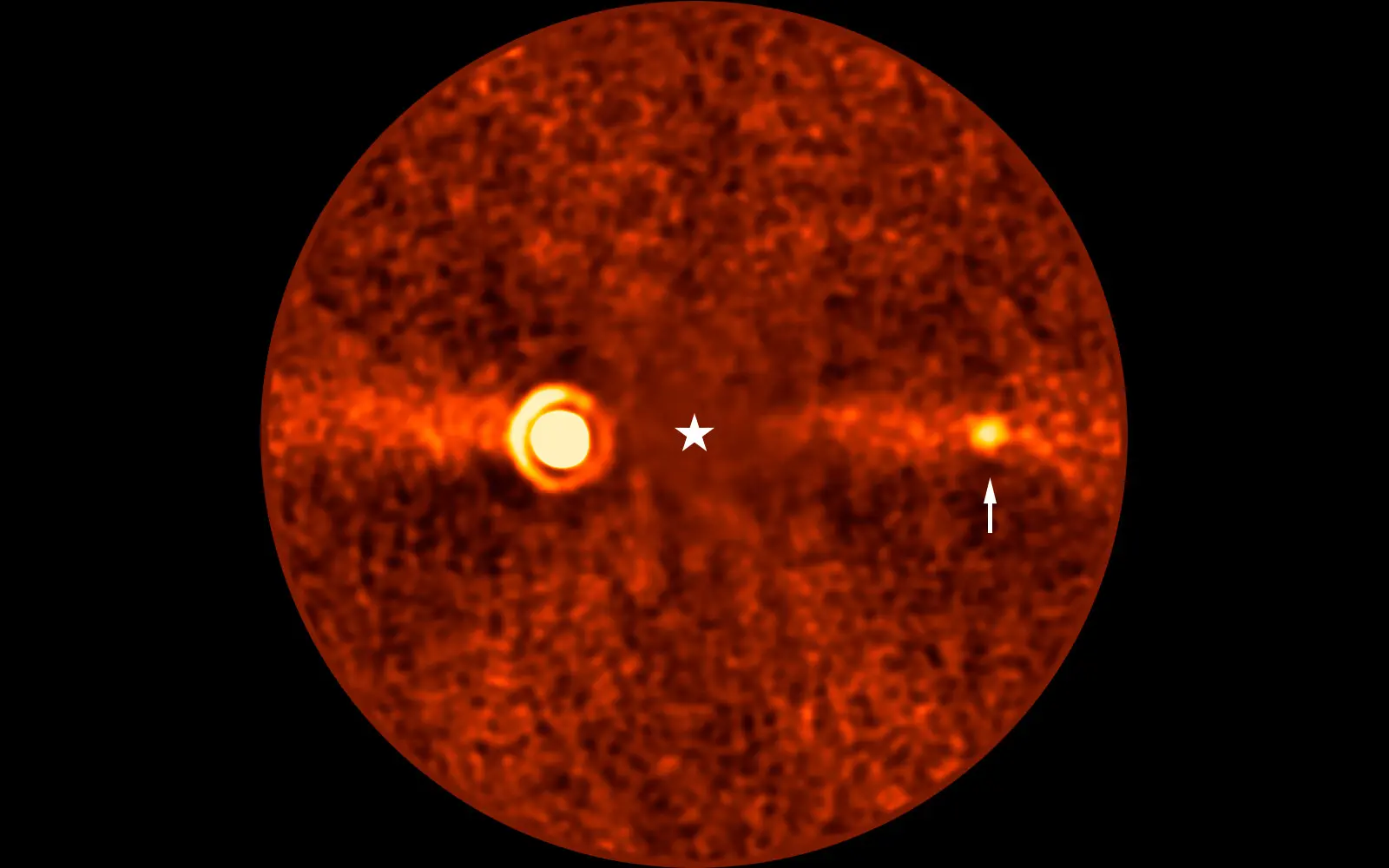
A team of researchers using the James Webb Space Telescope (JWST) recently announced the detection of dimethyl sulfide and dimethyl disulfide on the exoplanet K2-18b, located 124 light-years away in Leo. On Earth, these gases are primarily produced by plankton and contribute to the ocean air's distinctive salty, sulfurous smell. Could a related life form be cooking up the same on a water-world planet around a distant sun? Scientists are still skeptical, but it remains a possibility.
Stellarium with annotations by Bob King
Stellarium with annotations by Bob King
While seeing K2-18b directly is beyond the ability of even the largest telescopes, we can do the next best thing — observe its host sun. K2-18 is a red dwarf star about half the Sun's diameter and half its mass, with an estimated age of approximately 3 billion years. By earthly standards, that's sufficient time for life to evolve on K2-18b under the right conditions.
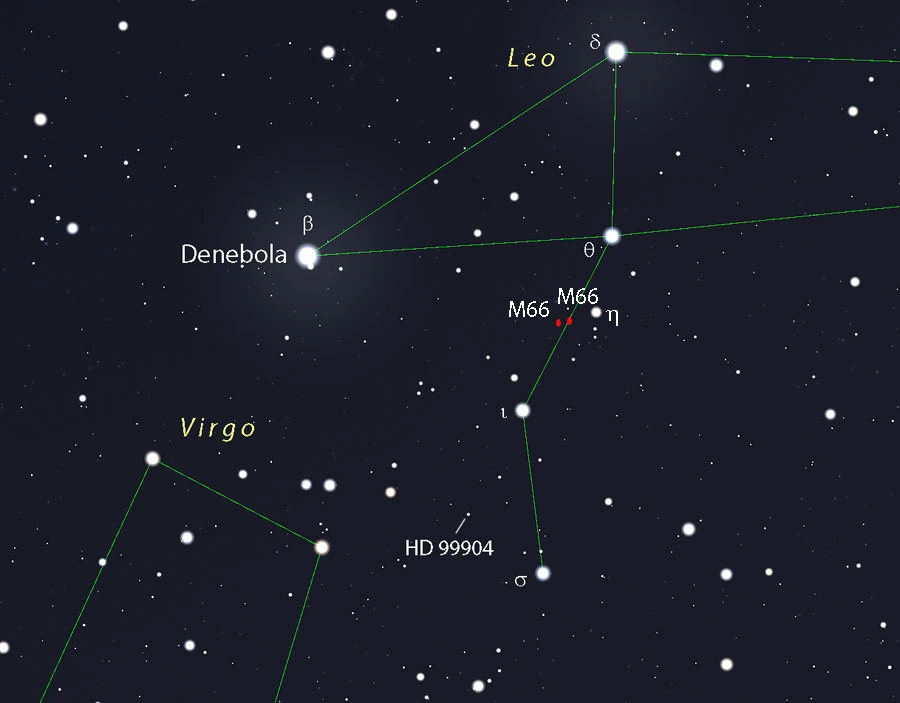
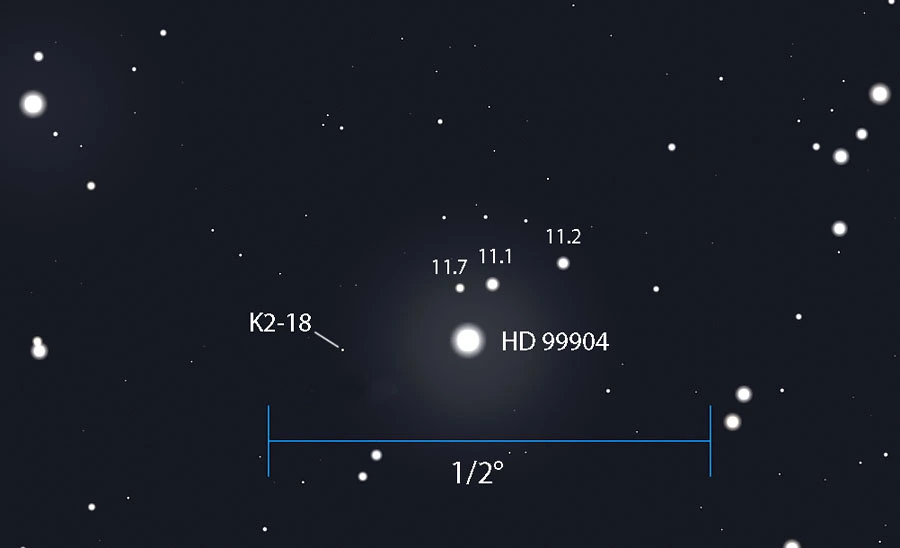
I looked up the host star's magnitude and was delighted to see it was 13.5, bright enough to track down in an 8-inch telescope. What's more, K2-18 is perfectly placed for viewing during the early evening hours from both hemispheres in the next couple months. Also, by good fortune it lies just 8.5′ east-southeast of 6.7-magnitude HD 99904. After a short star-hop from Sigma (σ) Leonis to HD 99904, K2-18's small, dim spark of a star was an easy find in my 15-inch at 64×. Under dark skies I'm sure a few of you will spot it in a 6-inch.
I like to imagine the exoplanet transiting its host sun as I observe, right there in my line of sight, invisible yet as real as any of the other nearly 5,900 extrasolar planets that have been discovered to date. At high magnification, I swear I could even detect a whiff of sulfur ;).
Eta Aquariid Meteor Shower Beckons Before Dawn
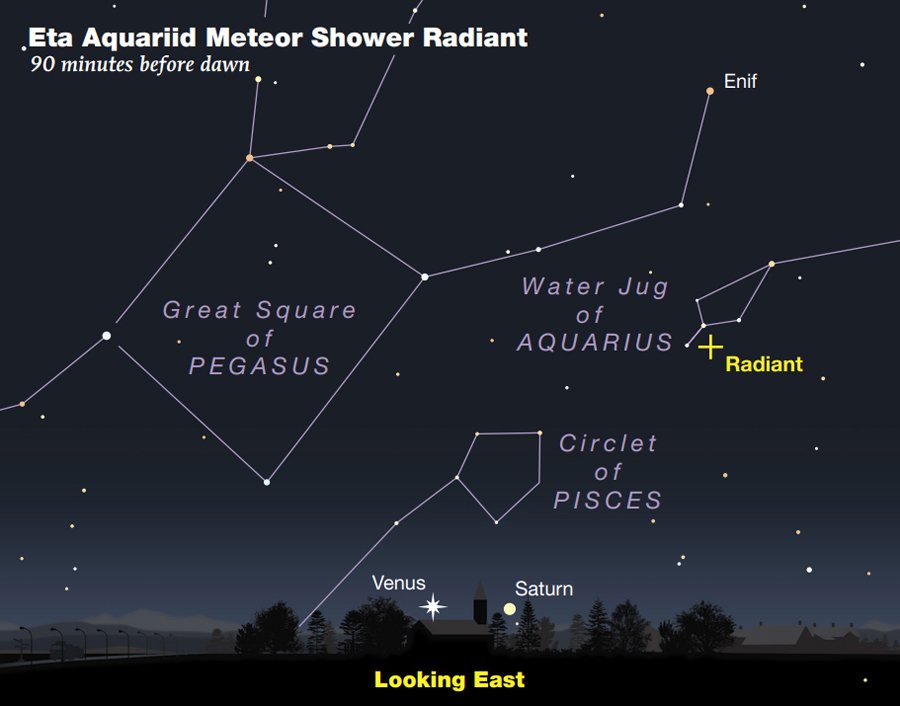
Sky & Telescope diagram
Just a quick reminder. On the mornings of May 5th and May 6th, the annual Eta Aquariid meteor shower reaches maximum. The shower can produce up to 50 meteors per hour under ideal conditions from the southern tropics, where the radiant stands fairly high up before dawn encroaches. Mid-northern latitude observers will see closer to 15 to 20 per hour. Best viewing will be from about 3 a.m. local time — when the radiant rises in the southeastern sky — until early twilight, around 4:30 a.m.
"Etas" are a thrill to see because they're swift and often produce bright, lingering ionization trails called trains. The shower is associated with Comet 1P/Halley. Every year from mid-April through late May, Earth crosses the outbound leg of Halley's orbit and encounters the comet's dusty castoffs from its many passages around the Sun. In October, we'll witness the Orionid meteor shower as Earth passes through Halley's inbound particle stream. Enjoy!
About Bob King
I love the sky (day and night) and have been a skywatcher and amateur astronomer since childhood. I'm also a long-time member of the American Association of Variable Star Observers (AAVSO) and Astronomical League. I pen the Astro Bob blog and have written four books: Night Sky with the Naked Eye (2016); Wonders of the Night Sky You Must See Before You Die (2018) and Urban Legends from Space (2019) and Magnificent Aurora, published in 2024. The universe invites us on an adventure every single night. To accept the invitation, we only need look up.



Comments
Rod
May 1, 2025 at 11:57 am
"A team of researchers using the James Webb Space Telescope (JWST) recently announced the detection of dimethyl sulfide and dimethyl disulfide on the exoplanet K2-18b, located 124 light-years away in Leo. On Earth, these gases are primarily produced by plankton and contribute to the ocean air's distinctive salty, sulfurous smell. Could a related life form be cooking up the same on a water-world planet around a distant sun? Scientists are still skeptical, but it remains a possibility."
Good to see this in the report here. A comet report in our solar system found same elements, What is a presumed sign of life doing on a dead comet?, https://www.science.org/content/article/what-presumed-sign-life-doing-dead-comet
You must be logged in to post a comment.
You must be logged in to post a comment.