 SUNSET:

 0
0An extreme (G5) geomagnetic storm hit Earth last weekend, delighting viewers as far south as Florida with green and red curtains of light.
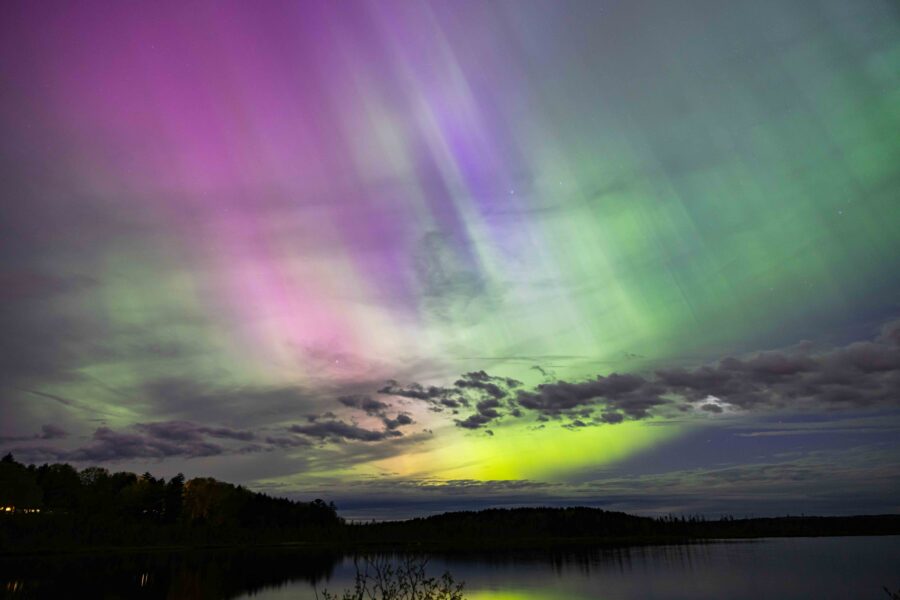
Rob Mack / S&T Online Photo Gallery
An "extreme" G5 geomagnetic storm hit Earth this past weekend, delighting viewers as far south as Florida with green and red curtains of light.
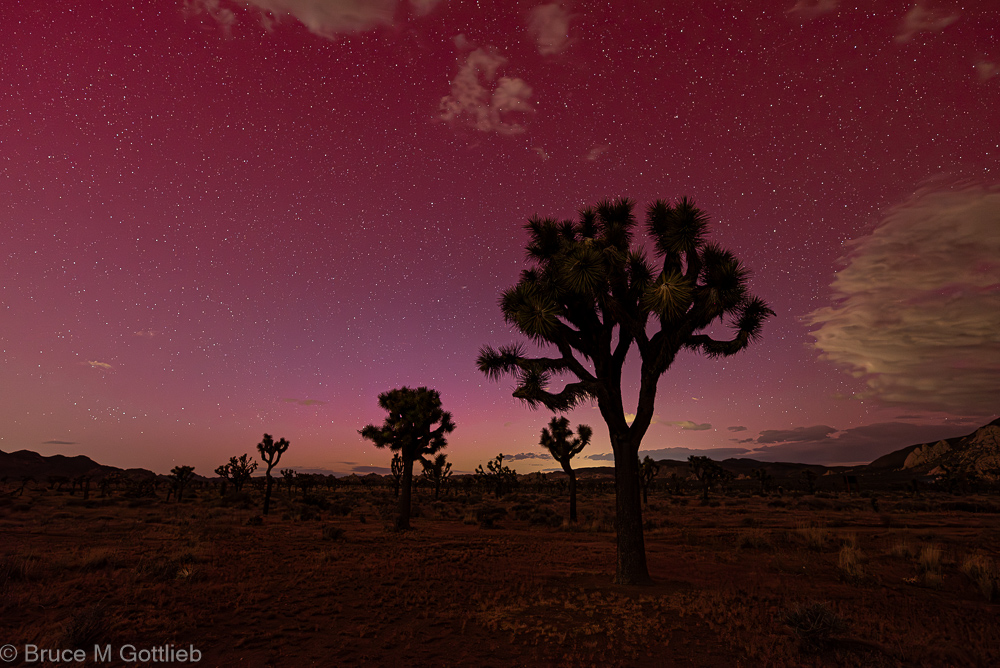
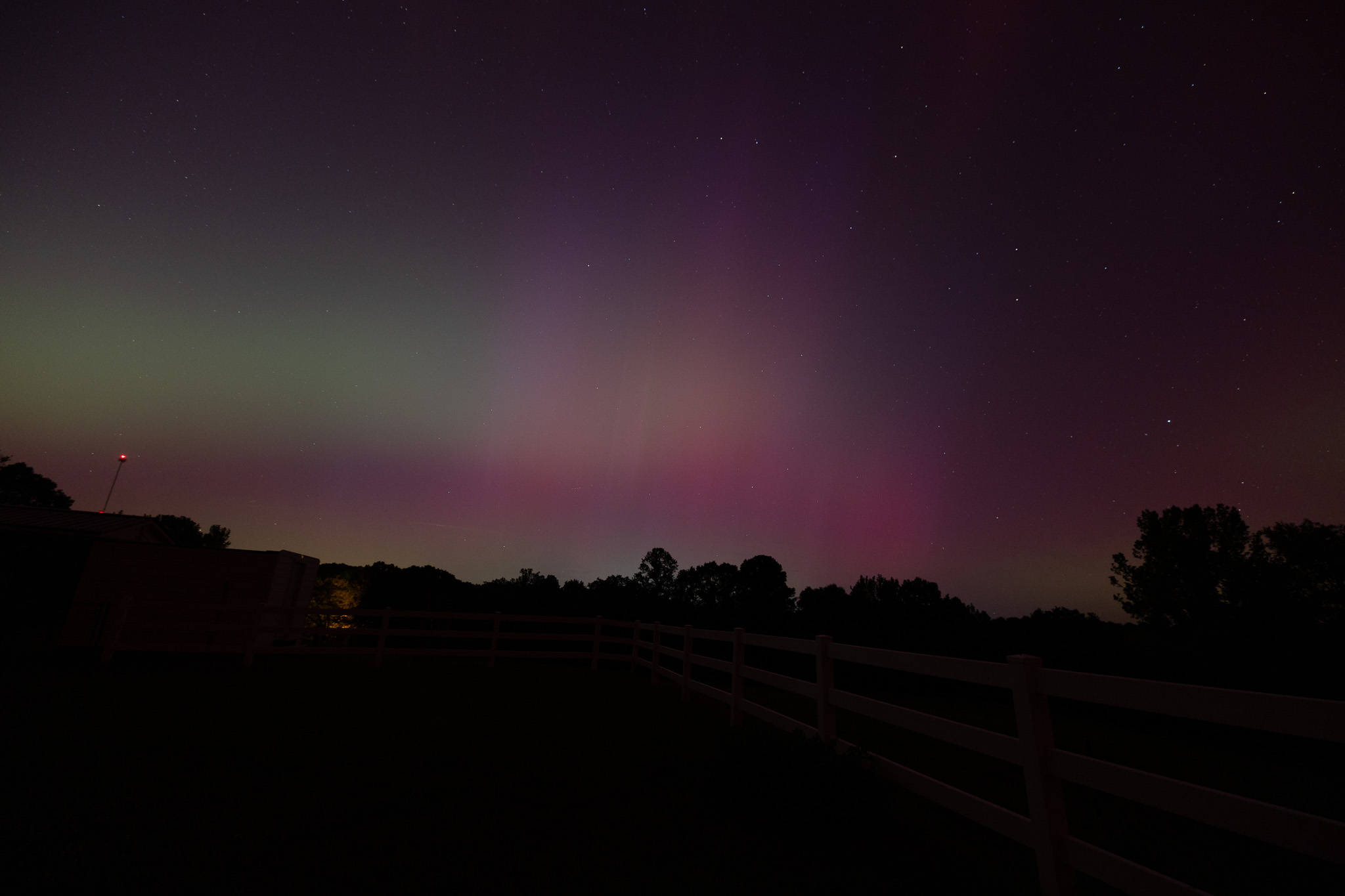
These were not blazing, rainbow displays of light to the eye. At mid- and southerly latitudes, even extreme aurorae are faint, and skies where most people live are bright. Most viewers saw curtains of white with just hints of color. However, photos revealed the true extent of those hues, thanks to multi-second exposures: The eye's "shutter speed" is 1/50 of a second, and the cones in our eyes need a minimum amount of light to perceive color — that iPhone in your pocket, on the other hand, can easily take 3-second exposures, capturing a good many more photons and showing their color.
The event was initially predicted to be a G4 (severe) geomagnetic storm, but the National Oceanic and Atmospheric Administration (NOAA) ultimately pegged it as G5 (extreme). Such an event hasn't crossed Earth's path since October 2003.
Last weekend's geomagnetic storm arose after one of the largest sunspot groups to emerge on the Sun over the past two decades spat out six coronal mass ejections (gobs of ionized solar gas) in our direction. Those gobs traveled with (and even outpaced) the solar wind that constantly spirals out from the Sun and across the solar system. Some of the later CMEs caught up to the earlier ones, producing a more powerful event when they finally reached Earth. You can see the CMEs in this video from ESA's Solar and Heliospheric Observatory:
The magnetic fields that travel with those charged and fast-moving particles reconnected with Earth's own magnetic field, allowing the solar particles entry to our upper atmosphere, where they collided with oxygen atoms to produce the green and red colors. Green is a more typical color for aurorae, produced by oxygen at middling altitudes. But red aurorae are more likely when there's a geomagnetic storm like this one, which dumps energetic particles into the atmosphere. Red comes from rarefied oxygen higher up, which means it can be seen from farther away, making red the most easily seen color at low latitudes.
Spectators across the contiguous United States enjoyed the sight, from the rural Pacific Northwest to Boston suburbs and down to Florida and Puerto Rico. Reader Larry Black wrote in from Cedar Rapids, Iowa: "This is the most intense auroral display I have observed since August 1972!" S&T's Sean Walker agrees: "It was perhaps the best aurora display I've seen in more than a decade, and certainly the best one I've seen from my own yard."
Below are some of the images and videos captured during the event. We welcome you to share your own experiences in the comments below as well as your photos in our photo gallery!
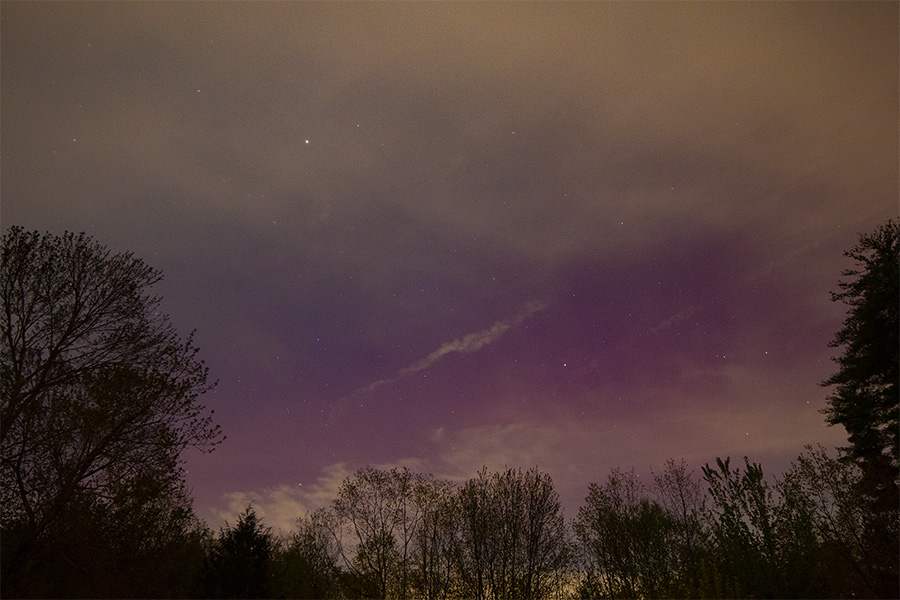
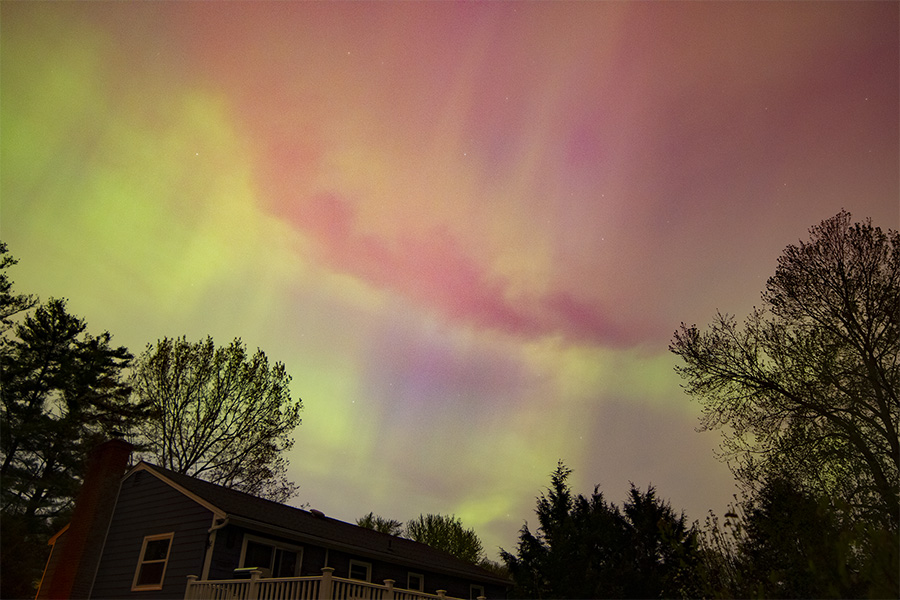


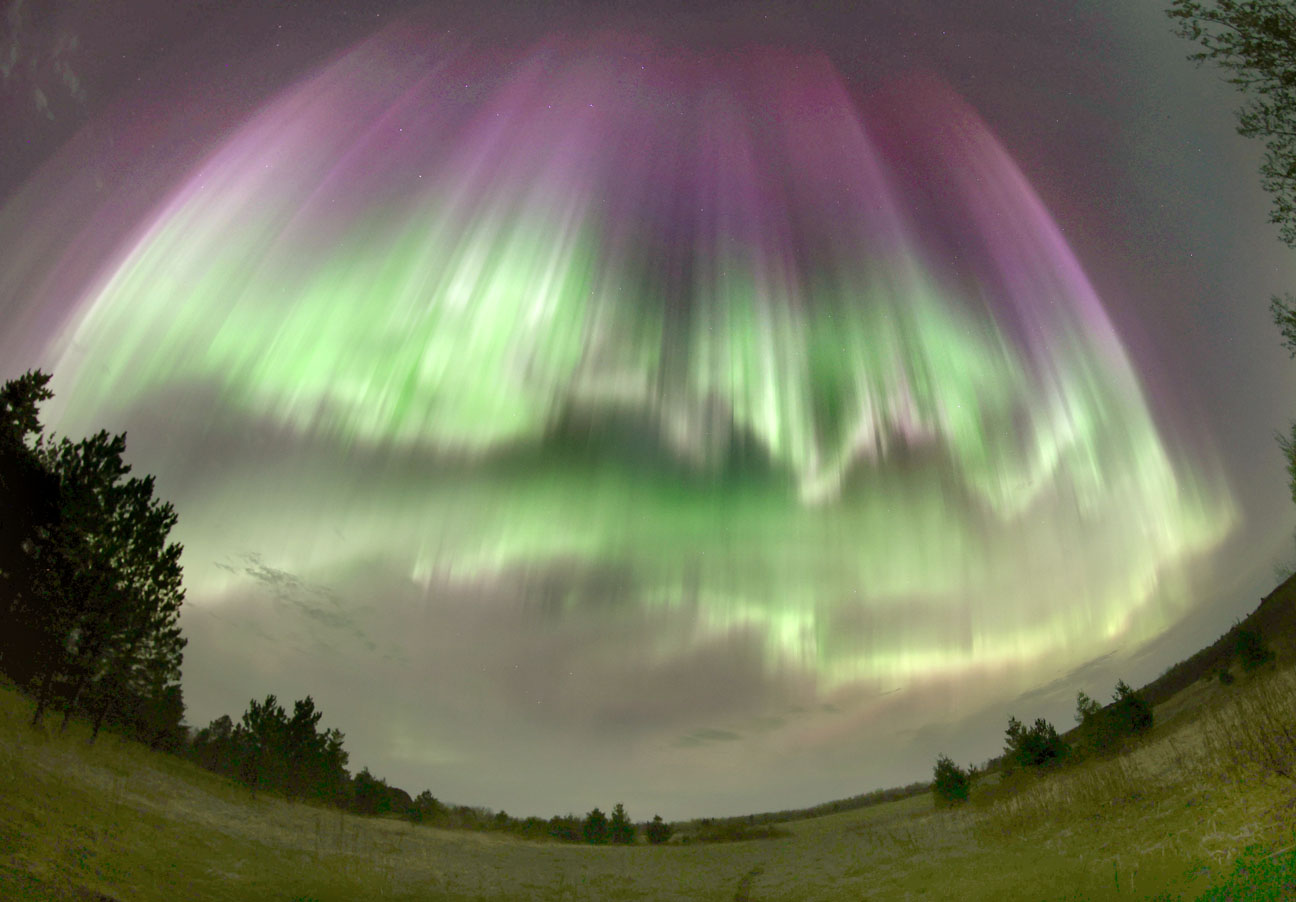

Readers of Sky & Telescope have shared photos with us from southerly locations:
astrorx01 / S&T Online Photo Gallery
dbrannan / S&T Online Photo Gallery
Visit the Aurora and Atmospheric category of the S&T Online Photo Gallery for more beautiful images.
Share your shots, too!
To close, we'll leave you with this time-lapse view, brought to you by Gianluca Masi of the Virtual Telescope Project from Rome, Italy:



Comments
You must be logged in to post a comment.