 SUNSET:

 2
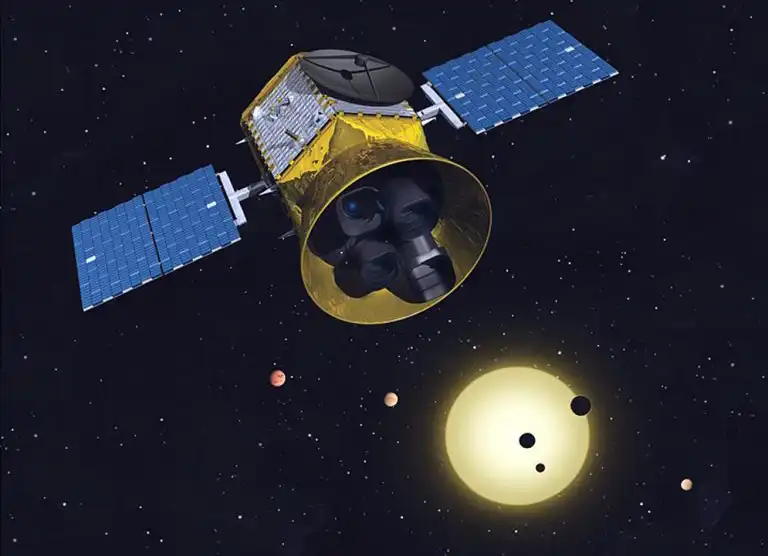
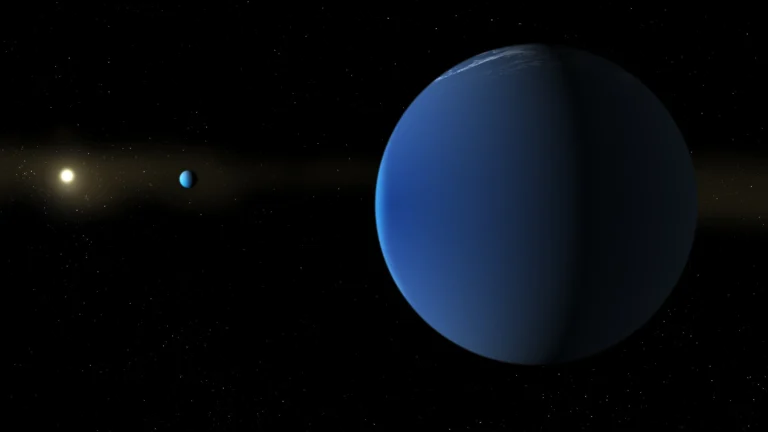
2More than 200 planets in the TESS catalogs may be bigger than originally estimated — putting initially Earth-size planets into the super-Earth category.
NASA / MIT
Astronomers may have underestimated the size of more than 200 exoplanets in data from the Transiting Exoplanet Survey Satellite (TESS). The findings could impact the assessment of which planets are likely to be habitable and even how planetary systems form.
The problem stems from the way astronomers most often find exoplanets. The vast majority of them are far too dim and distant to be seen directly, so astronomers rely on indirect clues instead. One of the most successful techniques to date has been the transit method, which looks for tell-tale dips in a star’s brightness when a planet creeps across its face. This method basically enables astronomers to measure a planet’s silhouette.
Yet the shape and depth of those silhouettes can be influenced by stray light from neighboring stars. The extra light contaminates the system, making the star itself look brighter than it is. When scientists remove the extra light, they find that the planets block more of the actual star's light. In other words, the planets end up being bigger than initially thought.
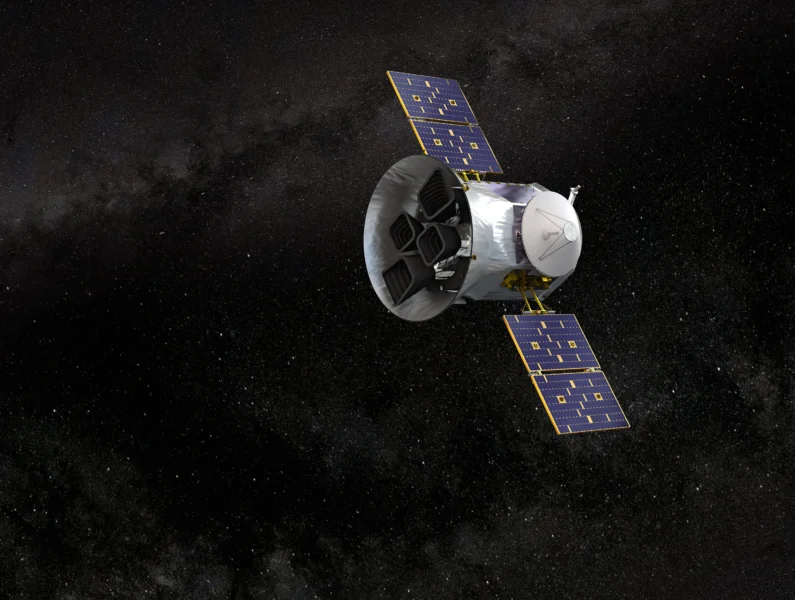
This new research, led by Te Han (University of California, Irvine), focused on exoplanet observations made using the Transiting Exoplanet Survey Satellite (TESS). TESS is particularly susceptible to this kind of contamination because each pixel spans 21 arcseconds of sky. That’s fine for capturing a large number of targets at once, but it comes at the cost of precision when dealing with crowded stellar fields.
NASA’s Goddard Space Flight Center
Han’s team cross-referenced TESS data with Gaia’s far more precise stellar positions and brightnesses to isolate how much light was leaking in from unrelated stars. Studying hundreds of TESS discoveries, they found that planetary radii were on average underestimated by 6%. That may sound insignificant, but for any given planet it leads to a density estimate that’s a fifth again greater than it should be.
According to Han, this has important knock-on effects. “We may have actually found fewer Earth-like planets so far than we thought,” he says.
It’s not like we had that many to begin with. Only three of the single planet systems found by TESS so far were ear-marked as similar in size to our planet. Now all of them are likely to be bigger, perhaps super-Earths instead of genuine imitations of our world. Some of them might even turn out to be larger, gaseous planets more akin to Uranus and Neptune than Earth.
“This has important implications for our understanding of exoplanets, including . . . prioritization for follow-up observations with the James Webb Space Telescope,” says team member Paul Robertson (University of California, Irvine).
It also has the potential to upset the applecart when it comes to planetary formation theories. Theorists try to tweak their models to incorporate known planetary system architectures. But if those architectures turn out to be wrong, the theorists might well have to head back to the drawing board.
About Colin Stuart
Colin Stuart (@colinstuartspace) is an astronomy author and tutor. He also runs a free online astronomy club.



Comments
robin_astro
July 25, 2025 at 8:45 am
Link to the paper? (Please, please always include references. Without these the article is just more internet click bait)
You must be logged in to post a comment.
Andrew James
July 26, 2025 at 5:18 am
Agreed.
You must be logged in to post a comment.
You must be logged in to post a comment.