 SUNSET:

 1
1Scientists have traced 70% of meteorite falls to three collisions that occurred in the asteroid belt within the past 40 million years.
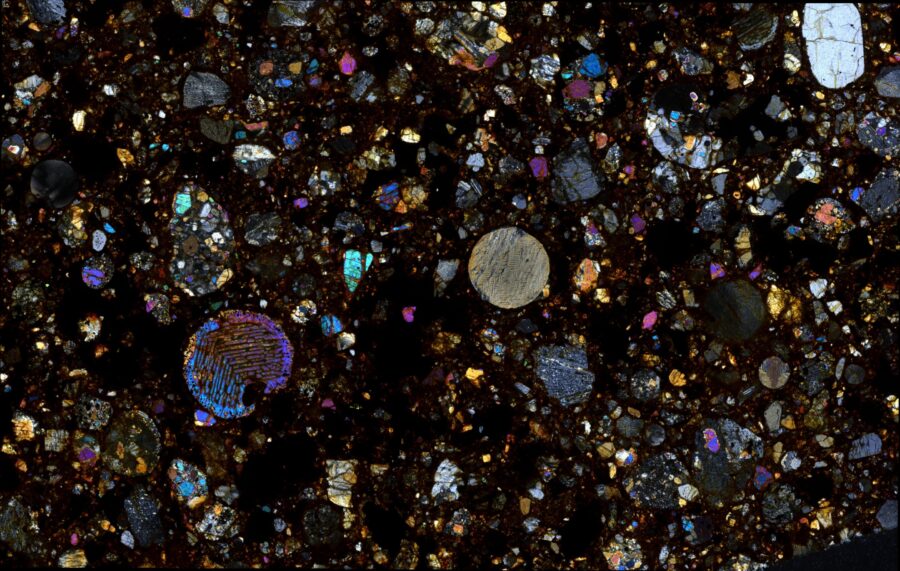
Jérôme Gattacceca / CNRS / CEREGE
At last, we know where most meteorites come from. Two studies published in Nature have traced 70% of meteorite falls to three collisions in the asteroid belt that occurred within the past 40 million years. Previously, scientists had only identified the origins of 6% of meteorite falls: the Moon, Mars, and the asteroid 4 Vesta.
Meteorites wander for many years in the asteroid belt before they fall to Earth, and where in the asteroid belt they originate from has remained elusive. That’s true even for the most familiar types, including the most common and second-most common meteorites, known as H-type ordinary chondrites (40% of meteorite falls) and L-type ordinary chondrites (35% of meteorite falls), respectively, as well as more than 150 other types.
“It has been a long-standing enigma why the H and L ordinary chondrites dominate the flux falling to Earth when they do not dominate [the asteroid population] in space,” says Birger Schmitz (Lund University, Sweden), who collaborates with the authors of the Nature papers but was not a coauthor.
Now, an exhaustive search by an international team has succeeded in tracking down the sources of most of these meteorites. The researchers started by gathering data on major main-belt asteroid families, whose members are parts of a larger body that split apart long ago. The data include the orbits of asteroid family members, their infrared spectra, and information their exposure to cosmic rays.
The researchers then simulated those bodies’ orbital motions over time, calculating collisional histories as well as the effects of exposure to solar heating, cosmic rays, gravity, and other forces that could change their orbits. The results show that three groups of stony chondrites dominate the current meteorite flux: two families of H ordinary chondrites and one family of L chondrites.
Crucial to the team’s analysis was the understanding of how collisions produce families of asteroids that start in similar orbits and how those fragments spread out over time. “We have pinpointed three asteroid families in the main asteroid belt which are by far the most important sources of meteorites falling on Earth today," says,” says Miroslav Brož (Charles University, Czech Republic), who led one of the studies appearing in Nature.
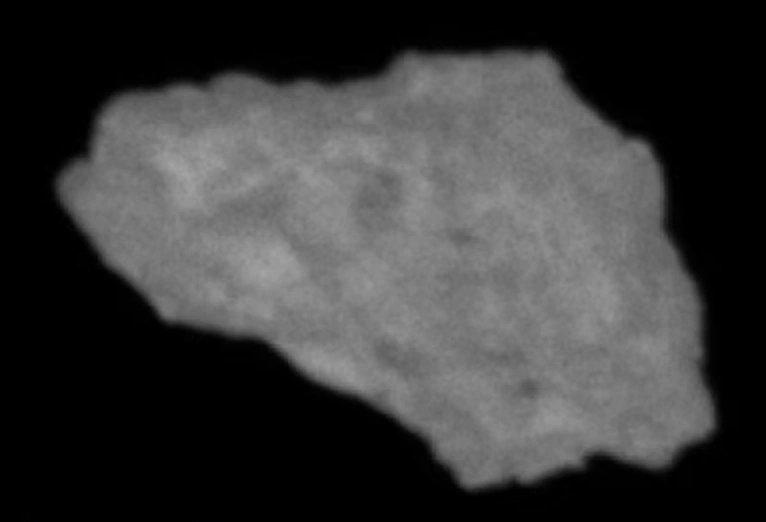
Two collisions involving H chondrites occurred so recently that the researchers could trace their orbits well enough to date the family’s origin. The older collision occurred 7.6 million years ago and yielded the family of objects with orbits similar to 158 Koronis. A younger family dates back to an event 5.8 million years ago, in which Koronis underwent another major collision, splitting off the smaller asteroid 832 Karin and its family.
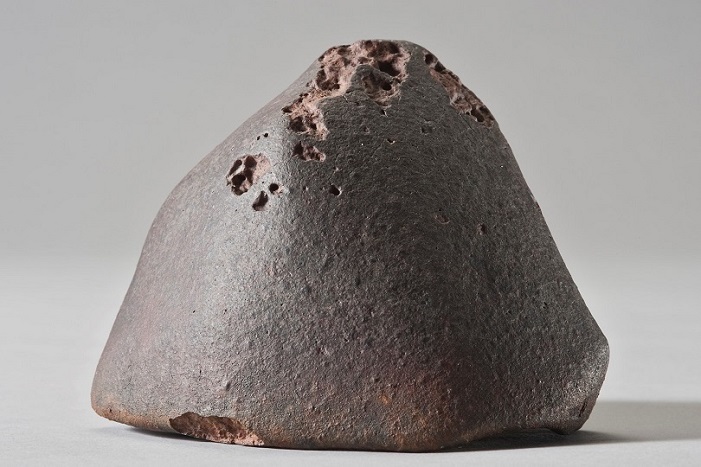
Jérôme Gattacceca / CNRS / CEREGE
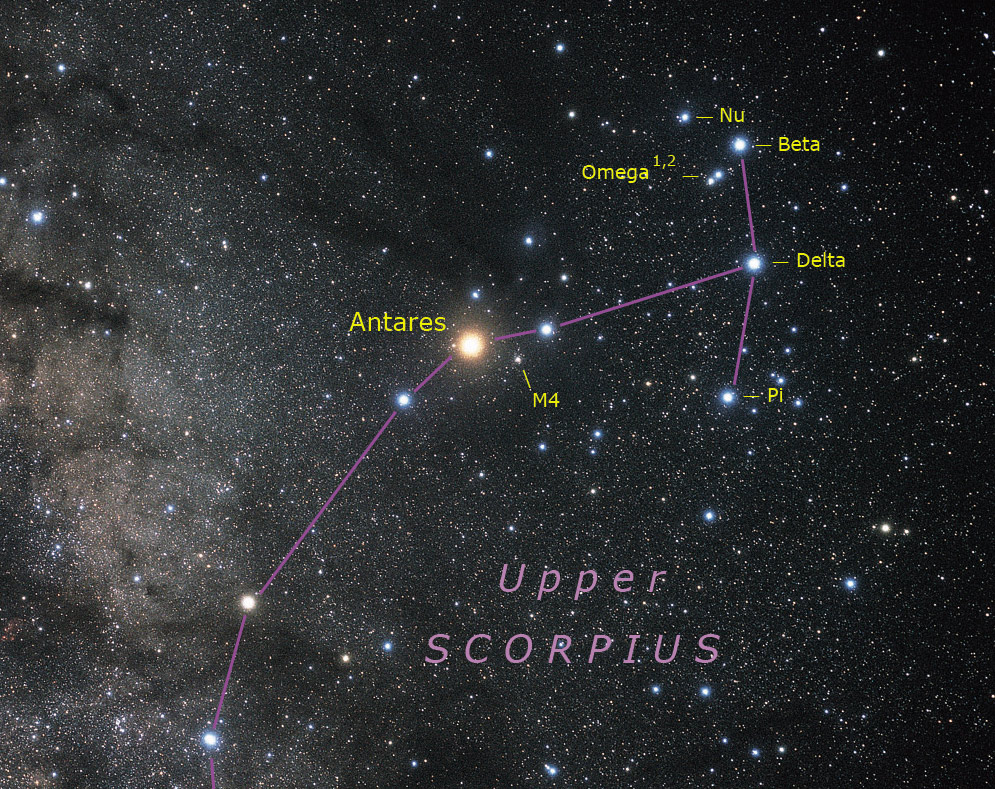
The L chondrites have a more complex origin, tracing back to a collision 466 million years ago that showered Earth with meteorites and may even have circled our planet in a temporary ring of debris, Michaël Marsset (European Southern Observatory) and colleagues report in an accompanying study in the same issue of Nature. That event left behind an asteroid family linked to the 150-kilometer asteroid 20 Massalia, now considered the parent body of L chondrite meteorites. In addition, the group finds that a collision within the last 40 million years formed a new branch of the Massalia family. This family of L chondrites, together with the H chondrites of Brož’s study, account for 70% of present meteorites.
The meteorites’ relative youth reflects the life cycle of asteroid families. Collisions tend to produce some large chunks as well as a wealth of 1-meter-size fragments, which become meteorites after falling through our atmosphere. Smaller chunks tend to be swept away from the family by multiple effects, including the pressure exerted by the Sun’s radiation as well as the gravitational tugs from larger objects. As they are swept away from the original family, these smaller pieces may then become meteorites. But after tens of millions of years, few small pieces are left to sweep away.
Another important factor in meteorite populations is the material’s durability as it falls through the atmosphere. For example, while the majority of asteroids in the main belt are carbonaceous, only 4% of meteorites are of the same composition. “We think this is because the carbonaceous materials are very fragile and prone to atmospheric and or thermal fragmentation,” says Brož.
The results of the two Nature papers are quite solid, says Schmitz, but it’s not a slam dunk just yet. “We still need empirical evidence, like a spacecraft picking up material from a Massalia family asteroid, so we can measure its potassium-argon isotope age,” he says. Schmitz has collaborated with the group but was not a coauthor of either Nature study.
“The models are very elegant and manage to explain several key observables with a single model,” says Mikael Granvik (University of Helsinki, Finland), who was not involved in the research. “I think that is a great feat, and one that will push the field forward by a great leap.”
The details still need to be worked out, though, he adds. “It will be very interesting to see how tests of their hypotheses will play out in the years to come.”
About Jeff Hecht
Jeff Hecht writes about science and technology, with a particular interest in all things optical. He first discovered Sky & Telescope when he was 10, and he still has the one-inch Wollensak refractor his father gave him then.



Comments
remlarralmer
October 30, 2024 at 1:02 am
wah that looks really mesmerizing
You must be logged in to post a comment.
You must be logged in to post a comment.