 SUNSET:


Iceland: Fire, Ice, and the Aurora
Iceland is a destination with explosive geysers, majestic waterfalls, towering glaciers, steaming thermal baths — and magnificent northern lights.
Safe Solar Observing
When it comes to observing the Sun, remember — safety first!
An Occultation Primer
The Moon frequently passes in front of stars. In rare cases, planets and asteroids will also obscure starlight for a short time. Here are some basic definitions that will help you understand what occultations are about.
Some Special Events in 2006
It's going to be an active year for stargazers. Here's where you can find some of the highlights of 2006, including a list of upcoming lunar occultations.
Observing &T's Interactive Sky Chart"}'>
Linking to S&T's Interactive Sky Chart
Here are simple instructions to enhance your Web site by adding a link to S&T's Interactive Sky Chart customized for your location.

Observing the Perseids - A Perennial Guide
The Perseids meteor shower is one of the year's top astronomical highlights. Learn how best to see the meteors.

Fuzzies in Your Future:
An Introduction to Deep-Sky Objects
Ready to voyage beyond the Solar System? Here's what you can see.

Finding Uranus and Neptune in 2006
Binoculars and our charts are all you need to spot these twin outer planets.

Tycho: The Metropolitan Crater of the Moon
Tycho is the most conspicuous crater visible near full Moon, shining brilliantly and radiating great long rays. But the rays from Tycho that partially encircle the full Moon are not distributed equally in all directions.

The Mysteries of Plato
The crater Plato is one of the superstars for observers of the Moon. It's big, conspicuous with its dark floor ringed by a bright rim, and long a subject of speculation, and controversy.

Messier on the Moon
Oblique impact resolves the mystery of one of the most bizarre crater pairs on the Moon: Messier and Messier A. Previous explanations for this crater pair ranged from imaginative to fantastical. All were wrong.

Rings and Things
Mare Nectaris is the smallest of the circular maria on the Moon; lavas extend only 350 kilometers from shore to shore. But the Nectaris basin is beautifully defined by the spectacular Altai Scarp, which forms the southwestern rim of the basin.
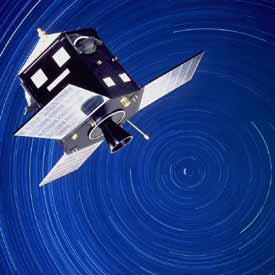
Mining Hipparcos's Buried Treasure
The satellite caught tantalizing pieces of light curves for many new variable stars. Now it's time to fill in the details.
Solar Filters for Safe Sun Observing
Before an eclipse occurs the media often provides information on how to watch the event safely. Unfortunately, despite the best intentions, inaccurate or confusing information on safe observing techniques is often provided. Here are the facts.

How to Sketch Sunspots Using Projection
Looking for a daytime astronomy project to pursue? Why not set your sights on our nearest star?
Astronomy and Stargazing Projects
Nova Hunters
Few observers have spotted an ever-elusive "new" star. Fewer still have done it twice. Observing styles and techniques are as varied as the searchers themselves.
The Benson Prize
If saving the Earth from destruction isn't enough incentive to find near-Earth asteroids, there's a prize for the amateur who discovers one.

A Treasure-Trove of Variable Stars
Some of the Hipparcos satellite's unfinished business provides fair game for backyard observers.

The Minima of Algol
Now you can calculate the dates and times (local and Universal Times) when the eclipsing variable star Algol should be at its dimmest (magnitude 3.4 instead of its usual 2.1).

The Lure of Variable Stars
Studying and recording the ups and downs of variable stars is a pleasant pastime that can also be scientifically rewarding. Here's a simple project to get you going.
