 SUNSET:

This Week's Sky at a Glance, January 9 – 17
Daily sky sights among the ever-changing Moon, planets, and stars.

A Visit to the Sky's North Pole
Unlike the terrestrial North Pole, the heavenly version is easily accessible any clear night of the year. We explore curiosities within one degree of the celestial north pole and take a journey back in time. What could be more appropriate in January than a jaunt to the north celestial pole? When the polar vortex…
This Week's Sky at a Glance, January 2 – 10
Daily sky sights among the ever-changing Moon, planets, and stars.

What Makes Moonlight Special?
Romantic, mysterious, soothing, and radiant, moonlight has its own special qualities. We explore how we perceive the night under a bright Moon. A moonlit stroll is starkly different from a walk in the sunshine. Moonlight's dark, spooky quality contrasts with the clarity of sunlight. And while it may not grow hair…
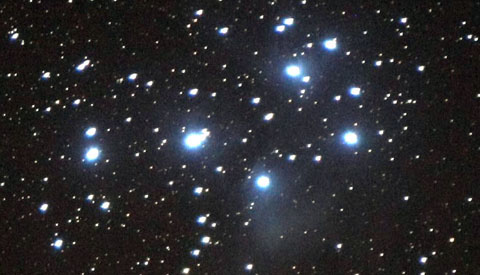
Tour January's Sky: The Pleiades
Our downloadable monthly podcast offers highlights for stargazing in January, how to find the planets, and a special look at the Pleiades star cluster
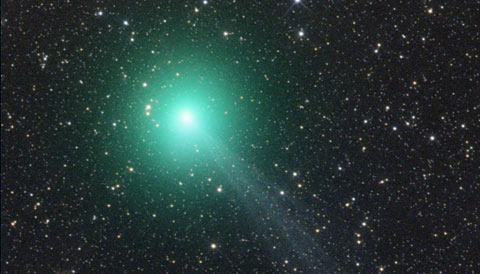
Binocular Comet Lovejoy Heading Our Way
A new Comet Lovejoy, C/2014 Q2, is heading our way. It may brighten to 5th magnitude from late December through much of January as it climbs into excellent viewing position for the Northern Hemisphere, high in the dark winter sky.
This Week's Sky at a Glance, Dec. 26 – Jan. 3
Some daily sky sights among the ever-changing Moon, planets, and stars, from Sky & Telescope.
Top Tips for Stargazing with Your New Telescope
Thousands of telescopes are given and received as gifts during the holidays. But once you've assembled your new treasure, then what? The editors of Sky & Telescope magazine point the way.

This Week's Sky at a Glance, December 19 – 27
Some daily sky sights among the ever-changing Moon, planets, and stars. Friday, December 19 Have you ever tried to catch Sirius actually rising? If you can find a good view down to the east-southeast horizon, watch for Sirius emerging about two fists at arm's length below Orion's Belt. It now…

How to See the Orion Nebula in 3D
Add another dimension of viewing to winter's favorite deep sky object, the Great Nebula of Orion. The Orion Nebula is arguably the centerpiece of the winter sky. This bright, richly-detailed blossom of glowing gas and dust invites repeated observation. How many of us have pointed our telescope or binoculars in its direction five,…
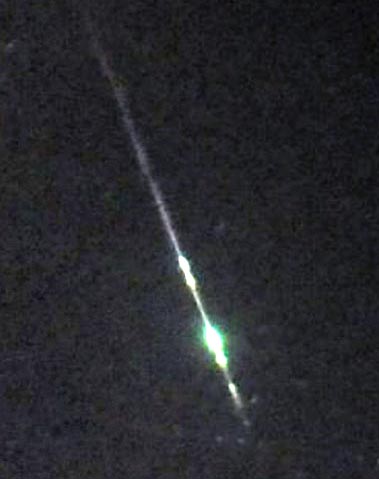
Meteor Showers in 2015
Sky & Telescope predicts that 2015's best meteor showers will be the Perseids in mid-August and the Geminids in mid-December.
This Week's Sky at a Glance, December 12 – 20
Some daily sky sights among the ever-changing Moon, planets, and stars. Friday, December 12 This is the time of year when, around 8 or 9 p.m., Cassiopeia stands very high in the north as a flattened letter M. When will you see it perfectly level? This mostly depends on how…

Venus Finally Comes Out of Hiding
Welcome back, Venus! Brightest planet in the sky returns just in time for the holidays. "There are so many stars shining in the sky, so many beautiful things winking at you, but when Venus comes out, all the others are waned ... Mehmet Murat ildan from the play Galileo Galilei (2001) I miss Venus.…
This Week's Sky at a Glance, December 5 – 13
Some daily sky sights among the ever-changing Moon, planets, and stars. Friday, December 5 The Moon is essentially full this evening and Saturday evening both (it's exactly full at 7:27 a.m. Saturday morning EST.) On Friday evening in the Americas, look for Aldebaran less than about 2° from the Moon.…

Carbon Stars Will Make You See Red
Treasure hunting for carbon stars, the rubies of the night sky. Color can be tough to come by in the deep sky, especially if you own a small telescope. Planets serve up a medley of subtle hues, as do a few planetary and bright nebulae. Stars show tints of blue, yellow, and orange, but there's nothing…
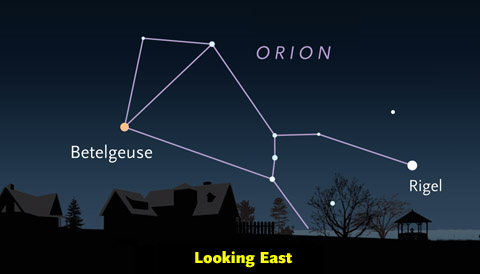
Tour December's Sky: Orion Rising
Our monthly podcast offers the key highlights for stargazing in December: where to find bright stars and planets — and how to spot the Geminid meteor shower.
This Week's Sky at a Glance, Nov. 28 – Dec. 6
Some daily sky sights among the ever-changing Moon, planets, and stars. Friday, November 28 First-quarter Moon (exactly first-quarter at 5:06 a.m. Saturday morning EST). Look this evening for Fomalhaut far to the Moon's lower left, and for Enif, the nose of Pegasus, almost as far to the Moon's upper right.…

Shadows on the Moon Make a Point
Fooled by shadow play into thinking lunar mountains were pointy pinnacles? Learn why we often see them that way.

Watch Asteroid Juno Occult a Star
Watch an asteroid approach a star and block its light, all in a fraction of a second.
