 SUNSET:

 2
2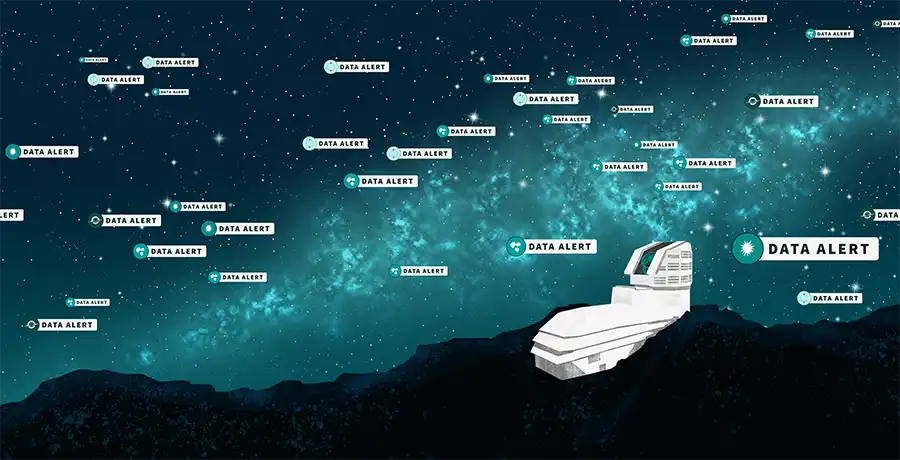
NSF–DOE Vera C. Rubin Observatory / NOIRLab / SLAC / AURA / P. Marenfeld / J. Pinto
The much-anticipated Vera C. Rubin Observatory has released its first batch of astronomical alerts — and it’s huge. A single night of observation on February 24th resulted in 800,000 alerts of ephemeral events in the night sky.
Rubin is perched high on the Cerro Pachón mountain in central Chile. It works a little differently to the majority of telescopes. Instead of homing in on a specific target, it scours the entire night sky every few nights to create an ultra-wide, ultra-high-definition, time-lapse record of the heavens. It does this with the help of the largest digital camera ever built.
The observatory's telescope, the Simonyi Survey Telescope, has one main quarry: transients — astronomical objects that change rapidly, such as moving asteroids and exploding stars. When something is different from the time Rubin last looked, an automated alert is pinged out to astronomers.
“By connecting scientists to a vast and continuous stream of information, NSF–DOE Rubin Observatory will make it possible to follow the universe’s events as they unfold, from the explosive to the most faint and fleeting,” says Luca Rizzi (National Science Foundation).
The amount of data Rubin will generate is staggering. In the first year alone, the telescope is expected to capture images of more objects than all other visible-light observatories in human history combined. Once fully operational, the number of nightly alerts will jump from 800,000 to up to 7 million. The project is expected to run for at least a decade.
Automating the alerts from such a deluge has been a complicated task. In fact, there are now so many alerts that following up on all of them would be impossible.
Instead, alerts are handled by a series of intelligent software platforms known as brokers. These systems use machine-learning algorithms to filter, sort, and classify the alerts before distributing them to scientific teams and observatories. The alerts are also cross-referenced with data from multi-wavelength astronomical catalogs.
“The broker teams have built systems that operate rapidly at scale so that scientists can find all of the objects of interest to them, as well as things we’ve never seen before,” says Tom Matheson (Community Science and Data Center), who developed the ANTARES alert broker.
ANTARES is one of seven official brokers, each ingesting all of the data that Rubin’s collecting and specializing in different aspects of that data. The brokers can be accessed by anyone, including the public and citizen scientists.
For professional scientists, Rubin and its alert systems are a game changer.
“Until now, we used to discover a few hundred to a few thousand transients per year,” says Or Graur (University of Portsmouth, UK). “Going from that to 800,000 alerts per night is a sea change.”
“Objects that used to be rare will become commonplace, and even rarer objects, that could not have been discovered with the previous surveys, will start popping up,” Graur says. “In other words, the chance of discovering brand-new objects and phenomena is very real.”
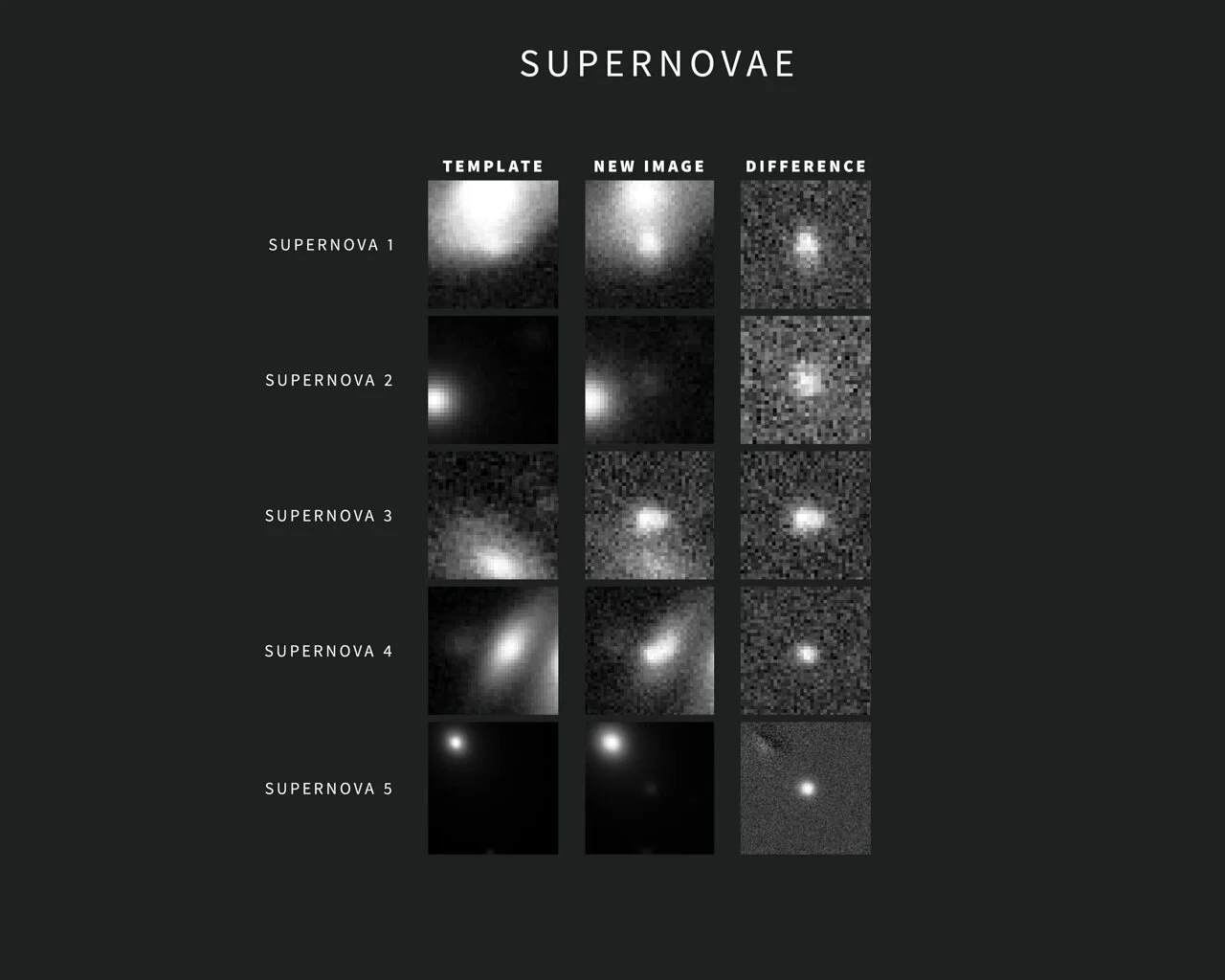
NSF–DOE Vera C. Rubin Observatory/NOIRLab/SLAC/AURA Acknowledgement: Alert images with classifications provided by ALeRCE and Lasair.
Rubin is already making a difference to the study of supernovae. “Even with the current alert stream, we have identified transients that would be completely missed from any other survey operated until today, which is amazing,” says Georgios Dimitriadis (University of Lancaster, UK). “I am super excited to discover, observe, and analyze Type Ia supernovae from Rubin.”
This first batch of alerts is the trickle before the flood. Once the Vera C. Rubin Observatory is in full swing, it is not hyperbole to say that astronomy may never be the same again.
About Colin Stuart
Colin Stuart (@colinstuartspace) is an astronomy author and tutor. He also runs a free online astronomy club.


Comments
Blaine Dickey
March 4, 2026 at 1:18 pm
Thank you for this informative article. It would be helpful if Sky and Telescope would publish several articles about how amateur astronomers might access and use the data brokers.
You must be logged in to post a comment.
Mark-Spearman
March 6, 2026 at 10:31 pm
Could AAVSO observers do some of the follow-up?
You must be logged in to post a comment.
You must be logged in to post a comment.