 SUNSET:

 4
4What’s an amateur astronomer supposed to do if she’s afraid of the dark? Be brave!
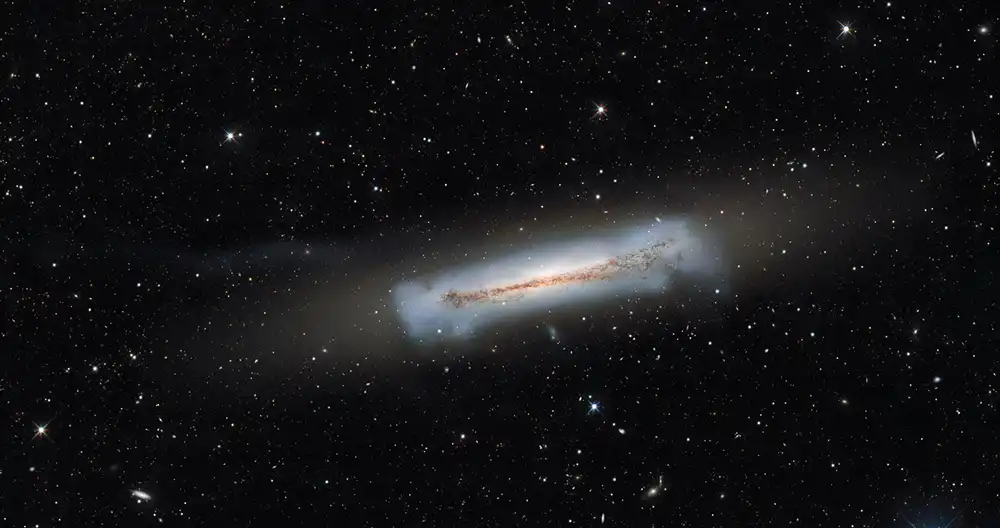
CTIO / NOIRLab / DOE / NSF / AURA / T. A. Rector / M. Zamani / D. de Martin
There’s a line of poetry that has become a nighttime mantra for me: “I have loved the stars too fondly to be fearful of the night.” Often used as an epitaph, these words come from “The Old Astronomer” by 19th-century English poet Sarah Williams. Although the poem concerns unfinished work and imminent death, I take comfort in the line’s haunting beauty.
Because I’m afraid of the dark.
My uneasiness is far from a full-blown phobia, but it’s deuced inconvenient for an amateur astronomer. We are vulnerable in the dark, when vision — my primary sense — is diminished. At night, I feel more prey than predator. Inside the house, I’m anxious about surprise insects and stepping on the cat; outdoors, I fear unlikely brigands, phantom whatsits, and suburban wildlife.
But the stars call to me, and I head outside anyway. Miraculously, I have survived night after night.
During the pandemic a few neighbors did renovation work, and our yard became a “rat superhighway” as the rodents escaped under cover of darkness toward the park down the street. I did not have nerves of steel as they skittered past my feet, mere inches from where I sat with my telescope. I frequently jumped up, yelled, and whipped my flashlight around the yard like a shield. As soon as I sat down again to star-hop to my next target, another wave ran past. One brave rat darted across the top of my shoe.
After the Summer of Rats came the all-season raccoons. There was the night I was out in the zero-gravity chair and mistook a roaming raccoon for the neighbor’s cat and tried to pet it. More often I encountered groups of them growling from the shadows, their eyes glowing in the beam of my red light. Those nights, I dashed inside as quickly as I could, sometimes leaving my chair or backpack to sit outside overnight.
We’ve had less of a raccoon problem since we adopted Jax, our canine gentle giant. In warm weather, Jax comes outside with me, and most critters leave us alone. But it’s unnerving when the coyotes start to sing from the surrounding woods — especially when their voices come from opposite directions and I realize I’m between them. We haven’t yet come face to face — because I speedily pack up my gear and the dog and try not to trip on my tripod as I high-tail it back inside.
But aside from all of that, I prefer the hush and stillness of night, when I can better hear myself think, rather than the frenetic daylight hours. I love the songs of the frogs in darkness. I enjoy those small hours when it seems I’m the only person awake for miles around, when it’s just me and the sky — and sometimes a dog snoring on an outdoor bed.
Because the night is when I can see the stars.
I’m far from the only astronomer, amateur or otherwise, who’s afraid of the dark. I’d argue this makes our shared hobby all the more meaningful, because we choose to be brave. As the Sun goes down, we prepare for our cosmic vigils with planning what we’ll observe, dousing ourselves with bug spray, choosing our instruments, and charging our devices. And then we open the door, face our fears, and step out into the darkness.
“I have loved the stars too fondly to be fearful of the night,” I murmur when I stand outside alone long after sunset, a touchstone of reassurance and wonder. I am not truly in danger, though the dark puts my primitive brain on high alert. The thumps of apples falling from our tree startle me. I talk to the creatures I cannot see, assuring them that if they leave me alone, I will extend them the same courtesy. When I can, I move my chair and equipment to give them a wider berth. I turn my attention again skyward, and the stars overpower my anxiety.
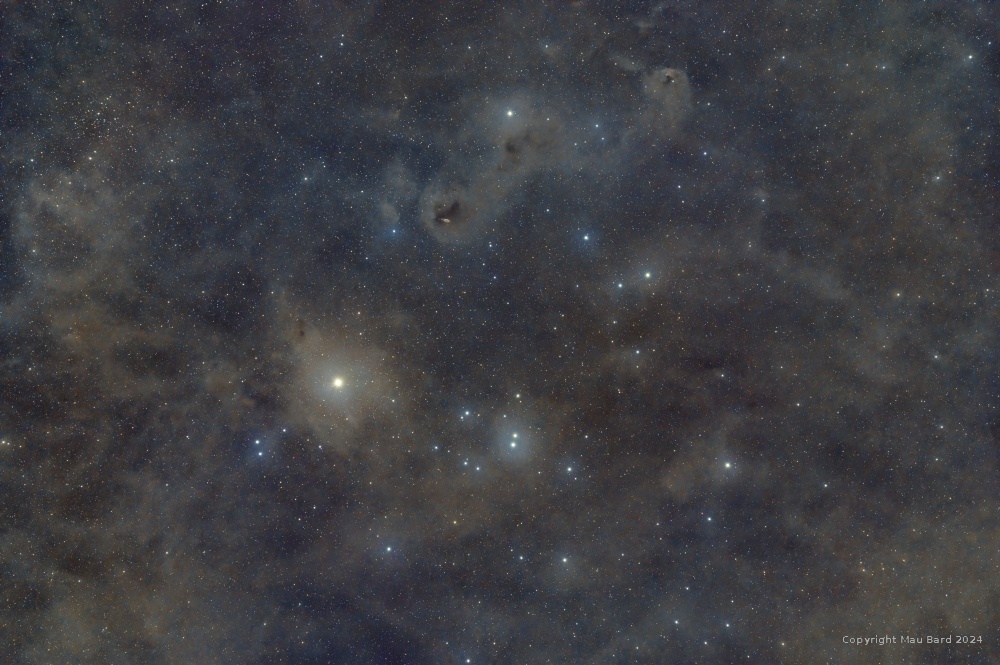
Other nights, fear gets the better of me. Not long ago, I was setting up to image the Little Scorpion Cluster (NGC 1342) in Perseus when something scurried nearby. I tried to ignore it. Then it scurried closer. “Nope!” I exclaimed in a firm voice and bolted back inside. Whatever small creature was scuttling about in the ferns, I was happy to give it the run of the patio.
So far, I have not encountered poltergeists, roving bands of yetis, or non-raccoon bandits, but I flinch at every unexpected noise until I can lose myself in observation. The next time I feel spooked, perhaps I can soothe my nerves with a view of faraway NGC 3628 in Leo — also called “Sarah’s Galaxy” for the poet who so eloquently wrote:
“Though my soul may set in darkness, it will rise in perfect light;
I have loved the stars too fondly to be fearful of the night.”


Comments
Howard-Banich
April 4, 2025 at 3:10 pm
Me too - being afraid in the dark can really suck sometimes. But going out at night anyway and catching brief glimpses of the near and far universe usually reminds me that I'm safe. However, there's often an unexplained noise that unnerves me, and just like you I shine my light around and talk to whatever it was - usually the neighborhood deer pack - that I'm here and won't bother them. I'm sure they've been perfectly aware of my presence all along, but I feel better letting them know I see them too.
You must be logged in to post a comment.
Jen Willis
April 4, 2025 at 4:15 pm
Yes! I enjoyed reading your "In Focus" essay on the same topic from a couple of years back; your words made me feel better about my own nerves.
You must be logged in to post a comment.
Jeff
April 5, 2025 at 12:53 pm
Great article.
For me, the worst part is that short period waiting for my eyes to dark adapt, and then the sense of anxiety kicks - is that a sabre-tooth tiger lurking behind the hedge, or is it just next door’s cat.
Like you though, the desire to see the wonders of the night sky overrides my fear and anxiety. That is, right up to the point where I’m about to step back inside to the safety of warmth and light, and then I wonder - is some dark entity going to follow me in?!
If I think I’m going to be going out observing, then I make sure I don’t watch any horror movies in the hours beforehand.
You must be logged in to post a comment.
Jen Willis
April 7, 2025 at 12:06 pm
Horror movies are for daylight hours only!
My grandmother taught me a trick for adaptation when moving abruptly from lit to dark conditions: close your eyes tight for ten seconds, then open them for slightly better night vision. It's not perfect, but it helps.
You must be logged in to post a comment.
You must be logged in to post a comment.