 SUNSET:

 3
3After more than a decade in space, the European Gaia spacecraft will end its observations this week. Astronomers are still busy preparing final data blasts.

ESA / Gaia / DPAC; CC BY-SA 3.0 IGO. Acknowledgement: A. Moitinho.
After more than a decade in space, the European Space Agency's Gaia observatory will end its observations this week, while astronomers are preparing a final data blast.
Technical troubles, a failed transponder, and micrometeorites and solar storms have not stopped Gaia from becoming one of the most successful space observatories in history. But now, after more than a decade space, the European Space Agency (ESA) astrometry observatory is on its last leg: The nitrogen-gas supply — used to maintain the spacecraft’s position and spin rate — is almost used up. On January 15th, Gaia’s data-gathering days come to an end. As soon as the last batch of data has been downloaded and a series of technical tests completed, probably around the end of March, ESA’s engineers will shut the spacecraft down for good.
Seeing the mission come to an end is hard, admits Carme Jordi (Barcelona University), who has been on the project since the 1990s: “Gaia is a bit like our scientific child,” she says. “You develop a concept, compete with other missions, get it approved, constructed, launched, commissioned, operate it, process the data, do the science... All this takes decades, a life!”

ESA
The effort has surely paid off: Gaia’s legacy is a giant catalog that, once completed, will contain positions, brightness, color, and distances of about 2 billion stars. Their positions will be known down to microarcsecond precision — a gold standard for the next generations of astronomers to work with. “We have exceeded our expectations in terms of mission life, precision of measurements, covered science topics, and world-wide impact,” Jordi adds.
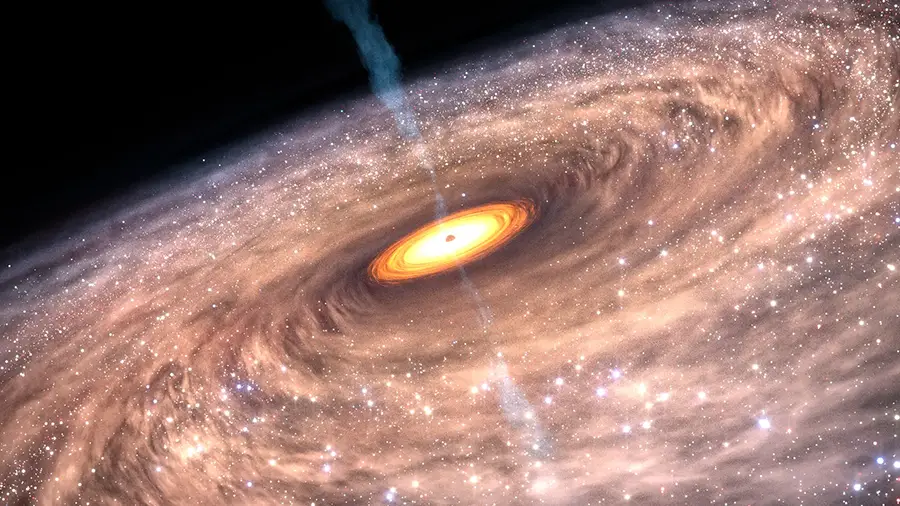
“New results based on Gaia [data] are pouring in at a rate of more than five peer-reviewed scientific publications per calendar day,” confirms Gaia project scientist Johannes Sahlmann (European Space Astronomy Center, Spain). “They cover virtually every field of astrophysical research, often with transformative impact.” Just last year, the Gaia community announced the discovery of the most massive black hole of stellar origin known in the Milky Way. Gaia’s data has also revealed 9 million variable stars, 165,000 binary systems, 360,000 white dwarfs, at least 700 open clusters and more than 150,000 asteroids.

ESA / CC BY-SA 3.0 IGO
But all results so far rely on only the first 33 months of data-taking, published in three data releases. That’s less than a third of Gaia’s mission duration. Up next is Gaia's fourth data release, which will cover 5.5 years. Expected in 2026, it will bring major improvements, Sahlmann promises: “In addition to the longer timespan, instrument calibrations and processing algorithms have been much improved.” One of the treats to come will be a large exoplanet candidate catalog, as well as positions, magnitudes, and spectra for the full catalog of 2 billion stars and other sources.
Around 2030, all 10.5 years of data collected between July 2014 and January 2025 will be published as Gaia’s fifth and final data release. “The times for Gaia to shine even brighter are still ahead of us!” Sahlmann says.
Engineering Tests Before the End
The spacecraft isn’t quite done yet, though. Before leaving for retirement, Gaia will undergo some technical tests. The most crucial of these concerns the angle separating Gaia’s twin telescopes as they swept across the sky, following the spacecraft’s 6-hour rotation. This angle measures about 106.5° and had to be kept constant to microarcsecond precision to reach the desired star position accuracy. “It was quite a shock when we learned, very soon after the launch, that [this] angle varied by a whole milliarcsecond, 100 times more than specification,” recalls Lennart Lindegren (Lund University, Sweden).
Lindegren and his colleagues were able to use an on-board laser system to correct this, but the root cause was never uncovered. “This is worrying because Gaia’s design relied on computer simulations of how the optical and mechanical parts would react to the changing conditions in space,” he adds.
Apparently, those models got something wrong. To see why, engineers will use some of the remaining nitrogen fuel to move Gaia into different angles with respect to the Sun while monitoring the angle between the two telescopes. This test would have disturbed the scientific measurements, which required a fixed solar angle of 45°, so they'll be carried out after January 15th. “I don't think the result will have a big impact on the [next two data releases], but it could be extremely important for any future space astrometry mission,” Lindegren says.
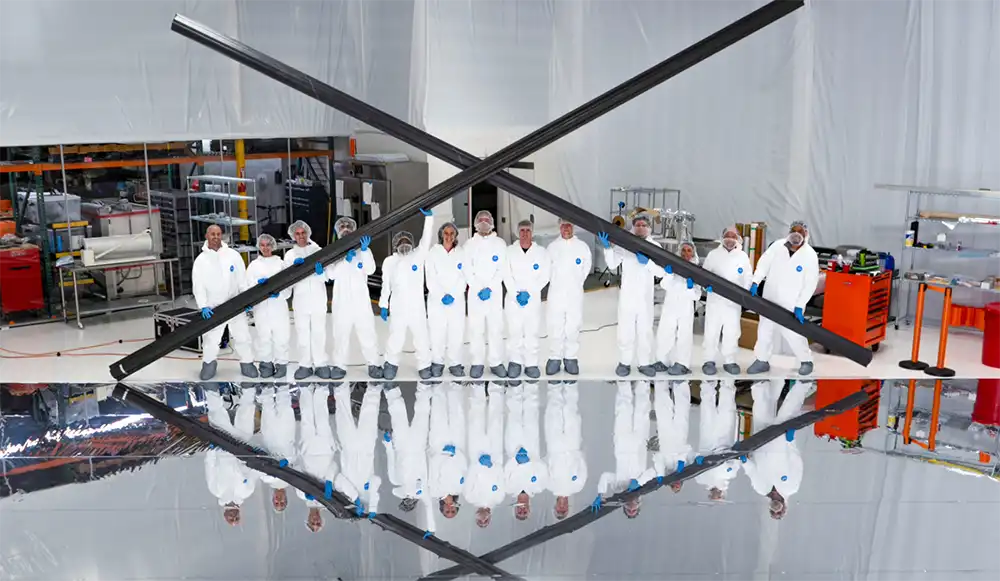
Varying the solar angle may also help solve the mystery of why Gaia appeared three magnitudes dimmer as seen from Earth than predicted, at magnitude 21 instead of 18. ESA, which tracked the satellite using reflected sunlight, worked around its unexpected faintness by using larger telescopes.
As Gaia’s 11-meter (36-foot) wide sunscreen changes its solar angle during these tests, the spacecraft should flare up to magnitude 14 – a kind of “goodbye” that would be visible in telescopes as small as 8 inches. ESA is asking the amateur community to send in magnitude and color measurements.
These engineering tests will help to improve the design of future space missions. “A successor to Gaia for near-infrared wavelengths has been put forward in ESA's Voyage 2050 planning cycle,” says Sahlmann. Dubbed GaiaNIR, it would peer through dust clouds that obscured the galactic center and other regions at visible wavelengths. It would also refresh Gaia's astrometric reference frame, dramatically increasing the accuracy of Gaia’s catalog.
“Such a successor, however, cannot be expected to operate before the middle of this century,” adds Sahlmann. Gaia’s legacy will be long-lived, for sure.



Comments
Andrew James
January 15, 2025 at 4:04 pm
A truly remarkable astronomical endeavour. That the ESA has produced such an excellent spacecraft and that the data will change our perspective of the Milky Way and the nature of the Galaxy. It is true that the data, at least after DR4 release in mid 2026 based on 66 months of data, will start a revolution for the rest of the 21st-century. DR5 will be the completion of the catalogue, which should produce better accuracy and should be published by 2030. Not only does it contains the stellar data, but it reveals much about dynamics, asteroids, cosmology and new unforeseen science. As Uwe Lammers, Gaia Mission Manager says: “Gaia will treat us with this final gift as we bid farewell, shining among the stars ahead of its well-earned retirement.” However, methinks the new gift will be more professional astronomers from the next generation people, who will have the benefits of quality data for future study and theory.
You must be logged in to post a comment.
Warren-Odom
January 17, 2025 at 5:25 pm
Among all the other uses, last year I learned Gaia data has materially aided NASA space probes such as Lucy, which is en route to visit various Trojan asteroids (those held in Jupiter's L4 and L5 regions). Coordinated groups of amateurs, traveling to occultation paths, and making accurate observations of stellar occultations by these asteroids, have greatly refined the asteroids' sizes, shapes, and orbits. Gaia's more precise locations of these stars has obviously translated into much more precise numbers for all this data, so that NASA can much better pre-program the spacecraft for optimal approach and encounter of those asteroids.
You must be logged in to post a comment.
Ted Swift
January 28, 2025 at 6:32 pm
Yes, Gaia will be spinning off (pun intended) hundreds of vital data sets that benefit fields of study that were never intentionally included in the design. Asteroid astrometry was almost an afterthought. But minor planet occultation astronomy saw, first, star location and proper motion uncertainties drop by ~2 orders of magnitude, and then with the next Data Release, the shadow path uncertainties of ~1500 asteroidsdrop dramatically. As a result, the number of positive occultation observations increased by at least a factor of 10 starting in ~2016, and observers could realistically plan to observe MUCH smaller asteroids. I can't wait for the next data releases! I especially hope we get improvements in the precision of the orbits of all the outer planets' "irregular" satellites: Occultations would give us sizes and shapes, from which we can refine albedo estimates, further improve the orbital ephemerides, etc.
You must be logged in to post a comment.
You must be logged in to post a comment.