 SUNSET:

 1
1An AI search through decades-old spacecraft images reveals that Mercury may still be alive and kicking, geologically speaking.
NASA / JHUAPL / Carnegie Institution of Washington
Mercury looks like it’s dead. From what we know, Mercury is a small husk of a planet, its proximity to the Sun leaving it blasted by radiation. Its shielding magnetic field is weak, and whatever water there once was is long gone.
What’s more, we’ve largely left this planet alone since NASA´s Messenger mission ended in 2015. So it’s no surprise planetary scientists become excited at a hint of activity on this planet’s surface.
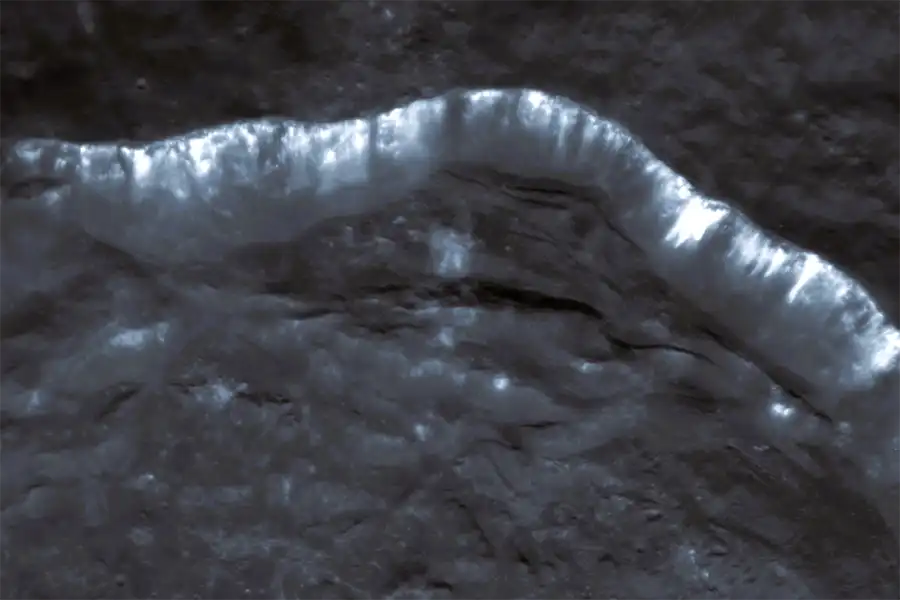
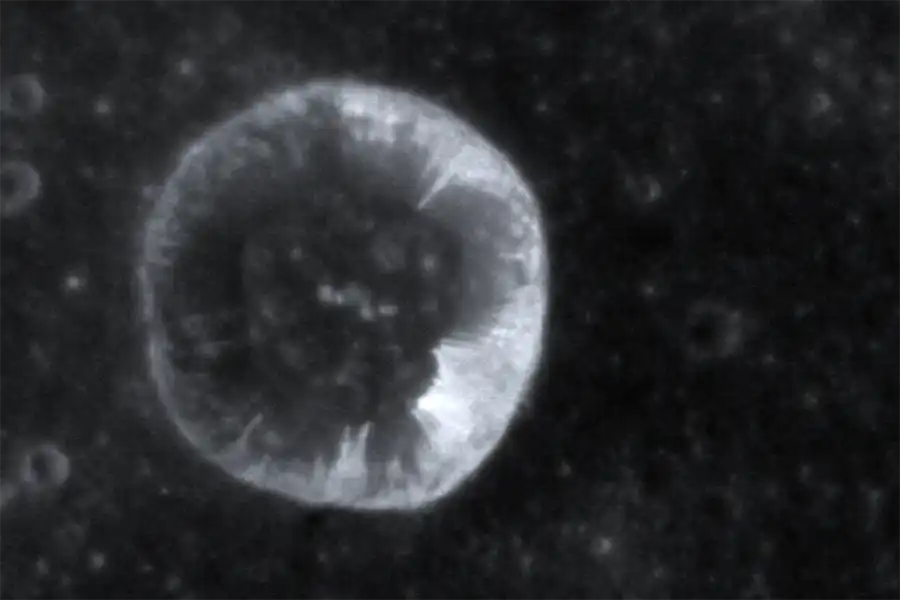
That’s exactly what a study, led by Valentin Bickel (Universty of Bern, Switzerland) offers. Using artificial intelligence (AI), Bickel’s team focused on an intriguing surface feature in the Messenger images called lineae. First described at a conference in 2019, Mercury’s lineae appear as bright, linear features, often clustered near the rims of impact craters. Their presence suggests that asteroid impacts have punctured the planet’s crust, exposing deeper layers and releasing volatiles (ices that easily turn to vapor).
NASA / JHUAPL / Carnegie Institution of Washington
Bickel and colleagues have now thoroughly examined lineae in the Messenger image archive. The researchers trained a convolutional neural network — a type of AI commonly used in image recognition — to spot these features, then let it loose on the whole dataset. The network found 402 lineae in total.
“Messenger produced thousands of images, some with very high resolution, so it’s very difficult to check them one by one with the human eye,” says Valentina Galluzzi (National Institute for Astrophysics, Italy), who wasn’t involved with the new study. “The artificial-intelligence approach is really helpful to get a global overview of these special features.”
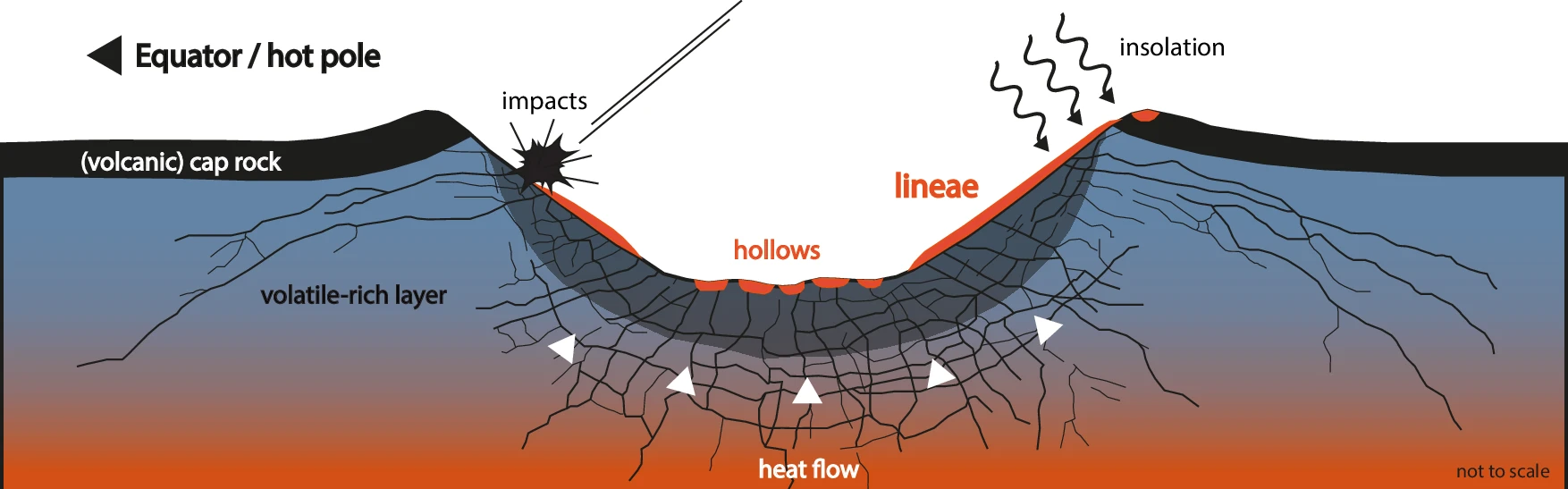
The researchers confirmed that lineae are mostly on steep, Sun-facing slopes of young impact craters. They extend from hundreds of meters to several kilometers long, and they appear deep enough to have penetrated Mercury’s upper layer, reaching volatile-rich material below. Solar heating in these exposed areas would warm trapped gases or ices, helping them escape.
Supporting this conclusion, lineae start near the upper part of crater rims, flowing downwards across the inner slopes. The impacts might fracture the crust, with cracks spreading outward from the impact as well as around it. These networks of fissures might allow volatiles from large areas beneath the crust to move up toward the surface, where they then flow laterally until they reach the steep slopes, the researchers speculate.
Bickel et al. / Communications Earth & Environment 2026 / CC BY ND 4.0
It’s still unclear what lineae themselves are made of. They could be some sort of residue, left behind by escaping fluids, or they might mark freshly exposed materials underneath, Bickel explains. Similar features have been observed in other planets and moons, such as on Mars.
It’s also unclear how quickly they form. “The big question is whether this is one swoosh and then in a few seconds this whole thing forms, or whether these grow centimeter by centimeter over decades,” Bickel says. “We don’t know.”
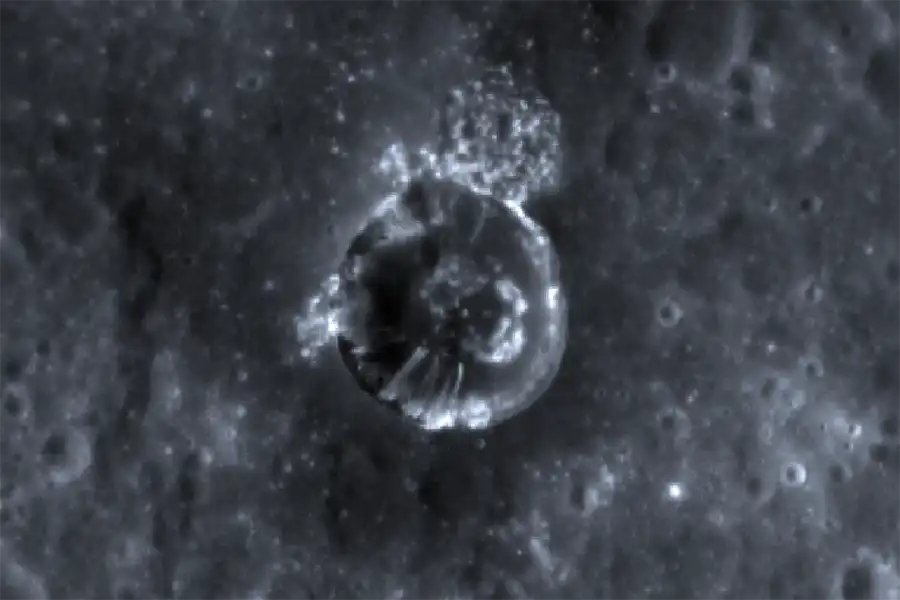
Lineae are some of the youngest features on Mercury’s surface and could be related to other seemingly young features, known as hollows. Hollows are rimless round depressions unique to Mercury and found on flat terrain. They’re also thought to form when volatiles escape from the subsurface, leading the area to collapse.
“It might just be that it's the exact same volatile and the same process, just that hollows are in flat regions and the lineae are what happens when this process occurs on a slope,” Bickel says.
Of the few lineae that Messenger imaged more than once, none changed shape between 2011 and 2015, when the spacecraft was surveying the planet. That suggests that if there’s any ongoing activity, it requires timescales longer than four years to unfold. Or, maybe changes were too subtle for Messengers’ instruments to resolve.
NASA / JHUAPL / Carnegie Institution of Washington
“I think the main take-home message from this paper is that Mercury is not dead, it’s not a fossil from 3 billion years ago,” Galluzzi says. But she adds, “This activity is due mainly to volatiles hidden somewhere in the subsurface.”
The findings are a great appetizer for BepiColombo, a joint mission between the European Space Agency, and Japan’s Aerospace Exploration Agency, currently on its final approach to Mercury. The spacecraft is expected to begin returning high-resolution images between March and April 2027, about 12 years after Messenger ended.
“The first thing we will look into is whether these landslides . . . continued moving along the slopes,” says Galluzzi, who is part of BepiColombo science team. “The second thing is whether we can find new evidence in other places that have similar characteristics but that Messenger didn’t image.”
If BepiColombo can confirm that slope lineae are actively evolving and linked to volatile loss, they could offer scientists a rare window into understanding how many volatiles the planet had to begin with. The mission will also provide some clues about Mercury’s chemical composition and the characteristics of the rock where the lineae appear. That could help researchers answer a key lingering question: Are the escaping volatiles leftovers of Mercury’s youth? Or is the planet’s interior active enough now to continue brewing such materials?
“If I knew the answer, probably I would have a paper in Nature or Science myself,” Galluzzi says. “This is the big question for the future.”
About Javier Barbuzano
Javier Barbuzano is a bilingual Spanish-English science writer and communicator. He graduated from Boston University with a master’s degree in Science Journalism. He writes about many topics, but astronomy and technology are his favorites.





Comments
Mike-Edmunds
February 6, 2026 at 9:44 pm
Why does this sounds suspiciously similar to the Martian crater streak/linaea situation? On Mars I recall the streaks were more prevalent on sunward facing slopes with higher solar insolation and the question was: are they dry rock or volatile driven? Hopefully Bepi can help can help resolve this.
You must be logged in to post a comment.
You must be logged in to post a comment.