 SUNSET:

 4
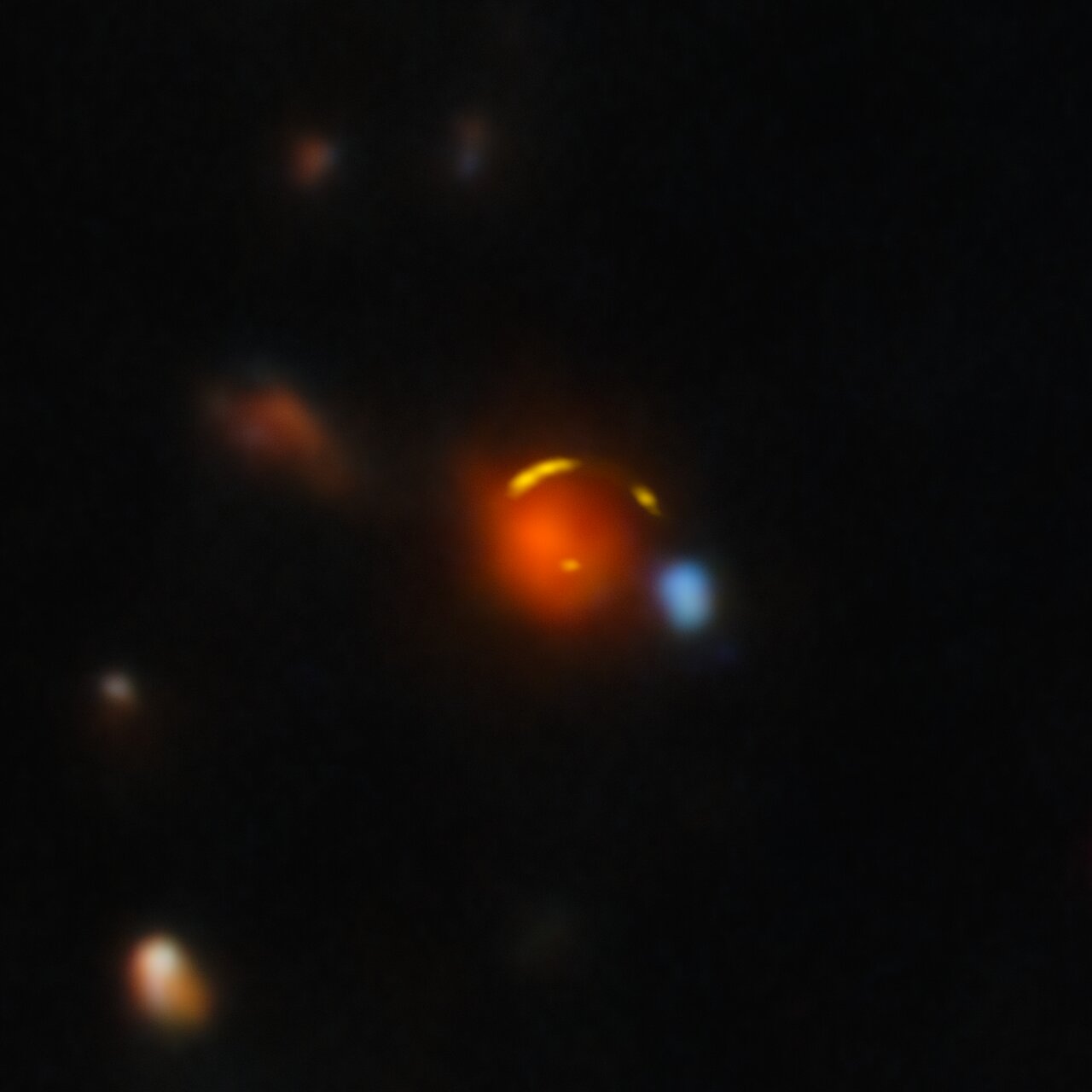
4The latest JWST images, along with archival images taken before the asteroid was even discovered, combine to refine its trajectory.
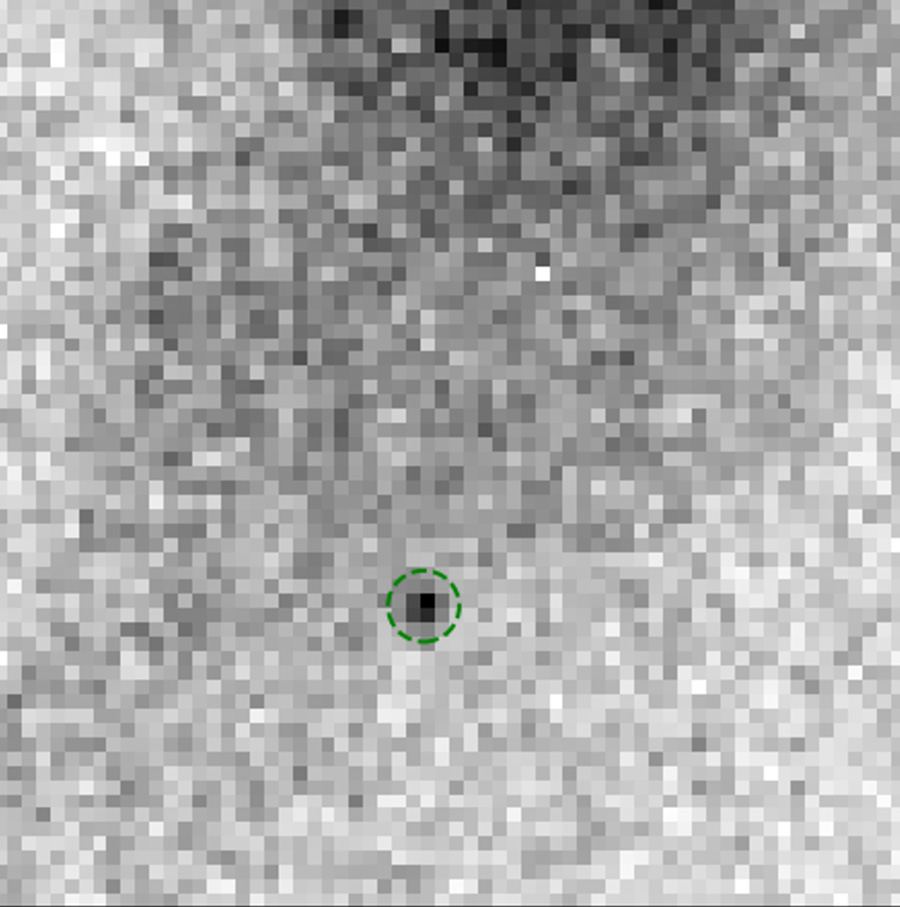
NASA / ESA / CSA / STScI / M. Micheli (ESA NEOCC)

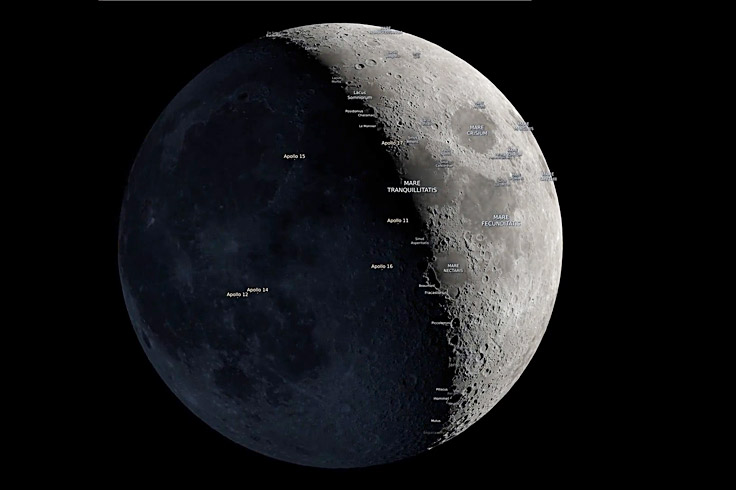
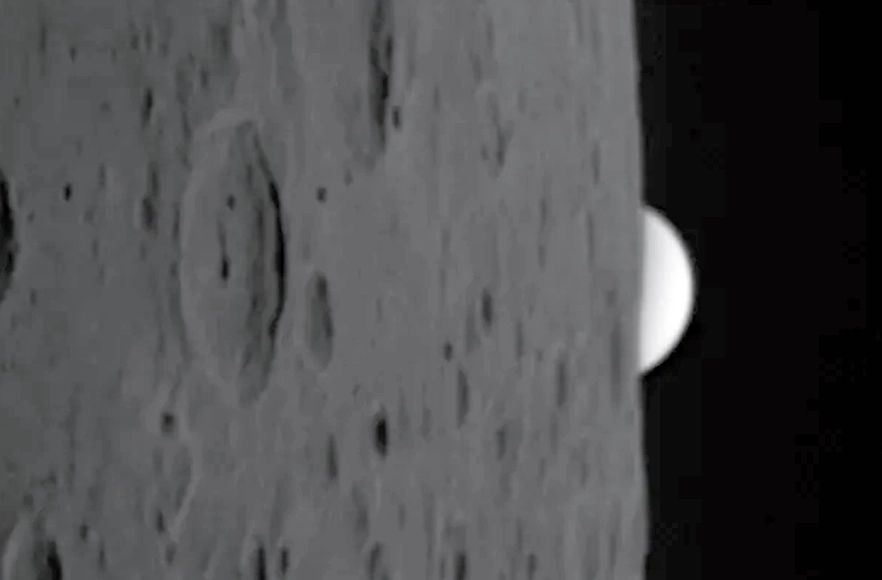
The Moon is safe from asteroid 2024 YR4 after all. While previous best estimates of its trajectory showed a 4.3% chance that it would impact the Moon in 2032, that possibility has now been clearly ruled out.
Two independent methods, one using images obtained just days ago by the James Webb Space Telescope (JWST), and one using archival images to track the object’s path all the way back to 2016, both arrived at virtually identical estimates of where the object would be at the time of its closest approach in 2032 — and it’s more than 21,000 kilometers (13,000 miles) from the lunar surface.
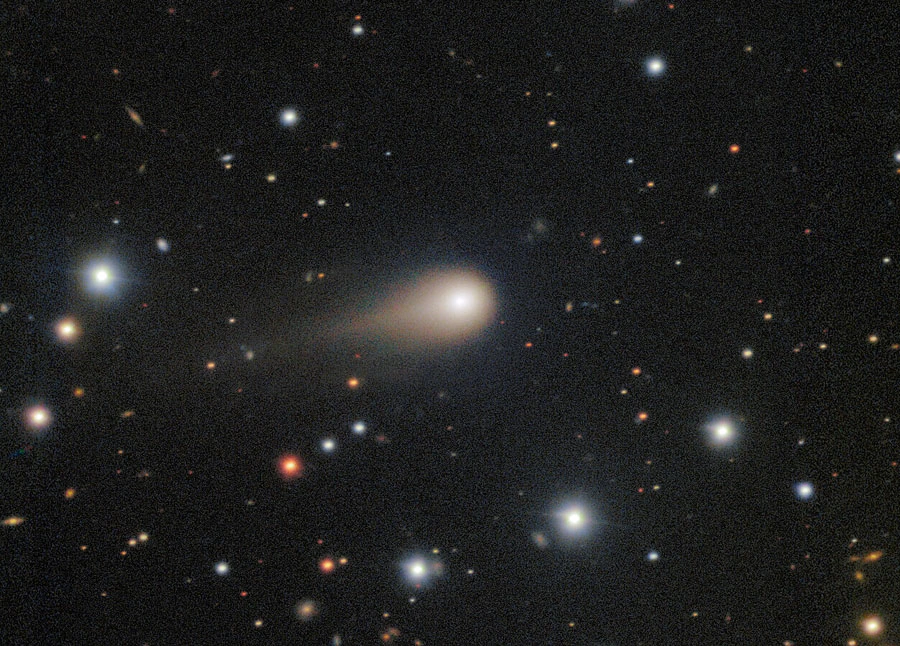
The JWST observations were taken on February 18th and again on February 26th, with five hours of exposures on each day, says Andrew Rivkin (Johns Hopkins University Applied Physics Laboratory), who led the team. Those one-hour exposures used the telescope’s near-infrared camera to reach a magnitude between 30 and 31. (The object was too faint for any of Webb’s mid-infrared cameras).
Webb’s exposures were chosen for times when the asteroid was moving close to stars previously observed by the European Space Agency’s Gaia satellite. Thanks to Gaia, those stars have very precise measured positions on the sky, Rivkin explains to Sky & Telescope, “so we could have them all in the same image at the same time and use those stars as positional standards.” That enabled the team to narrow the uncertainty in the asteroid’s trajectory at the time of closest approach by about twelve-fold. The new estimate is that on Dec, 22, 2032, the rock will miss the Moon by 21,200 km. The results were reported in the Research Notes of the AAS.
NASA / JPL Center for Near-Earth Object Studies
Meanwhile, amateur astronomers Sam Deen and Derek Lam posted research results on the astronomy arXiv preprint server last week, following a careful scouring of archival images from the Intermediate Palomar Transient Factory (IPTF) data as well as other publicly available data. He identified potential pre-discovery images of the asteroid from the asteroid’s closest approach to Earth in 2016, including four images from Palomar, two from the Subaru Telescope on Mauna Kea, Hawai’i, and one from the Cerro Tololo Inter-American Observatory in Chile.
Deen worked with Lam to show that these detections were real, despite the object’s extreme faintness. “We worked together to use the expected properties of YR4 in the data (brightness, how much it's streaked, in what direction it's streaked) to check the whole IPTF dataset,” Deen says. They were looking to see if the asteroid ought to appear in other observations but didn’t — if so, that would indicate that the potential detections they’d found were spurious. But they only found the asteroid in where it was supposed to be.
With the pre-discovery observations in hand, the duo refined the asteroid’s trajectory, showing it would miss the Moon by about 22,000 km – in close agreement with the conclusions from JWST data.
The archival search took three months, Deen says, “manually poring over even the slightest little blip in every image, before checking that against the other images and always being disappointed.”
“To be honest,” he adds, “I’d say it’s probably the hardest I’ve ever worked to hunt down a single object in my decade of archival research.” But the results were worth it, especially after seeing confirmation from the JWST observations. “It’s very validating, after spending so long worrying about this detection.”
Rivkin agrees that the two approaches are complementary. “I think the future of planetary defense depends on all sorts of people using all sorts of techniques,” he says. “So having interested and motivated amateur astronomers looking at the archives is an important piece, and having these very, very capable big space telescopes demonstrating that they can make these hard observations is another piece.”
Richard Binzel (MIT), inventor of the Torino Scale for describing the risks of impact from approaching asteroids, says that ruling out a lunar impact is not surprising, but nevertheless useful. “That was the outcome to bet on,” he tells Sky & Telescope, “but it's a relief to know for sure. We owe it to the public to do our due diligence."
Rivkin thinks the whole unfolding story of the detection, observations, and analysis of 2024 YR4’s potential for hitting Earth or the Moon provide a useful exercise, as new telescopes will make the discovery of possible impactors much more frequent.
“For the first time the question came up of, ‘Should planetary defense extend to the Moon?’” he says. Many studies have analyzed exactly what might happen in the event of an asteroid impact on Earth under a wide variety of scenarios, but the variety of possible consequences of a lunar impact — and how big such an impacting object would have to be for it to be a potential hazard to our planet or its satellites — has not been studied as much. “This is maybe going to start that conversation,” he says.



Comments
terryharan
March 6, 2026 at 4:39 pm
Andy Rivkin not Andy Revkin.
You must be logged in to post a comment.
Monica Young
March 9, 2026 at 8:46 am
Thanks, we've fixed that typo!
You must be logged in to post a comment.
Anthony Barreiro
March 8, 2026 at 12:24 am
22,000 km is about 6 times the diameter of the Moon. That's a darn close pass. If I'm doing the math right (caveat lector, and somebody who is better at trigonometry than I am please check my work), as seen from Earth at closest approach the asteroid will appear about three degrees from the Moon.
You must be logged in to post a comment.
Anthony Barreiro
March 8, 2026 at 1:51 am
The apparent separation between the asteroid and the Moon at closest approach will be 3 degrees 17 arcminutes if the asteroid is the same distance from Earth as is the Moon, less than that if the asteroid is closer to or farther from the Earth. The asteroid could pass directly behind or in front of the Moon.
You must be logged in to post a comment.
You must be logged in to post a comment.