 SUNSET:

 0
0Exploding stars have left their radioactive mark on our planet. Now scientists have found more evidence of a particularly violent event in Earth’s more ancient past.
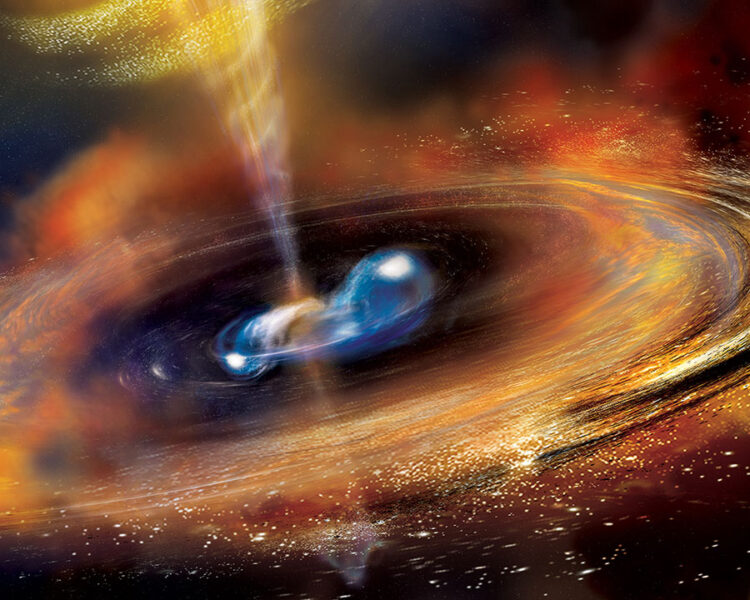
A. Simonnet (Sonoma State University) / NASA’s Goddard Space Flight Center
Do you find the thought of radioactive plutonium raining down on us alarming? Worry not: It’s such a light drizzle that physicists struggle just to prove it’s there. Now, a team of astronomers has traced the element’s history over the past 100 million years. The results show that two types of cosmic blasts have spread their ashes over Earth.
Atom heavier than hydrogen and helium are generally forged either in stars or result from their deaths, either as core-collapse supernovae or kilonovae, the merger of two neutron stars. Such explosions release radioactive nuclei, which decay over time into lighter, more stable elements (when half of a given radioactive sample remains, that is its half-life).
We know some supernova have exploded nearby thanks to an extremely fine dust of radioactive iron-60 found all over our planet and beyond: It’s in Antarctic ice cores, sediments, lunar regolith, and deep-sea ferromanganese crust (slow-growing mineral deposits on the sea floor). Iron-60 isn’t produced on Earth in natural processes, and it’s too short-lived (with a half-life of 2.6 million years) to have survived from our planet’s formation. But it’s readily produced in massive stars and spread by supernova explosions, so this is where it must come from.
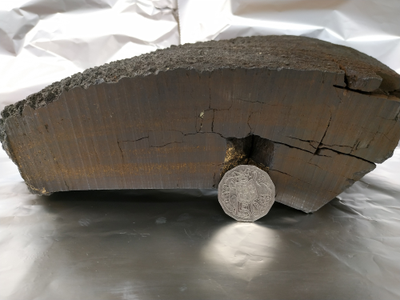
Helmholtz Zentrum Dresden Rossendorf
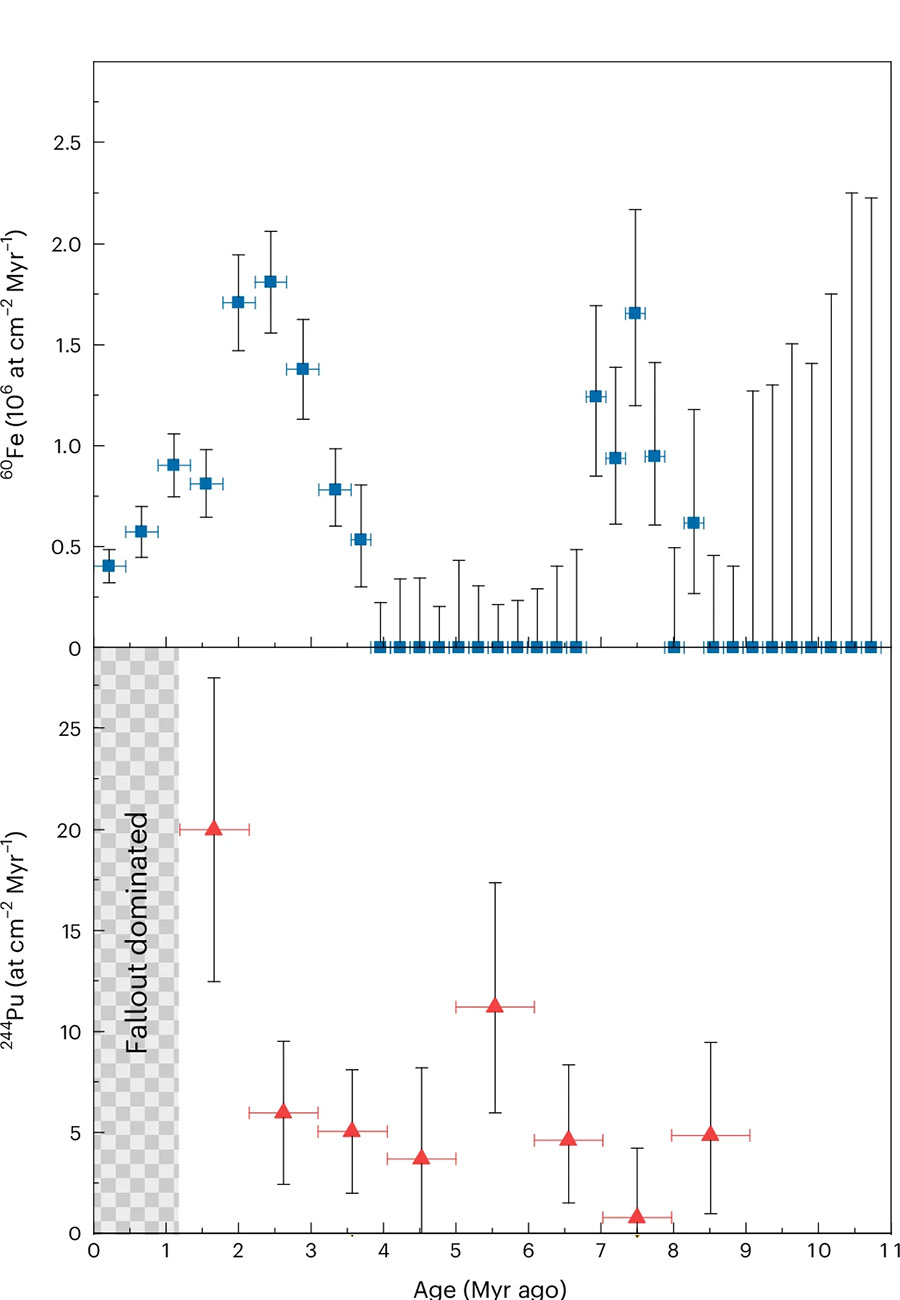
In a seminal study in 2016, a team led by Anton Wallner (then University of Vienna) showed that around 2.5 million and 7 million years ago, particularly large amounts of iron-60 fell onto Earth. Scientists think at least two supernovae went off around these times, showering us with radioactive elements from a few hundred light-years away at most. In 2019, astronomers found candidate supernova remnants from these ancient explosions.
But while nearby supernovae makes an exciting story, it might not be so cut and dry: As an alternative, Merav Opher (Boston University) and collaborators suggest the solar system’s magnetic shield was weaker than usual during these times, allowing Fe-60 to reach us more easily. The peaks thus would not indicate specific supernovae. But Wallner and his team have rejected this idea, claiming that a weak heliosphere would lead to more galactic cosmic rays producing more beryllium-10 and aluminum-26 in Earth’s atmosphere — which they did not find in their samples.
Traces of a Kilonova
Complicating matters is the 2015 detection of plutonium-244. Plutonium is a radioactive element with a much longer half-life of 81 million years, and it’s is too heavy to be produced even in the most massive stars. Physicists think it comes out of the rapid neutron capture process, or “r-process” for short. The r-process requires lots of neutrons to coalesce in a very short time, and kilonovae provide the dense, energetic environment for that to happen. Observations of recent kilonovae confirm that they produce heavy elements.
Early plutonium-244 detections were too few and far between to reveal clusters like to those found with iron-60. But now, a team including Wallner, Dominik Koll (Helmholtz-Zentrum Dresden-Rossendorf, Germany) and Michael Hotchkis (Australian Nuclear Science and Technology Organisation, Australia) used improved sampling and dating techniques to re-analyze a 1.9-kilogram (4.1-pound) piece of ferromanganese crust recovered from the bottom of the Pacific in 1976. They found 77 plutonium-244 nuclei from outer space (out of a total of 286, the rest being contamination from nuclear bomb tests in the 20th century). These atoms helped the team trace the history of the element, with a temporal resolution of about 1 million years. They then compared plutonium-244’s history to that of iron-60, publishing the results in Nature Astronomy.
The result leaves little room for interpretation: While iron-60 clearly arrived in two distinct “showers,” plutonium-244 drizzled down constantly over millions of years. This confirms what astrophysicists thought: The iron-60 and plutonium-244 cannot come from the same source, as plutonium isn’t formed in ordinary supernovae.
Koll et al. / Nature Astronomy 2026
Curium sets the clock
Pinning down the kilonova responsible for the plutonium has proven difficult. Any such event can’t have happened too recently, because there’s no trace of curium-247, another r-process element that’s supposed to be created together with plutonium. Curium-247 decays much faster than plutonium-244, with a half-life of 15.6 million years. If there’s no curium detectable, then the source must have occurred at least 100 million years ago. On the other hand, the event also cannot have occurred more than 1 billion years ago, otherwise the plutonium-244 would have also disappeared.
Over the course of 100 million years, the solar system travels halfway around the galaxy. Estimating the distance to the r-process source is therefore practically impossible.
Nonetheless, “Koll and colleagues have made the best determination of the history of interstellar plutonium-244 deposition on the Earth,” says Brian Fields (University of Illinois Urbana-Champaign), who was not part of the team. “This is an exciting new result, by a team that has delivered many exciting results.”
But Fields cautions that the abundance of radioactive elements in the r-process isn’t nailed down just yet. “Another possibility is that curium was made much less abundantly than expected,” he says. “This would give us unique new insight into the origin of the heaviest elements.”
There are still big gaps in the history, though. Koll’s team’s measurements don’t go further back than 10 million years, which is the limit set by iron-60’s relatively short half-life . Plutonium-244 last much longer but counting its few nuclei pushes our current technological limits.
But Koll is confident his team will eventually be able to map out the history of ancient Earth: “We have plans to go back to about 25 million years with crust dating,” he says, “and several hundred million years with lunar samples.” The team also wants to analyze soil samples from major extinction events, like the one that killed two-thirds of all lifeforms 360 million years ago, during the late Devonian. If an even closer kilonova were responsible for that event, it, too, might show up in our ancient soil.






Comments
You must be logged in to post a comment.