 SUNSET:

 0
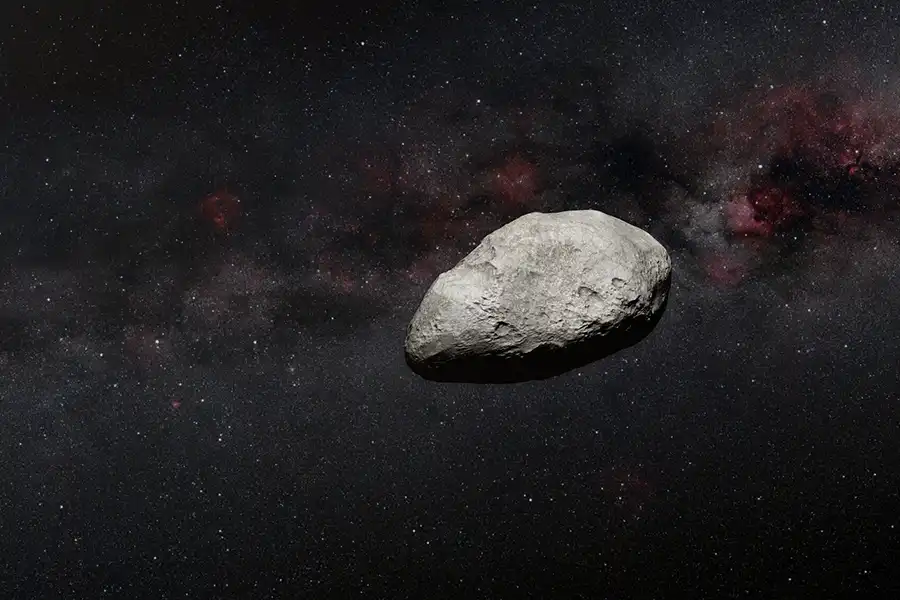
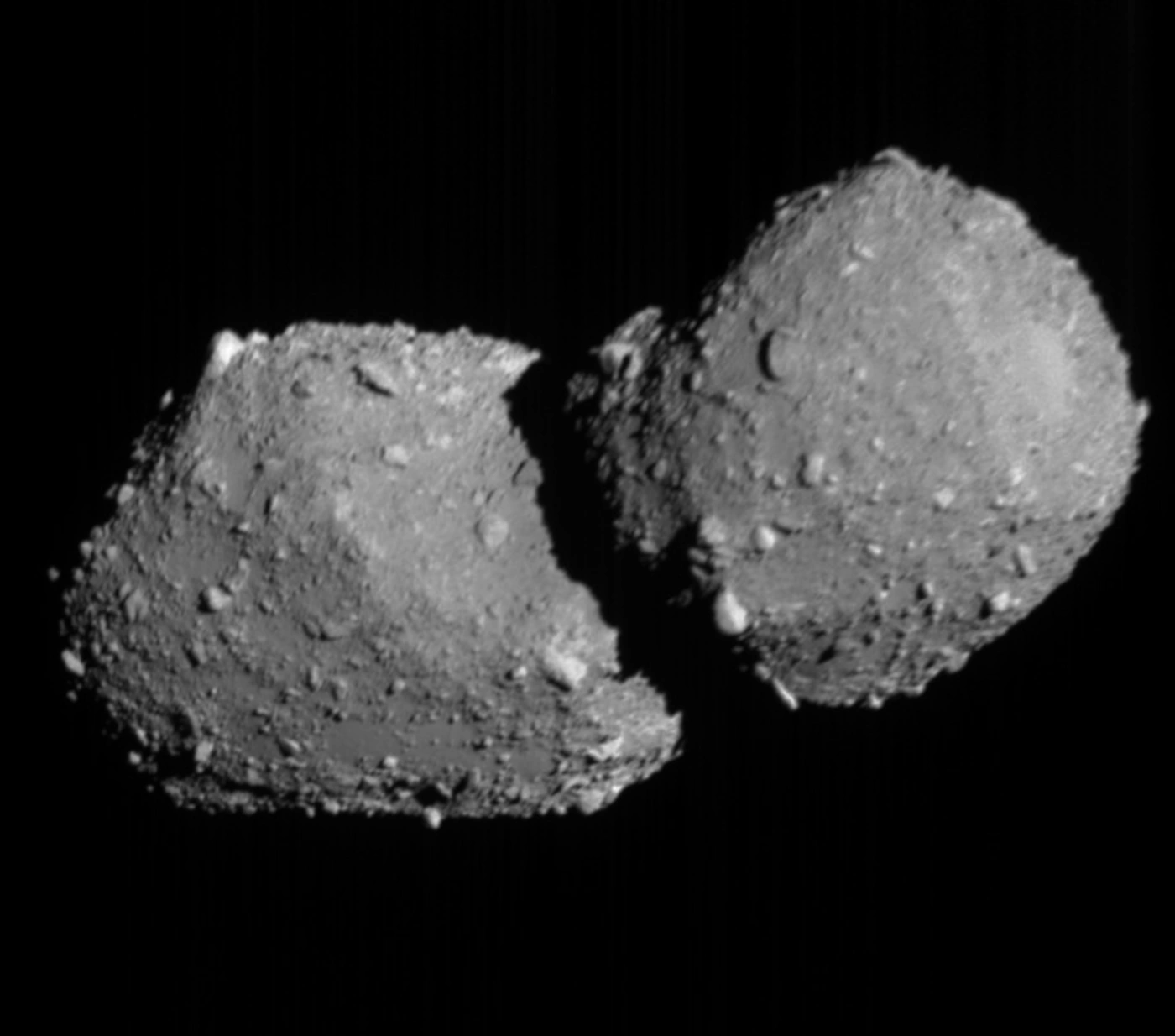
0The fast spin of small near-Earth asteroids suggests scientists need to revise their ideas about what holds these rocky bodies together.
N. Bartmann (ESA / Webb) / ESO / M. Kornmesser and S. Brunier, N. Risinger (skysurvey.org)
All asteroids rotate. Some carry the imprint of their last collision, and all are touched by the Sun. But there are limits — an asteroid spinning too quickly can break itself apart when it crosses the so-called spin barrier. Asteroids that exceed that 2.2-hour boundary are classified as fast rotators.
"It's difficult to find anything larger than a few kilometers rotating faster than two hours," Miguel Alarcon (Institute of Astrophysics of the Canary Islands, Spain), said last month at the joint meeting of the Europlanet Science Congress and the Division for Planetary Science. To see if the same is true for smaller objects, Alarcon and his colleagues used the Two-meter Twin Telescope (TTT) at Teide Observatory in Tenerife, Spain, to map the near-Earth asteroid population.
Over nearly two years, Alarcon and his colleagues observed 142 near-Earth asteroids. Their research, as yet unpublished but presented at the recent conference, reveals that 79% of the asteroids spanning less than 140 meters (460 feet) across – roughly the height of Egypt's Great Pyramid – are fast rotators. That fraction is even higher for smaller objects — 93% of asteroids smaller than 25 meters across are super-fast rotators, completing a rotation in less than 10 minutes. The fastest object the team spotted, 2025 KS1, completes a turn every 8 seconds.
What Makes Asteroids Spin?
The primary accelerator of asteroid rotation is the Sun, thanks to a process known as the YORP effect. As sunlight warms the surface of the rocky body, and the body emits its own thermal radiation, there’s an ever-so-gentle push that increases the rotation over time. Past studies revealed that sunlight is the predominant propeller of fast-rotating asteroids, pushing them beyond the spin barrier.
But the Sun isn't the only thing affecting how an asteroid turns. Collisions and interactions with a planet can cause many small objects to tumble chaotically. Most bodies in space spin around a single principal axis, like a perfect top. But tumblers are rotating around multiple axes, wobbling as they turn. The fastest of these is 2025 FB8, which Alarcon said is “the smallest and fastest rotating tumbler ever reported.” Its principal rotation period is 1.18 minutes.
If an asteroid spins fast enough, it can shed material from its surface, much like a child risks falling off a rapid merry-go-round. Spin too fast, and an asteroid can literally tear itself apart. But what and when it sheds depends on what the asteroid is made of and how it’s constructed.
Asteroids larger than 1 kilometer are typically weak rubble piles, loose collections of boulders and rocks bound together by gravity rather than material strength. Smaller objects, on the other hand, are more likely to be a single structure.
According to Alarcon, this difference means that asteroids larger than 1 kilometer start to break apart with a rotation of around 2.2 hours, while a 100-meter object can spin nearly twice as fast before feeling similar effects. Imagine stacking a pile of rocks on that merry-go-round. Individual pieces will start to move outward separately, but a single rock isn’t likely to break into pieces.
Tumbling adds complexity to that equation: While any kind of asteroid can become a tumbler, solid-rock asteroids take longer to settle their spin than rubble piles. According to Alarcon, finding so many tumblers among the small-asteroid population means that scientists may not understand that process as well as they thought.
Finding Fast Rotators
NASA
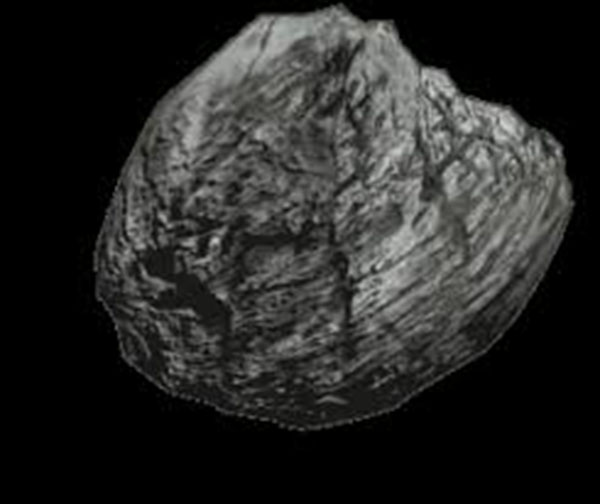
Identifying the fastest spinners can be challenging in several ways. Most professional telescopes use Charge-Coupled Device (CCD) sensors, which take several seconds to read an image. But fast rotators require shorter exposures.
“Using CCDs, we would spend more time reading the image than exposing it,” Alarcon says. That makes it difficult to determine the rotation. Instead, the TTT relies on Scientific Complementary Metal-Oxide-Semiconductor (sCMOS) sensors, which read out data much more quickly. “This allows us to take hundreds of images with almost no dead time,” he explains.
The other challenge is operational. Because so many known near-Earth asteroids are small, scientists have only a short window of time — usually just a few nights — to discover, confirm, and observe them. The TTT is a robotic telescope, with automation that Alarcon says “makes this survey highly efficient.”
Small asteroids that also tumble are even trickier to distinguish. Because they have multiple rotation periods, astronomers need to observe them continuously for a significantly longer period of time to fully characterize their rotational state. "Observing just one wobble period isn't enough to predict the following one," Alarcon says.
That means some asteroids could be tumblers in disguise, Alarcon said at the conference: “Maybe there are more than we think.”
About Nola Taylor Tillman
Nola Taylor Tillman is a freelance science journalist who specializes in writing about space and astronomy. She lives in Atlanta, Georgia with her husband and four cats. You can read more of her writing on www.astrowriter.com.



Comments
You must be logged in to post a comment.