 SUNSET:

 0
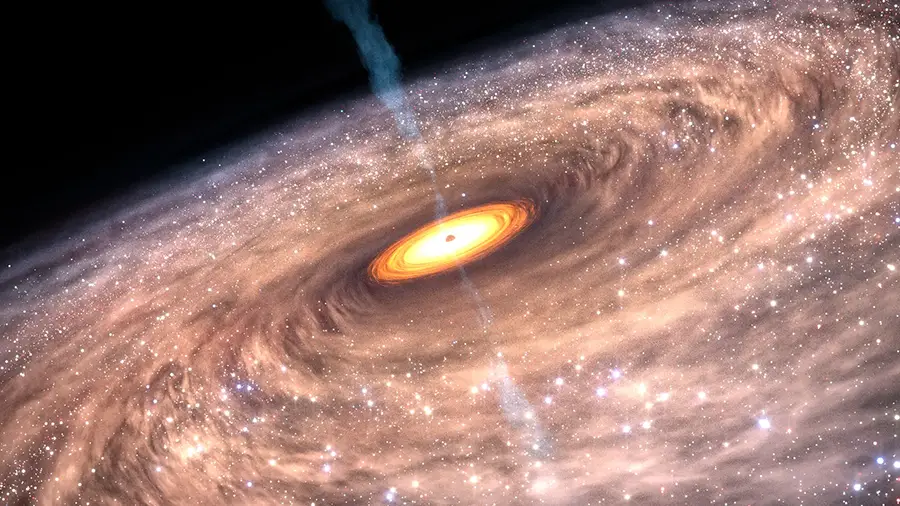
0Many less massive galaxies appear to lack something astronomers thought was ubiquitous: a central, supermassive black hole.
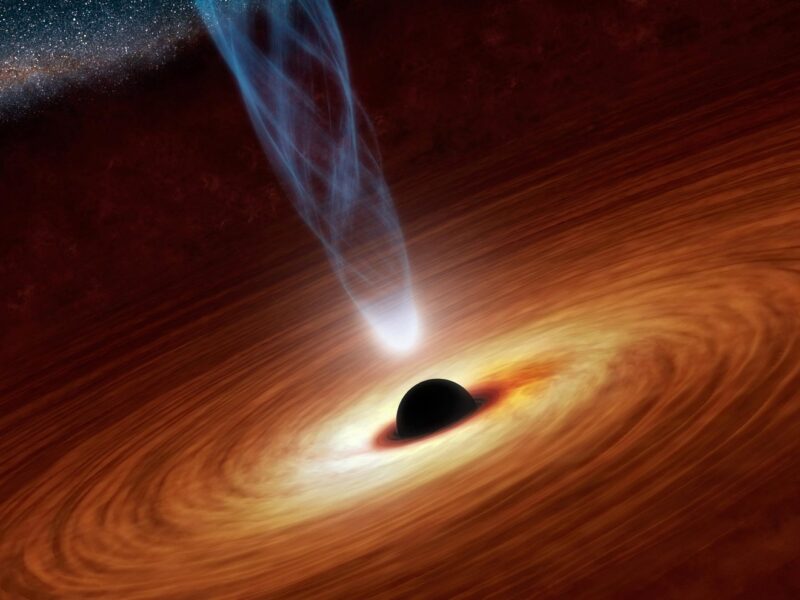
NASA / JPL
Supermassive black holes with the masses of millions or billions of Suns are thought to lurk in most galaxies. But a new study finds that not every galaxy hosts such a monstrosity — and if that finding pans out, it can tell us the origins of these behemoths.
Fiery Origins
Astronomers agree that supermassive black holes were likely born in fire. They might have been forged in fiery explosions as massive early stars went supernova. Those stellar-mass black holes would then have had to grow at furious rates early on. Alternatively, they might have originated in the collapse of huge and fiercely hot clouds of gas.
The more massive the seed, the less common supermassive black holes will be in our universe today. If they’re of stellar origin, then almost every dwarf galaxy should have one at its center. Direct-collapse behemoths, on the other hand, would be rare among lower-mass galaxies. But determining how many black holes lurk in galactic centers, even relatively nearby ones, is difficult when those entities aren’t actively drawing in gas from their surrounds.
Active black holes surround themselves in hot disks of gas that shine like beacons even from the distant universe. Even the middling black holes of dwarf galaxies can be found by this light, as long as they take in enough gas. In previous studies, teams of astronomers have sought out active black holes in hundreds of small galaxies, then used their number as a proxy for the total number of supermassive black holes.
Feeding from even a modest amount of gas, a supermassive black hole lurking at a galaxy’s center will generate X-rays that we can pick up. But so will stars paired with ordinary, stellar-mass black holes, known as X-ray binaries. Astronomers have sought the activity of supermassive black holes like skygazers seeking out meteors on a moonlit night: The brighter ones stand out.
Black Hole-less Dwarfs
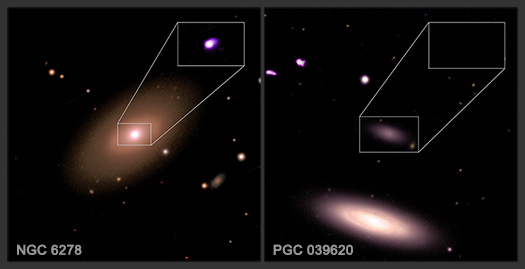
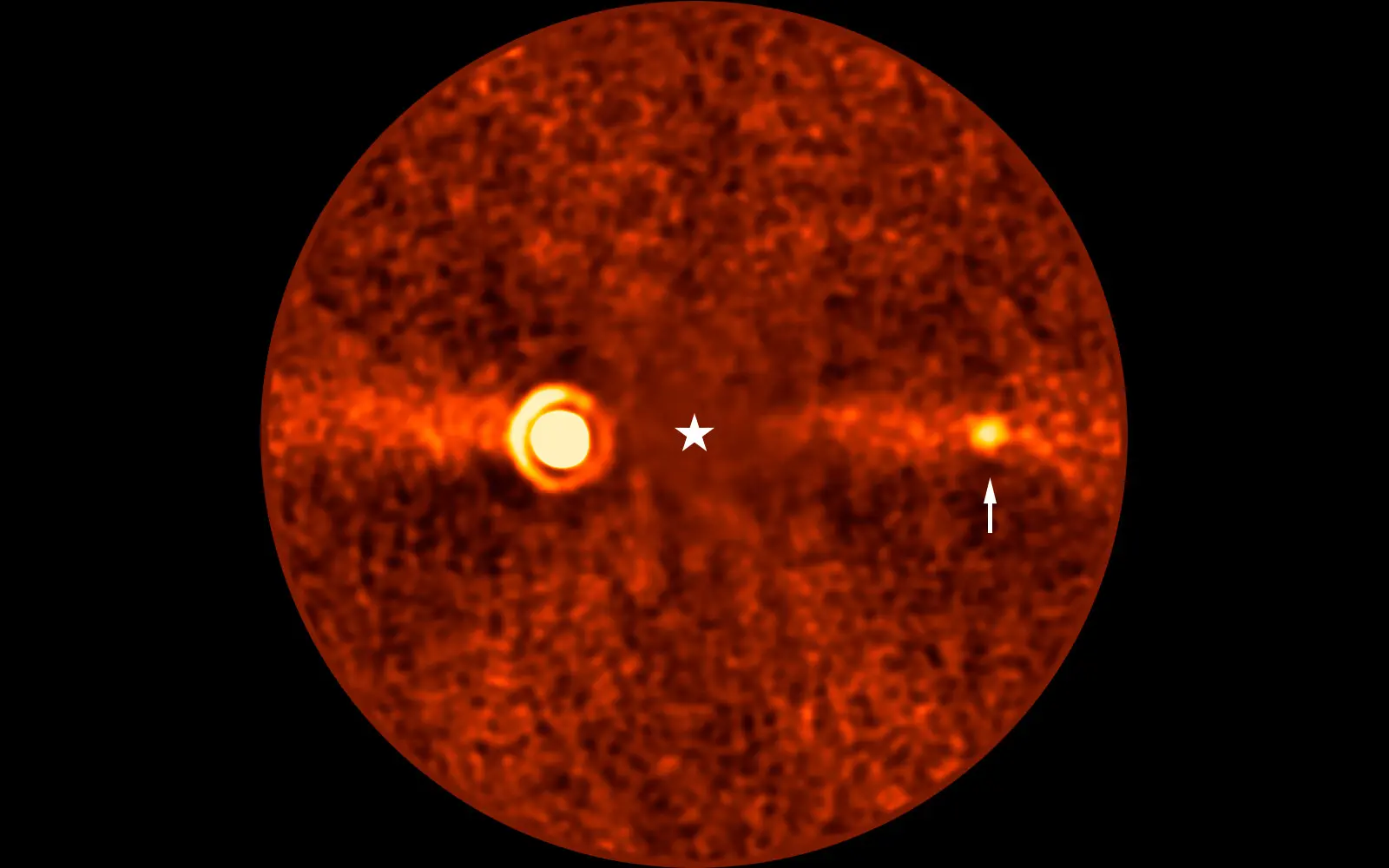
X-ray: NASA/CXC/SAO/F. Zou et al.; Optical: SDSS; Image Processing: NASA/CXC/SAO/N. Wolk
Fan Zou (University of Michigan) and colleagues take a similar tack, but without discarding galaxies from their sample. They examined 1,606 galaxies within 160 million light-years covered by two decades’ worth of observations from NASA’s Chandra X-ray Observatory. Chandra’s sharp images help separate out the black hole on the galactic center stage from the X-ray binaries in the wings. Then the team use a statistical method to infer the total fraction of black holes in galaxies of a given mass, for everything from galaxies bigger than the Milky Way down to dwarf galaxies more akin to the Milky Way’s Magellanic Cloud companions.
While supermassive black holes are indeed common in more massive galaxies, the team finds that only a third of dwarf galaxies contain a supermassive black hole — far from the ubiquity that’s expected for purely stellar origins. The result, published in the Astrophysical Journal, favors heftier scenarios for supermassive black hole origins. While recent data from the James Webb Space Telescope has also been leaning in favor of direct-collapse black hole seeds, the finding still comes as something of a surprise.
“I would not say this is expected,” says Angela Bongiorno (National Institute of Astrophysics, Italy), who was not involved in the study.
“This is in line with the direct-collapse scenario,” she adds. “However, additional measurements would help confirm this result.” For example, in smaller galaxies, supermassive black holes may not settle directly into the center. If those black holes are off-center, they might masquerade as X-ray binaries and be discarded by the current approach.
Ultimately, Bongiorno says, such studies will need to extend to far more distant galaxies, if we are to connect the supermassive black holes we see around us today to their origins in the early universe.
About Monica Young
Monica Young, a professional astronomer by training, is News Editor of Sky & Telescope.



Comments
You must be logged in to post a comment.