 SUNSET:

 5
5An alien comet will soon depart from the Sun’s glare and enter the morning sky. Get ready for the observing opportunity of a lifetime.
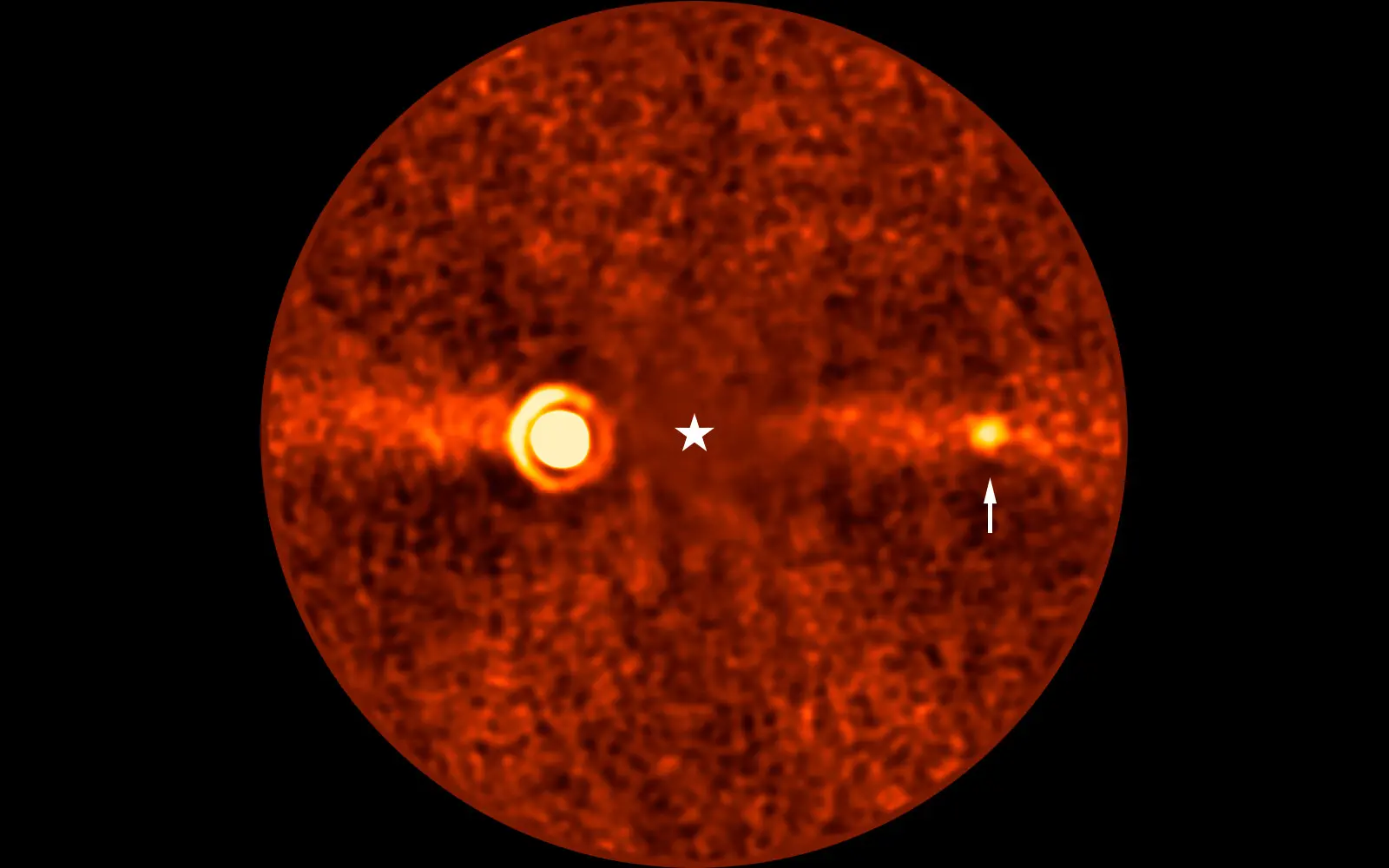
International Gemini Observatory / NOIRLab / NSF / AURA et. al
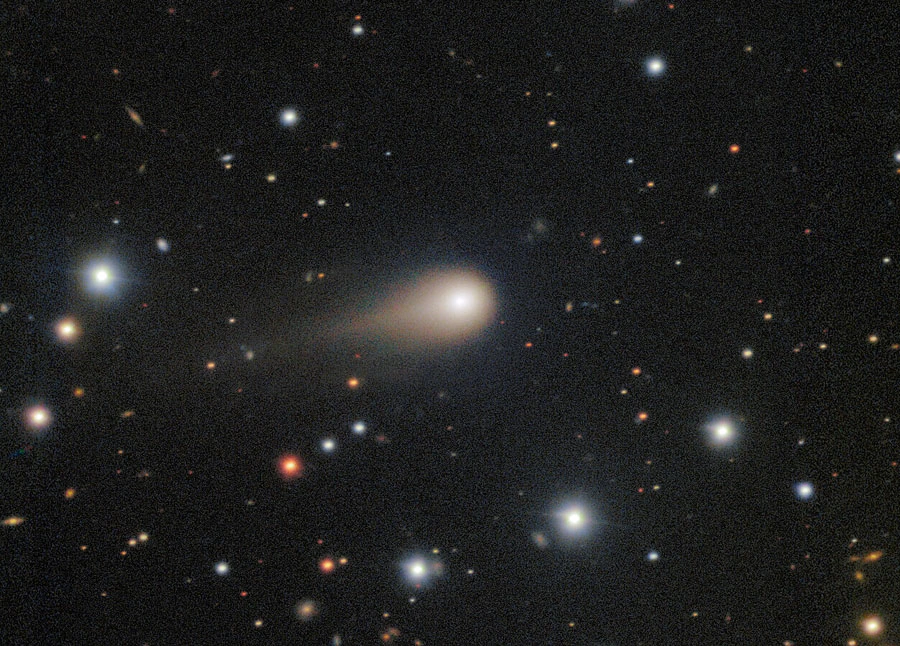
Wait a minute. What happened? Since we last visited the interstellar comet du jour, it was still a comet. A unique object to be sure, given its origin in another solar system, but it exhibited all the usual characteristics of homegrown comets, such as vaporizing ice, ion and dust tails, and a familiar fuzzy appearance. But if you believe what you read in social media, 3I/ATLAS has since become a mothership, biding its time behind the Sun before releasing mini-probes to surveil our planet or worse. NASA's in a panic, so it's said, and the agency has gone so far as to issue a warning of the comet's impending impact on our hapless planet.
My life must be pretty humdrum because all I'm waiting for is a chance to observe the first interstellar comet of my lifetime. You too? Then let's leave the hype and conspiracy behind and marvel at what we do know about this unique object.
NOAA image with path by Worachate Boonplod
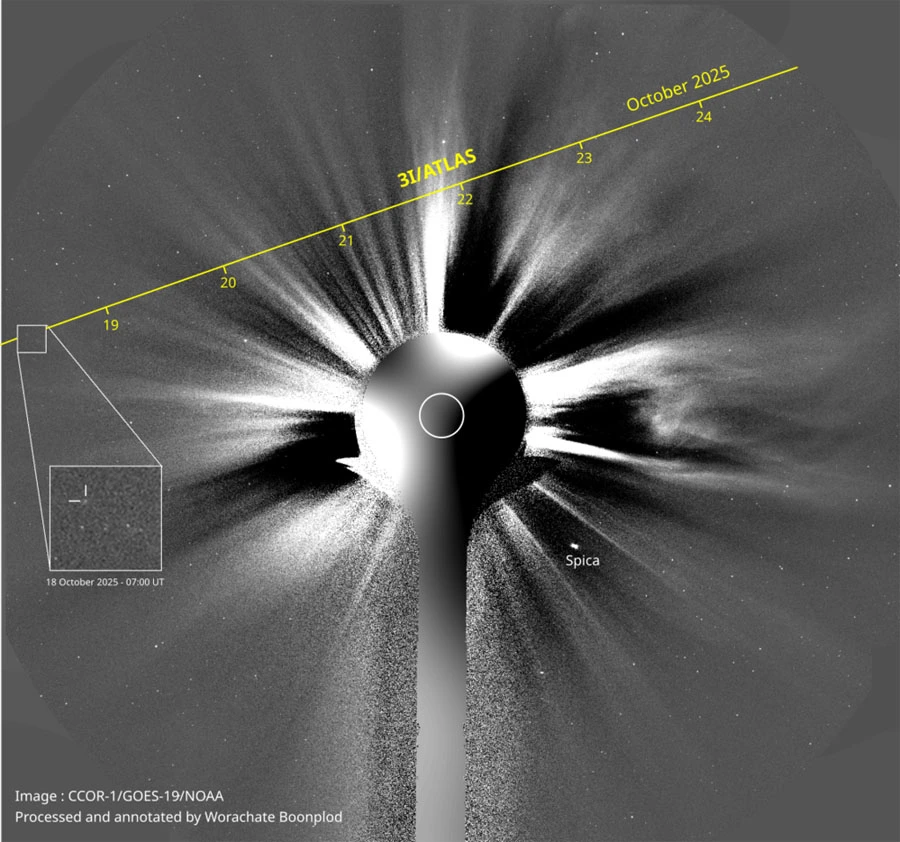
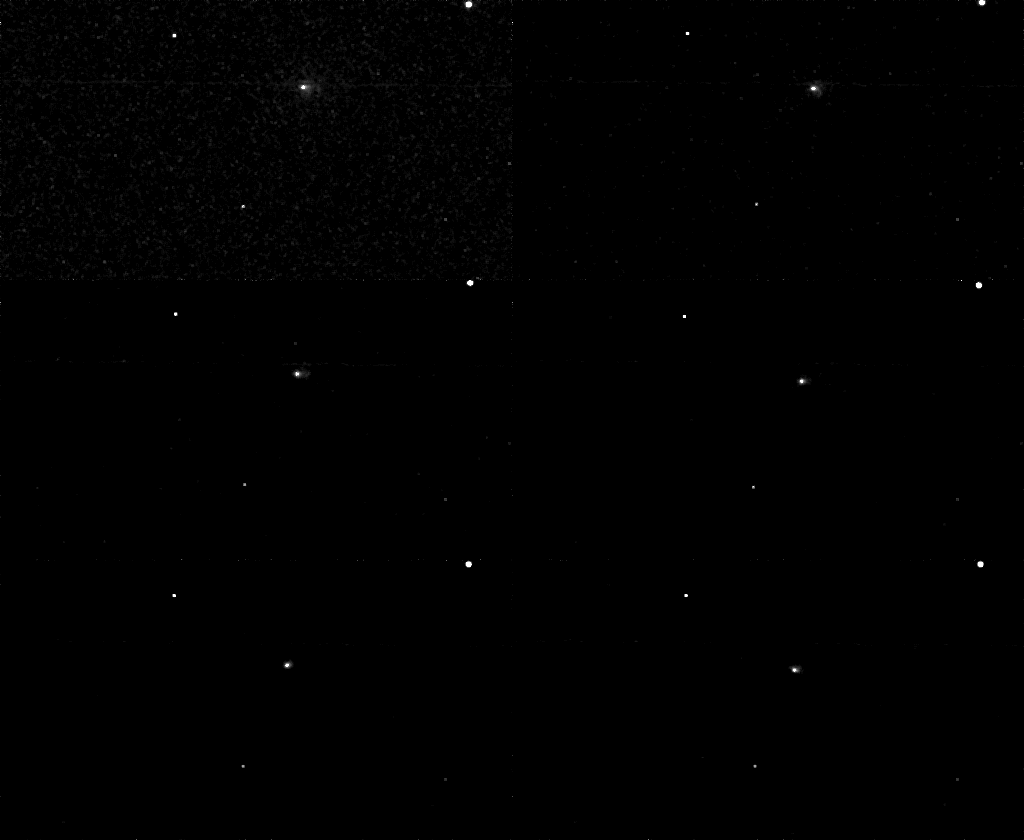
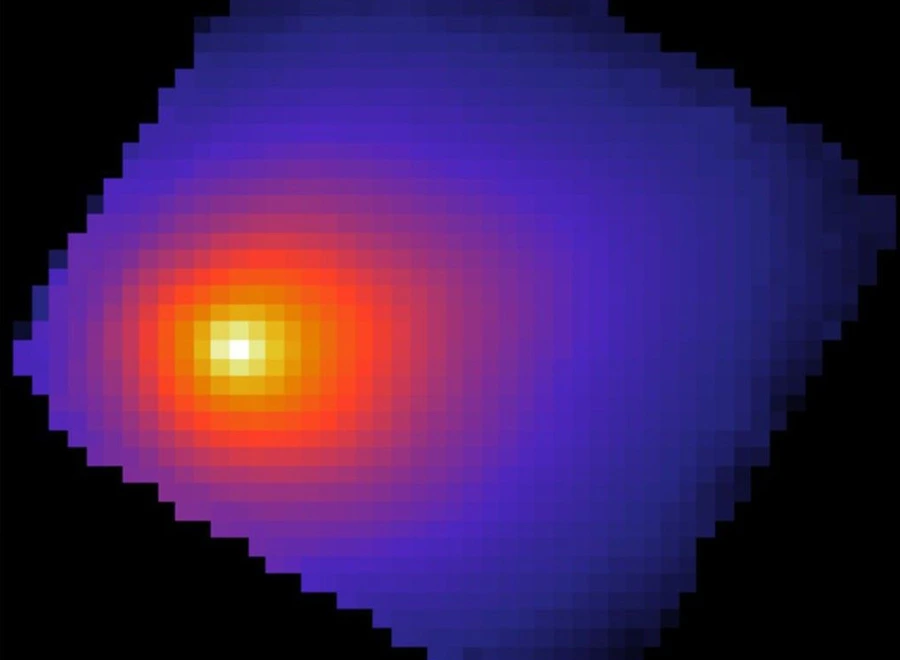
First, the comet remains visible from multiple spacecraft, so it's not hiding from us. While it's currently lost in the solar glare just 13° from the Sun as of October 29th (its perihelion date), astronomers have been tracking it with the CCOR-1 coronagraph on NOAA's GOES-19 geostationary weather satellite, the PUNCH satellite quartet, the Solar and Heliospheric Observatory (SOHO), and the STEREO-A spacecraft.
After October 29th, Comet 3I/ATLAS begins its farewell tour of our solar system. On its way back to the great beyond, it will pass closest to Earth on December 19th — at a distance of 269 million kilometers (1.80 au), or nearly twice the Earth-Sun distance. We have nothing to fear.
ESA
NASA / James Webb Space Telescope
Suprise surge
When visual observers lost sight of the comet in early October, it was glowing at magnitude 11.5. But space-based instruments indicate that it has continued to brighten — by a lot! Astronomers Qicheng Zhang (Lowell Observatory) and Karl Battams (U.S. Naval Research Laboratory) posted an article on the astronomy arXiv preprint server, where they reported on the comet's rapid brightness surge on approach to perihelion. The astronomers used data from the space-based instruments described above to extrapolate a perihelion brightness of about 9th magnitude, which is considerably brighter than originally forecast. They suspect the increase may be driven by "visible gas emissions" and that 3I will likely emerge from solar conjunction "considerably brighter than when it entered."
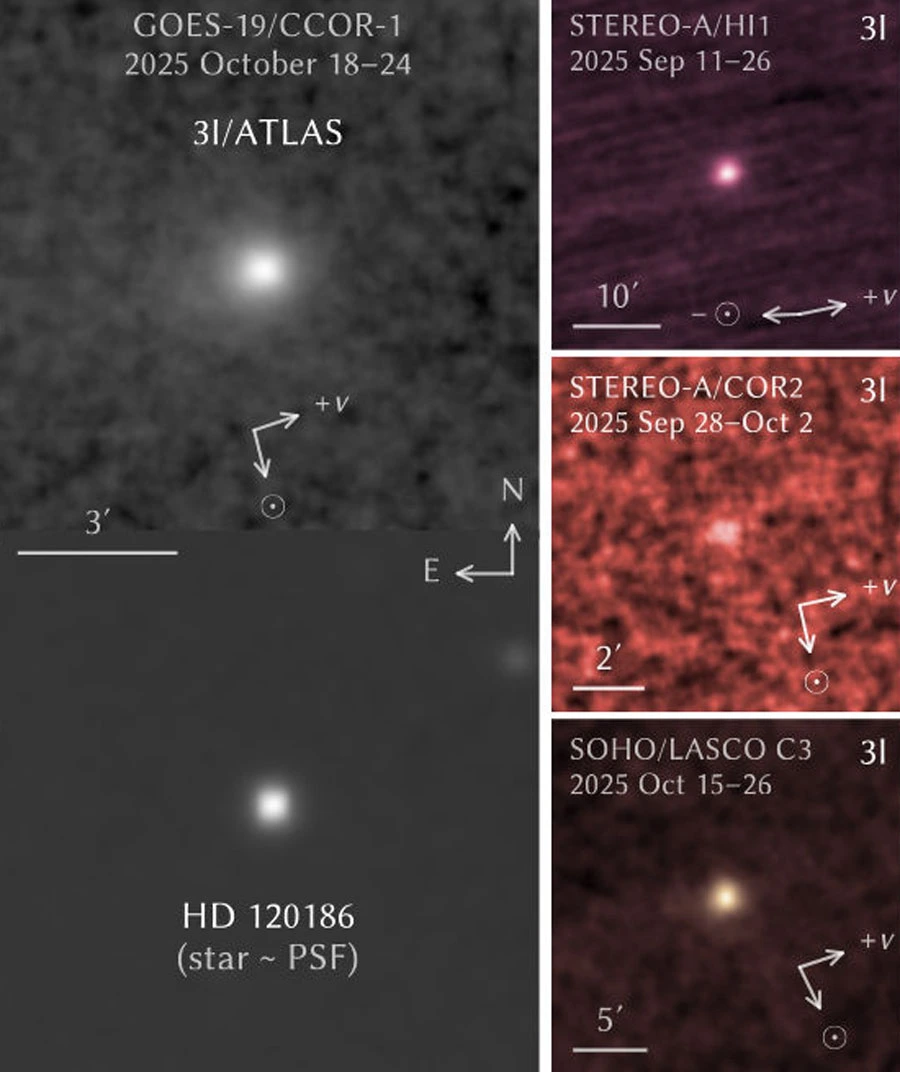
NOAA, NASA, ESA courtesy of Karl Battams and Qicheng Zhang
"The reason for 3I’s rapid brightening, which far exceeds the brightening rate of most Oort cloud comets at
similar [solar distances], remains unclear," the authors write. They suggest that the cooling effect of sublimating (vaporizing) CO2 ice, which held water-ice vaporization in check for a time as the comet approached the Sun.
That's hopeful news for amateurs. Come mid-November, when the interstellar traveler returns to view, it was originally expected to glow around magnitude 11.5. That would make it an easy target with a smart telescope but you'd need an 8-inch instrument to spot it from a dark-sky site. Hopefully, the surge will linger and smaller scopes will bag the vagabond. Pity we can't see it before then — on Halloween morning the comet will slip just 0.8° northeast of Venus. Unfortunately, the comet will only clear 5° altitude an hour before sunrise in the thick of twilight.
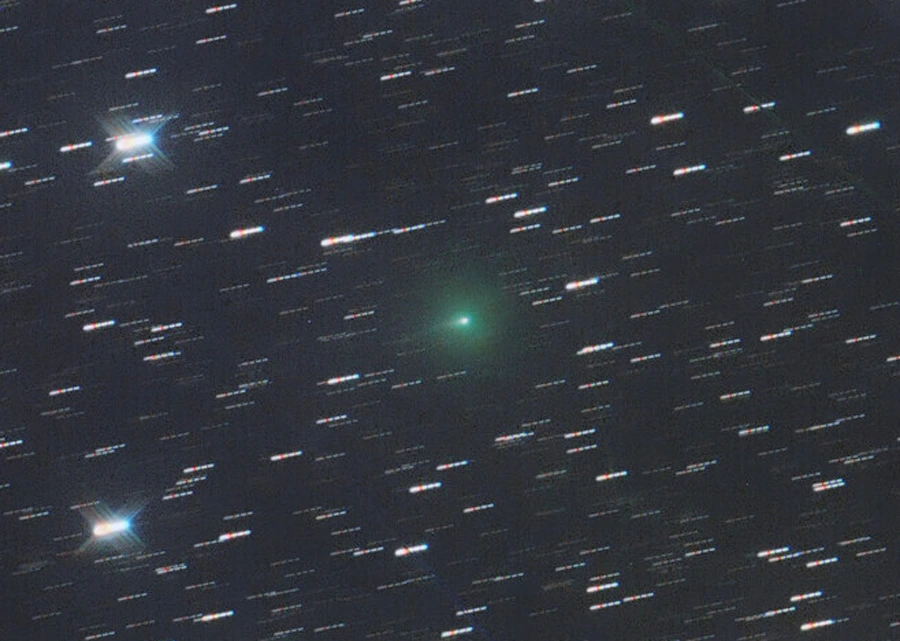
Michael Jaeger, Gerald Rhemann
Interstellar Comet 3I/ATLAS: Up, up, and away!
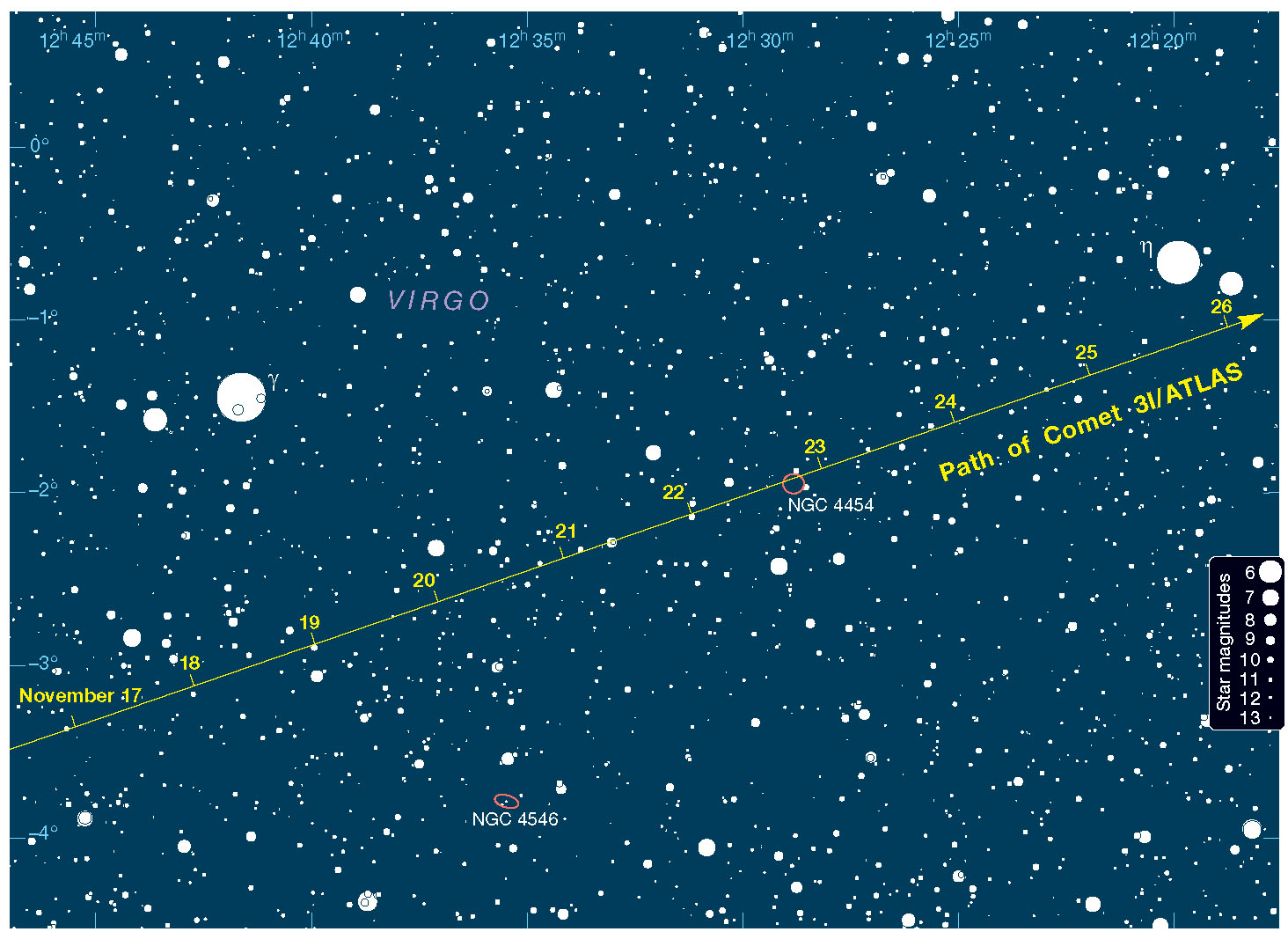
Fortunately, the situation improves quickly. On November 9th, the interstellar comet achieves an altitude of 10° just before the start of dawn for observers at latitude 40° north. The Moon will be in waning gibbous phase on that date and could pose a problem for visual observers. By the 16th, the comet's altitude doubles to 20° with the Moon a thin crescent located 4° to its south. On November 15th and 16th, Comet 3I/ATLAS glides within ½° of the 11th-magnitude barred spiral galaxy NGC 4691. From November 16th through about December 2nd the Moon is essentially out of the picture as 3I/ATLAS climbs the morning sky skirting the Cup of Virgo. It crosses into Leo on December 7–8 and passes 1.8° south of Regulus on December 27th.
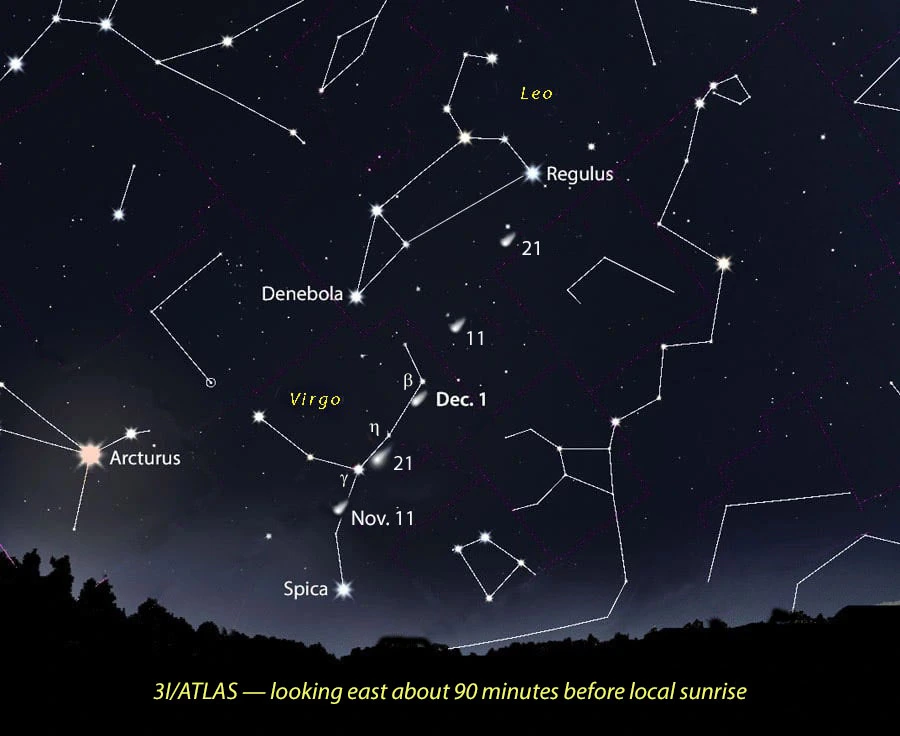
Stellarium with additions by Bob King
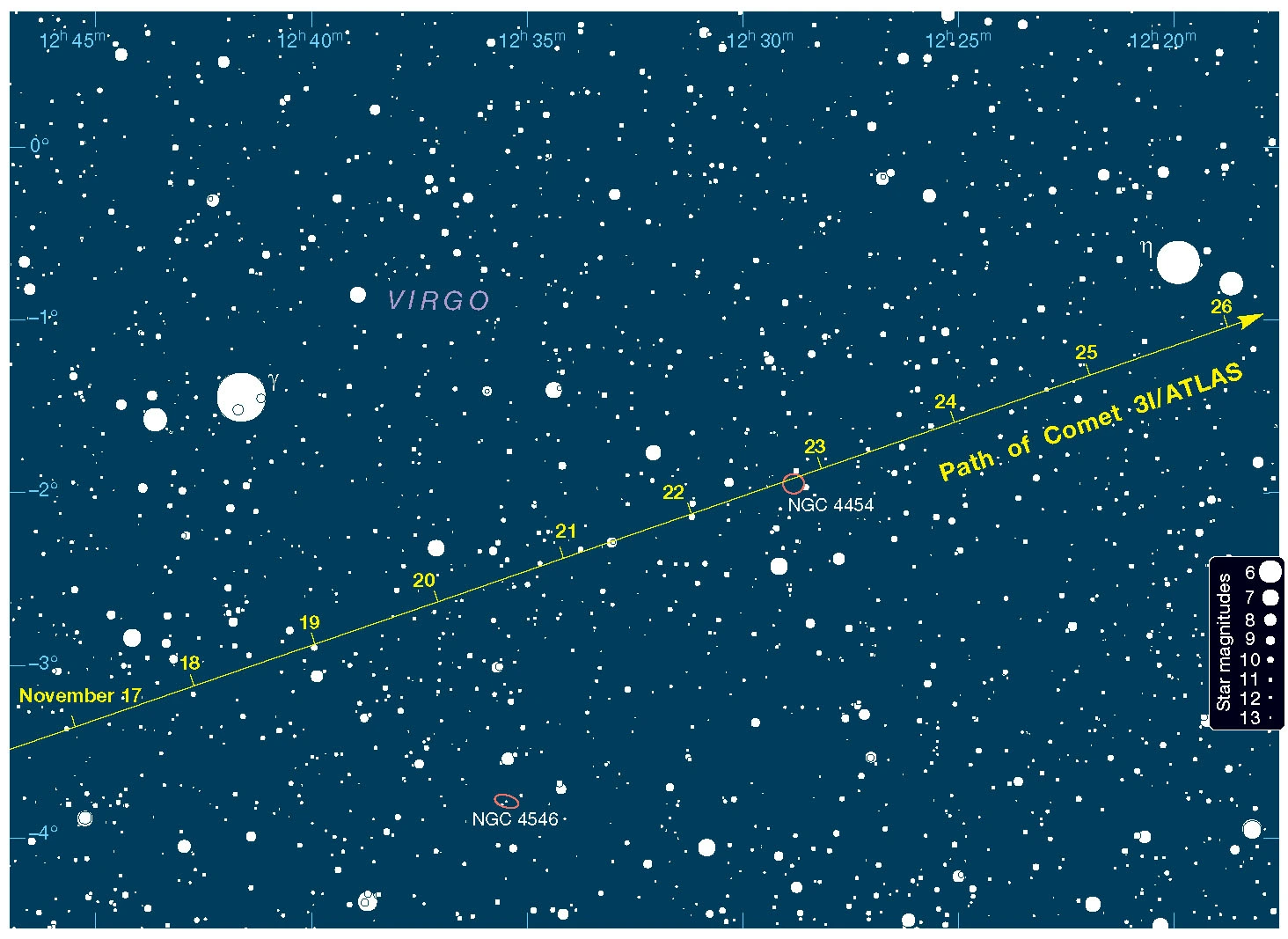
Sky & Telescope graphic
Throughout its run, 3I/ATLAS is expected to fade from around 11th magnitude (give or take!) in mid-November to 12.5 by the 30th, then another 2 magnitudes by the end of December. Of course, it could surprise us and dim more quickly, undergo a bright outburst, or plateau for a time. But the takeaway is this — if you want to see this interstellar comet, take advantage of every clear morning. November can be a cloudy month in many regions. It might be a long time before we get another opportunity to feast our eyes on a comet older than our solar system that once called a distant star home.
Comet Lemmon's splendid show
Bob King
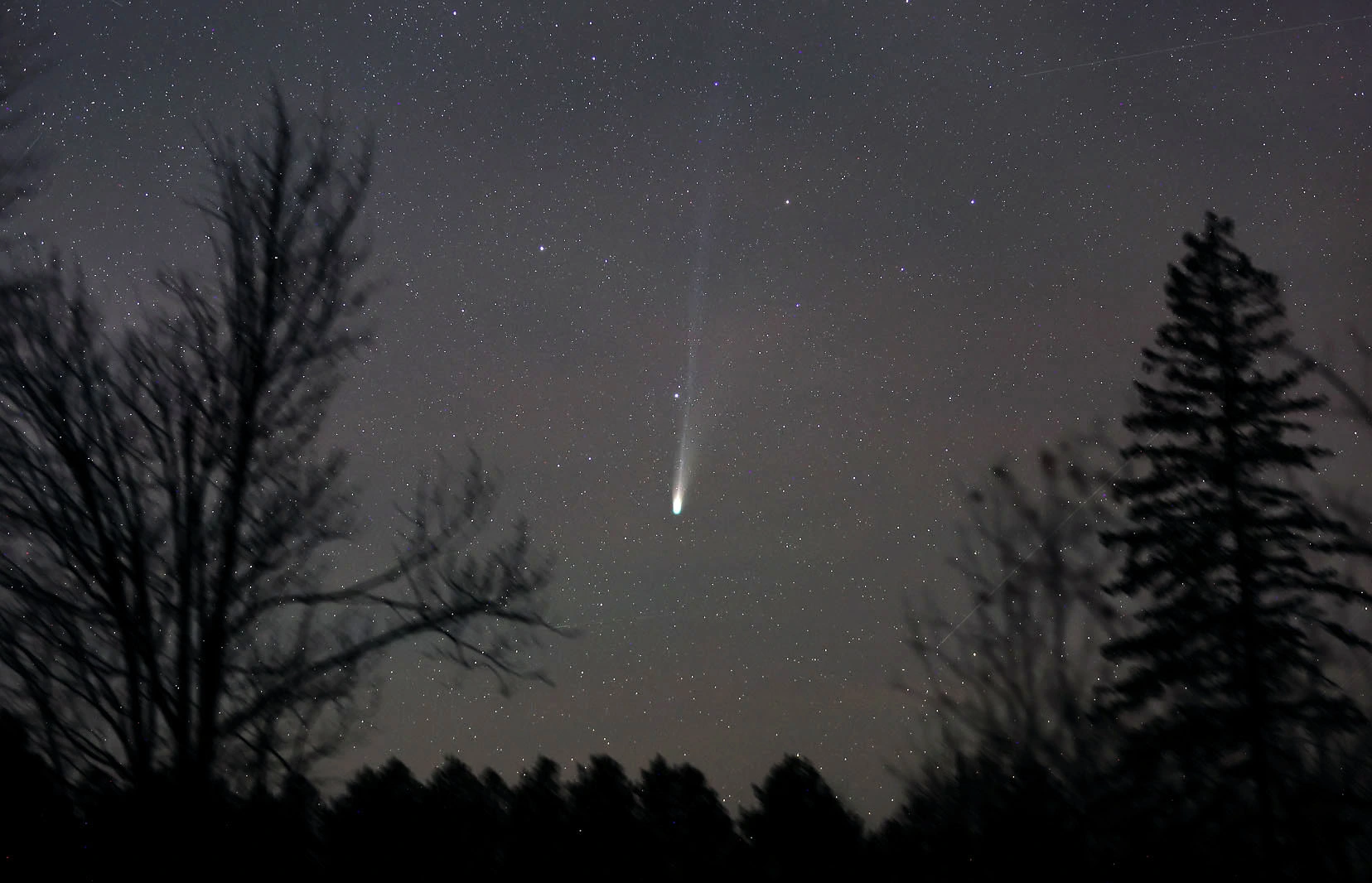
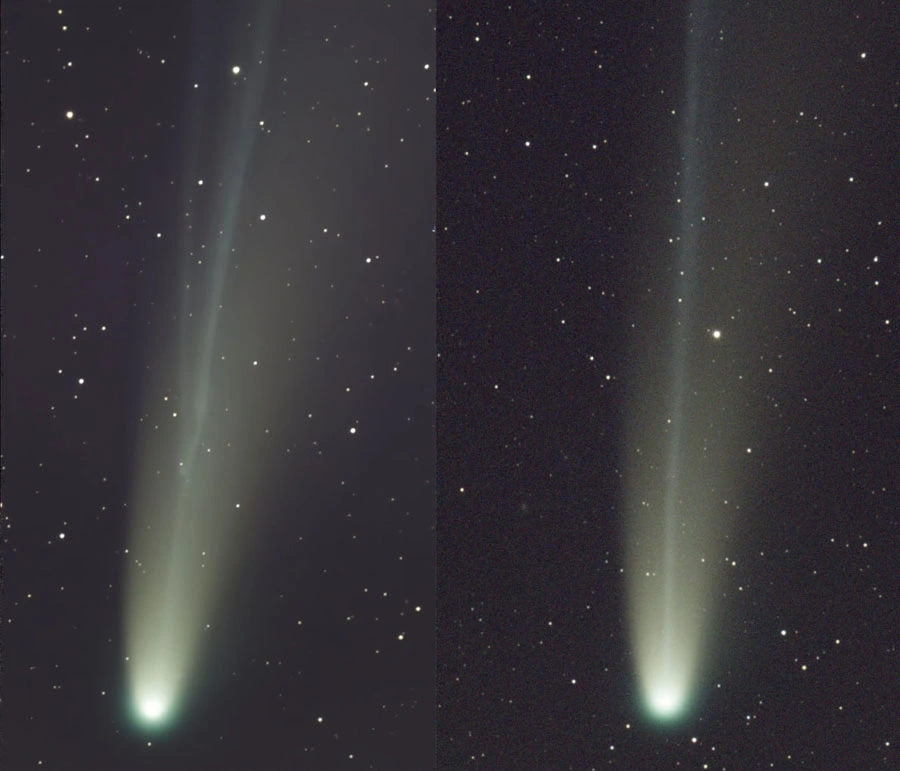
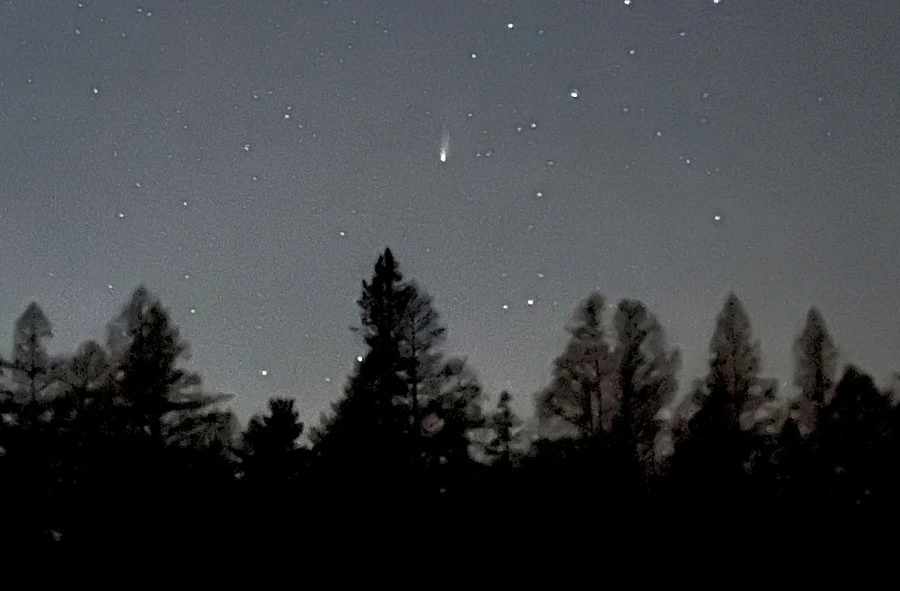
As we wait for 3I/ATLAS to arrive, I hope you've had the opportunity to observe Comet Lemmon. It's been putting on a great show. On October 26th and 27th the comet was clearly visible with the unaided eye at the end of evening twilight. From a rural location I saw a starlike point with a hint of a tail using direct vision. On both evenings I used Kappa (κ) and Iota (ι) Serpentis to estimate its magnitude at 3.9. In 10×50 binoculars the tail reached across the full 5° field of view. Recent deep images show the ion tail extending some 15°.
Bob King
Bob King
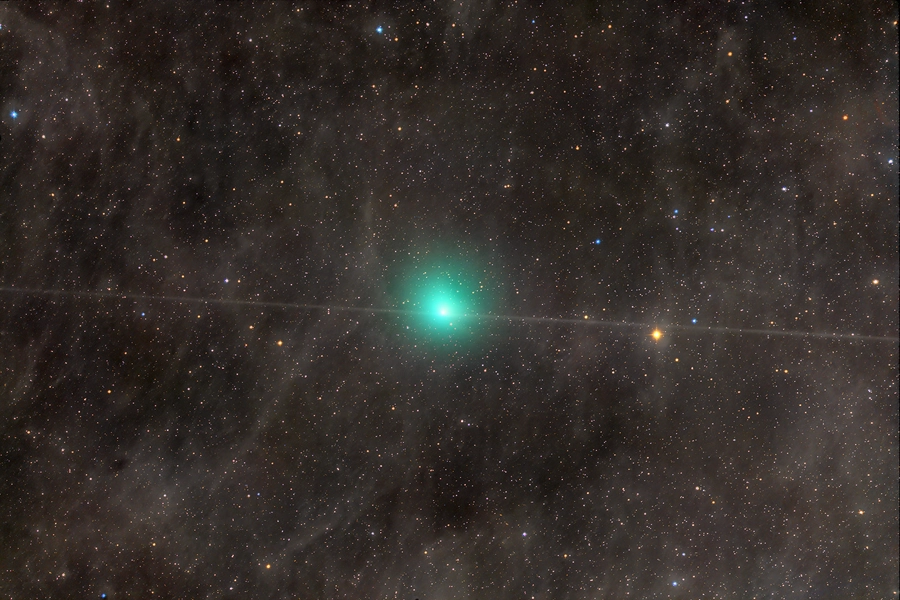
In my 15-inch Dob, the fuzzy sky-walker really shines. The inner pseudo-nucleus is a tiny, brilliant object resembling a millet seed. Its pale yellow coloration indicates strong dust production. Comet Lemmon will slowly fade as it travels southeast from Serpens into Ophiuchus in the next week. On November 3rd, it slides about 2° southwest of the bright globular cluster M12 and about 3° southwest of M10 on November 5th. Yes, the waxing Moon is already starting to compromise the comet, but take a look anyway. You might be surprised at what you see.
About Bob King
I love the sky (day and night) and have been a skywatcher and amateur astronomer since childhood. I'm also a long-time member of the American Association of Variable Star Observers (AAVSO) and Astronomical League. I pen the Astro Bob blog and have written four books: Night Sky with the Naked Eye (2016); Wonders of the Night Sky You Must See Before You Die (2018) and Urban Legends from Space (2019) and Magnificent Aurora, published in 2024. The universe invites us on an adventure every single night. To accept the invitation, we only need look up.




Comments
Derek
October 30, 2025 at 9:50 pm
Thanks, Bob, for another great article. Love the second paragraph!
You must be logged in to post a comment.
Bob KingPost Author
October 31, 2025 at 1:34 am
Thanks, Derek! I'm a simple man.
You must be logged in to post a comment.
John
October 31, 2025 at 4:49 pm
Man, those SeeStars are really good, aren't they? Remember when we old guys were skeptical of smart telescopes and couldn't believe the images in the ads were real? I guess we've finally found a telescope to unabashedly recommend for beginners. They'll go from beginners to experts in one hour.
You must be logged in to post a comment.
Bob KingPost Author
October 31, 2025 at 11:22 pm
I agree, John. I was also skeptical at first, but for me it's become an essential tool for imaging comets and supernovae. I like that I can continue to observe through my scope while the Seestar does its thing.
You must be logged in to post a comment.
AB
November 3, 2025 at 3:49 pm
It doesn't sound like I have much chance of seeing 3I/ATLAS with a little 70mm refractor...? :\ (Latitude 44N)
...well, unless the aliens light it up.
You must be logged in to post a comment.
You must be logged in to post a comment.