 SUNSET:


The Best Meteor Showers in 2019
Sky & Telescope predicts that the two best meteor showers in 2019 will be the Quadrantids in early January and the Eta Aquariids in early May. The popular Perseid and Geminid showers will be spoiled by bright moonlight.

What To See with Your New Telescope During 2018 Holidays
Just got a new telescope? Here are essential tips to getting started using it for astronomy.

Venus Occults a Star and Mercury Joins Jupiter on the Winter Solstice
Bring in winter with a bang with a beautiful, close conjunction and a rare planet-star occultation.
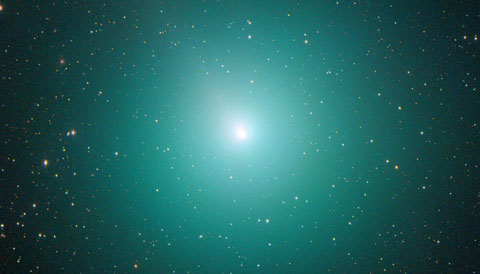
Chasing Comet 46P/Wirtanen as the Moon Looms
Learn how chase away the Moon to keep Comet 46P/Wirtanen in a dark sky. Here's an update on the comet's progress and what to look for in the coming nights.
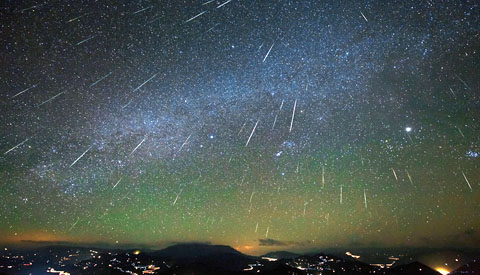
Spend an Hour with the Geminid Meteor Shower
Move over 46P/Wirtanen, it's time for the Geminids, the richest meteor shower of the year.
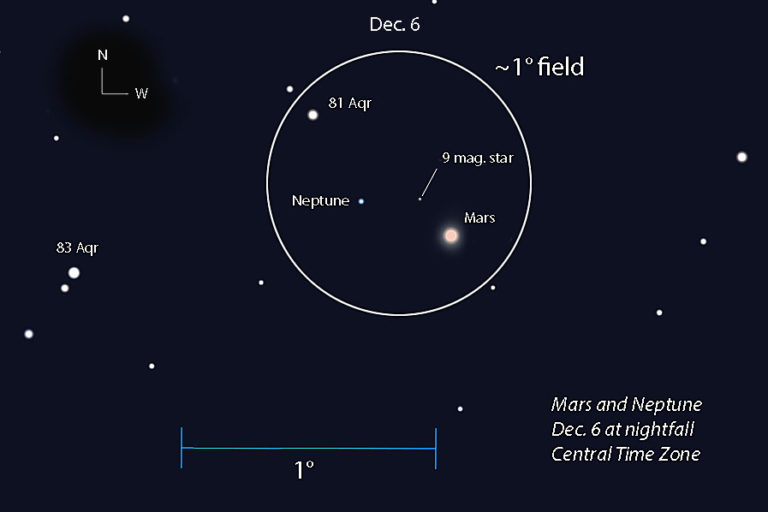
Mars and Neptune Have a Close Shave
Want to find Neptune the easy way? Just point your binoculars or telescope at Mars the next few nights, when the two planets will be in close conjunction.

Tour December's Sky: Morning Planets
December's astronomy podcast urges you to get outside early to gaze on dazzling Venus — then Mercury, then Jupiter — crowding the eastern sky before dawn.

Supernova Discovered in the Bright Galaxy M77
A new supernova in the bright galaxy M77 in Cetus is within range of amateur telescopes. Here's how to find it.

Comet 46P/Wirtanen Approaches Earth
On December 16th, the comet will pass within 12 million kilometers of Earth and should brighten to about 3rd magnitude, though the diffuse coma and a nearly full Moon will make observations difficult.

The Case of the Vanishing Nebula
Now you see it, now you don't. McNeil's Nebula in Orion has disappeared, thanks to a drastic reduction in brightness from the protostar that usually provides illumination.

Amateur Don Machholz Discovers His 12th Comet! (Updated)
Arizona comet hunter Don Machholz did it again! He discovered his 12th comet only two mornings ago. Set your alarm, grab your scope, and take a look.

Tour November's Sky: Cassiopeia's Clan
This month's astronomy podcast takes you on a tour of a dysfunctional "royal family" in the northern sky — along with tips for viewing two meteor showers.

Get Ready for International Observe the Moon Night
Fascinated by our Moon? Want to know more about it? Join fellow lunar enthusiasts on Saturday, October 20th, for International Observe the Moon Night!

The Outer Planets Move In, plus an "Old Moon" Observing Challenge
As the bright planets march westward, Uranus and Neptune become the fresh new faces of fall. And if you've never seen an ultra-thin lunar crescent, here's your chance.

R Coronae Borealis Awakes and Pluto Blocks a Star
Sometimes, it's just as exciting to watch a celestial object fade or disappear as it is to see it explode. We celebrate the "return" of a mysterious variable star and prepare for Pluto to occult a star.

Catch the Perseid Meteor Shower at Its Peak
Plan for optimal conditions for the year’s Perseid meteor shower, early in the mornings of August 12th and 13th.
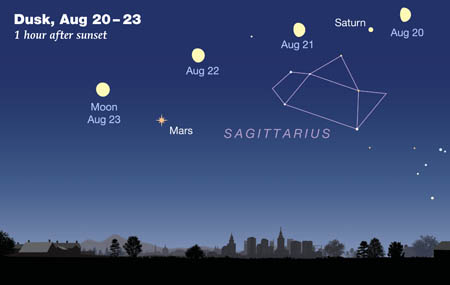
Tour August's Sky: Perseid Time!
As told in this month's astronomy podcast, August offers excellent viewing conditions for the always-flashy Perseid meteor shower — and a chance to see four bright planets at once.

Red Moon Meets Red Planet in Longest Total Lunar Eclipse of the Century
Not only will the Moon will be totally eclipsed this Friday, but Mars will be at opposition and shine in tandem with the red Moon all night!

See Mars at Its Best Since 2003
Wonder what to see now that Mars is at its biggest and brightest? Here are expert tips for when, where, and how to look.

PanSTARRS Comet, Rocked by Outburst, Goes Green
Comet PanSTARRS (C/2017 S3) has erupted again! Now bright enough to see in binoculars, it might become a naked-eye object if it survives until perihelion.
