 SUNSET:

 3
3FRIDAY, SEPTEMBER 6
■ In bright twilight, look low in the west-southwest for the crescent Moon. About 18° (nearly two fists) to its lower right Venus peeks through, as shown below.
Spica is partway between them. Bring binoculars.
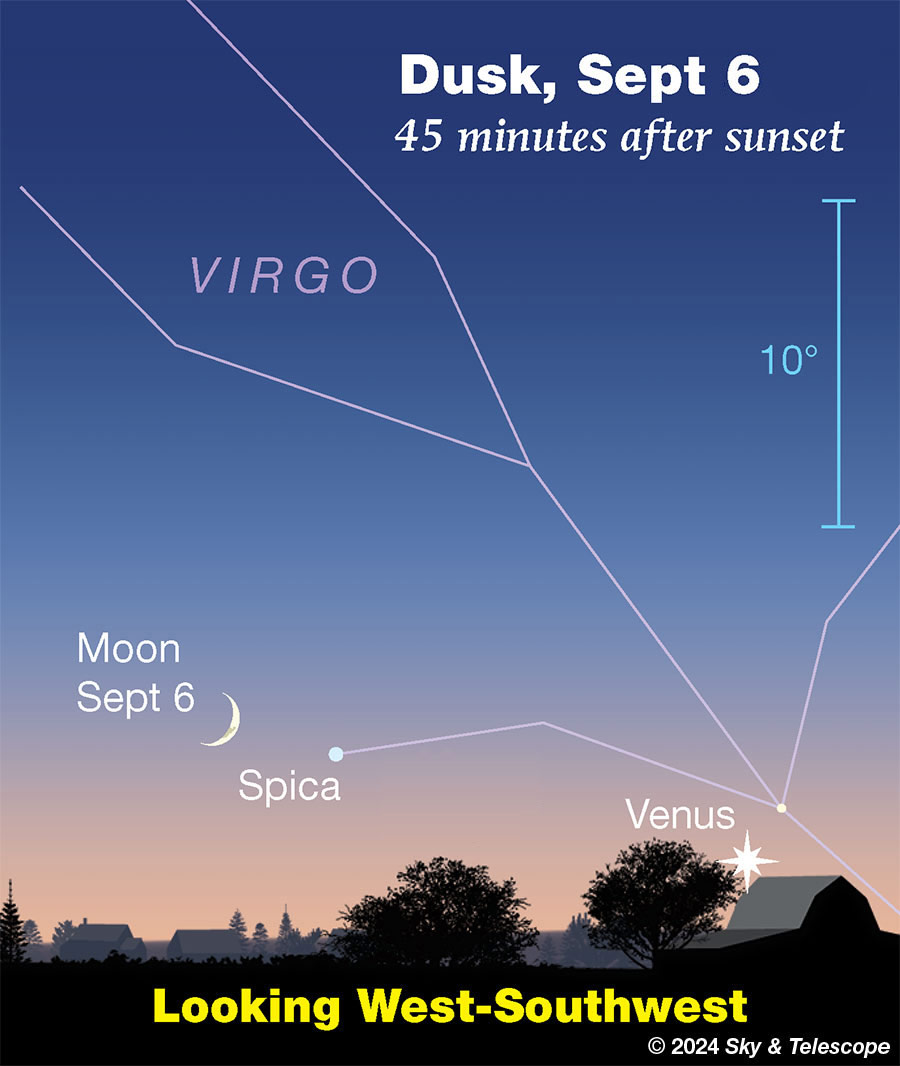
(The Moon here is always drawn three times its actual apparent size. The visibility of faint objects low in bright twilight is exaggerated. The 10° scale is about the width of your fist at arm's length.)
■ Then several hours later, as dawn in getting under way on Saturday the 7th, Mercury shines low with faint Regulus under it, as shown below. Again, bring binoculars.

SATURDAY, SEPTEMBER 7
■ A winter preview: Step out before the first light of dawn any time this week, and the sky displays the same starry panorama that it will at dinnertime around New Year's. Orion is striding up in the southeast, with Aldebaran and then the Pleiades high above it. Sirius sparkles far down below Orion. The Gemini twins are lying on their sides well up in the east.
They all move higher and westward as dawn starts to obscure them. By the time Mercury rises into good visibility as shown above, only the brightest stars will remain visible. The last star to go will be Sirius in the southeast. Then it's Jupiter's turn to finally fade out, very high in the south.
SUNDAY, SEPTEMBER 8
■ Right after nightfall, the thickening crescent Moon shines low in the southwest. Look almost two fists upper left of it for orange Antares.
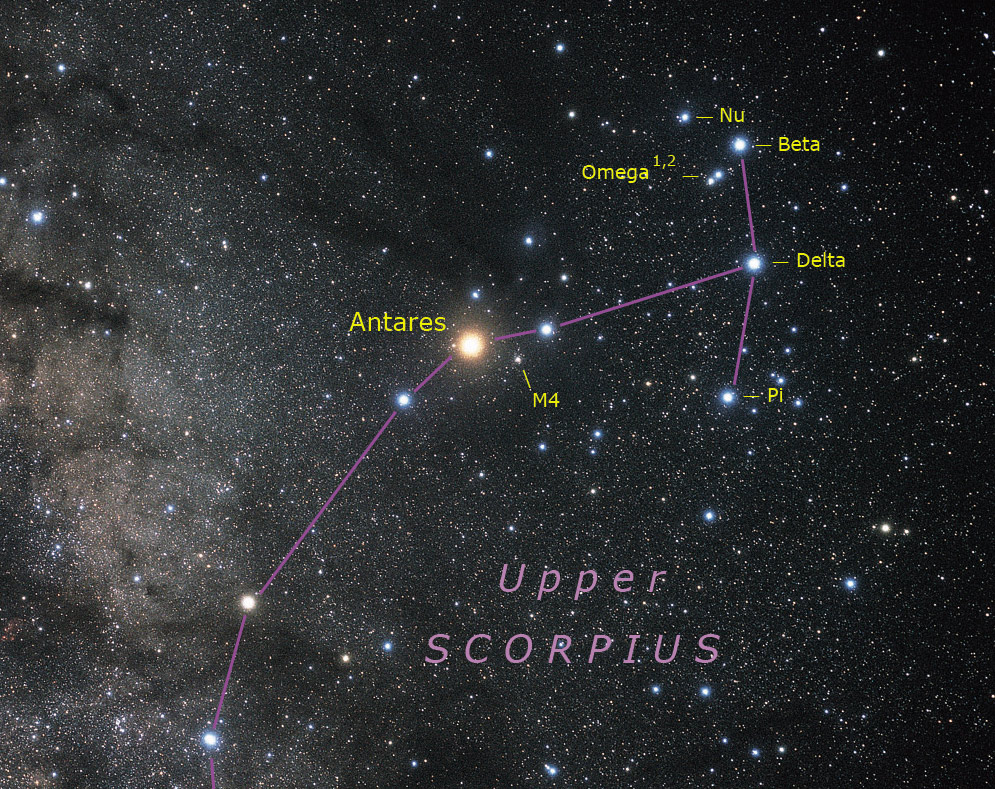
Two thirds of the way from the Moon to Antares is the near-vertical row of three stars marking the head of Scorpius. The brightest of the three is the middle one, Delta Sco, not all that much fainter than Antares.
■ On Monday morning the 9th Mercury and Regulus will be in conjunction, 0.5° apart. Look low in the east-southeast by east, and bring binoculars. Regulus will be to Mercury's right. Mercury is currently 9 light-minutes from us; Regulus is 78 light-years away.
MONDAY, SEPTEMBER 9
■ The Moon, nearly first quarter, is very close to 3rd-magnitude Pi Scorpii early this evening, as suggested below. Binoculars will help; so will covering the Moon with your fingertip.
The Moon's dark limb will occult (cover) Pi Scorpii in reasonably dark twilight for parts of easternmost Canada and the northeastern U.S. Some times: Moncton, NB, 9:10 p.m. ADT; Halifax, NS, 9:15 p.m. ADT; Quebec City, 7:57 p.m. EDT; Bangor, ME, 8:06 p.m. EDT; Boston, 8:08 p.m. EDT; New York City, 8:06 p.m. EDT; Washington DC, 8:06 p.m. EDT.

Remember, the Moon is drawn here three times its actual apparent size, and it's positioned for an observer at 40° north latitude, 90° west longitude. So don't expect its position with respect to Pi Scorpii to look just like this on the 9th, occultation or no.
■ The two brightest stars of September evenings are Vega high overhead and Arcturus in the west, both magnitude 0.
Draw a line from Vega down to Arcturus. A third of the way down you cross the dim Keystone of Hercules. Two thirds of the way you cross the dim semicircle of Corona Borealis with its one modestly bright star: Alphecca, the gem of the crown.
■ Alphecca is your guide star for checking whether the naked-eye recurrent nova T Coronae Borealis has exploded! That much-awaited event could happen any month now... or not. At peak brightness, T Cor Bor may nearly match Alphecca for a day or two. With binoculars or a small telescope, you might be among the very first catch it on the rise. For comparison-star charts and more info: Is the "Blaze Star" About to Blow? You May Be the First to Know.

Alphecca, Corona's brightest star at magnitude 2.2, is 6° west of T. Bob King photo
Update Sept. 12: The email AAVSO alert this morning that T CrB has just brightened to mag 6.6 is a false alarm, contradicted by five observations around and after that time.
For all the recent AAVSO observations of the star, you can always go to https://www.aavso.org/ and on the homepage under "Pick a Star", type T CrB and choose "Recent Observations". Then in the "Filter" column, look for only the "V" and "Vis" (visual waveband) observations.
TUESDAY, SEPTEMBER 10
■ First-quarter Moon (exactly first-quarter at 2:06 a.m. EDT tonight, after the Moon has set for most of us.)
As soon as the stars come out this evening, look for orange Antares about 6° to the Moon's right. Somewhat farther on in that same direction is Delta Scorpii.
WEDNESDAY, SEPTEMBER 11
■ Just left of the Moon this evening is the spout of the Sagittarius Teapot, as shown up above (during evening in North America).
■ You can see in the stars that the season is changing; we've reached the time of year when, just after nightfall, Cassiopeia has already climbed a little higher in the northeast than the Big Dipper has sunk in the northwest.
Cas marks the high northern sky in early evening during the chilly fall-winter half of the year. The Big Dipper takes over for the milder evenings of spring and summer.
Almost midway between them stands Polaris, due north. It's currently a little above the midpoint between the two.
THURSDAY, SEPTEMBER 12
■ This evening the Moon shines in the Teapot's handle. Cover the glary Moon with your fingertip to help reveal the stars around it.
FRIDAY, SEPTEMBER 13
■ Bright Vega now passes the zenith an hour after sunset during late twilight, for those of us at mid-northern latitudes. Vega is bigger, hotter, and 50 times brighter than our Sun. But at a distance of 25 light-years, it's 1,600,000 times farther away.
■ Saturn is the bright little dot in the southeast after dark, lower right of the Great Square of Pegasus. A telescope tonight will show Saturn's biggest and brightest moon, 8th-magnitude Titan, glimmering at its maximum elongation about four ring-lengths to Saturn's east. A 3-inch telescope can pick it up. A 4-inch will begin to show its orange color, caused by its smoggy atmosphere.
See any more moons around Saturn? Identify them at any time and date with our Saturn's Moons tool.

SATURDAY, SEPTEMBER 14
■ As dusk turns to night, Arcturus twinkles due west. It's getting lower every week. From Arcturus, the narrow, kite-shaped pattern of Boötes extends a little more than two fists at arm's length to the upper right.
Off to the right in the northwest, the Big Dipper is now turning more and more level.
SUNDAY, SEPTEMBER 15
■ The waxing gibbous Moon forms a nearly equilateral triangle with Saturn to its left and Fomalhaut to its lower left. The triangle is about 20° on a side.
This Week's Planet Roundup
Mercury is having a good dawn apparition. Spot it low in the east about 40 or 50 minutes before sunrise. It's already a bright magnitude –0.7 on Saturday morning the 7th, and it brightens a little to –1.0 by the morning of the 14th.
This week Mercury passes Regulus, which is a good deal fainter at magnitude +1.4. On the 7th you'll find Regulus below or lower left of Mercury, as shown at the top of this page. On Monday morning the 9th they're in conjunction 0.5° apart. After that, Regulus gains the ascendancy above Mercury. Bring binoculars.
Venus, magnitude –3.8, is still very low in bright twilight. Starting 20 or 30 minutes after sunset, look for it a little left of due west. It's getting very slightly higher and brighter week by week.
Spica is closing in on Venus from the upper left. They're 14° apart on the evening of September 6th — with a thin crescent Moon near Spica! They close in to 6° apart by the 13th. On the 17th they'll pass each other 2½° apart.
Mars and Jupiter (magnitudes +0.6 and –2.3, respectively) continue pulling apart from each other in the early-morning sky. Watch for bright Jupiter to rise in the east-northeast around 11 or midnight daylight-saving time. Mars, much fainter, rises about an hour later to Jupiter's lower left. On Saturday morning September 7th, the planets are 12° apart. By the 14th they widen to 15°.
Jupiter remains in Taurus not far from the Bull's horntip stars, Beta and Zeta Tauri. Mars is now creeping along the trailing foot of the Castor stick-figure in Gemini.
Mars-like Aldebaran shines to Jupiter's right or upper right by about as far now as Mars shines to Jupiter's lower left. Mars has definitely become the brighter of these two orange points.
By the start of dawn each morning, all three are very high in the southeast.

Saturn (magnitude +0.6, in Aquarius) is barely past opposition. Look for it glowing low in the east-southeast as the stars come out. It's lower right of the Great Square of Pegasus, which is balancing on one corner. The Square's upper-right edge points diagonally to Saturn almost exactly now, two fists at arm's length away.
Saturn climbs higher through the evening. It shines highest in south around midnight or 1 a.m., through less of our blurry atmosphere for better telescopic resolution.

Uranus (magnitude 5.7, in western Taurus) is some 22° west of Jupiter in the early-morning hours. You'll need a good finder chart to identify it among surrounding faint stars.
Neptune (tougher at magnitude 7.8, near the Circlet of Pisces) is 13° east of Saturn. Again you'll need a proper finder chart.
All descriptions that relate to your horizon — including the words up, down, right, and left — are written for the world's mid-northern latitudes. Descriptions and graphics that also depend on longitude (mainly Moon positions) are for North America.
Eastern Daylight Time (EDT) is Universal Time minus 4 hours. UT is also known as UTC, GMT, or Z time.
Want to become a better astronomer? Learn your way around the constellations. They're the key to locating everything fainter and deeper to hunt with binoculars or a telescope.
This is an outdoor nature hobby. For a more detailed constellation guide covering the whole evening sky, use the big monthly map in the center of each issue of Sky & Telescope, the essential magazine of astronomy.
Once you get a telescope, to put it to good use you'll need a much more detailed, large-scale sky atlas (set of charts). The basic standard is the Pocket Sky Atlas (in either the original or Jumbo Edition), which shows all stars to magnitude 7.6.
Next up is the larger and deeper Sky Atlas 2000.0, plotting stars to magnitude 8.5; nearly three times as many. (It's currently out of print.) The next up are the even larger Interstellarum atlas (stars to magnitude 9.5) or Uranometria 2000.0 (stars to mag 9.75). And read How to Use a Star Chart with a Telescope. It applies just as much to charts on your phone or tablet as to charts on paper.
You'll also want a good deep-sky guidebook. A beloved old classic is the three-volume Burnham's Celestial Handbook. An impressive more modern one is the big Night Sky Observer's Guide set (2+ volumes) by Kepple and Sanner. The pinnacle for total astro-geeks is the Annals of the Deep Sky series, currently at 10 volumes as it slowly works forward through the constellations alphabetically. So far it's only up to F.
Can computerized telescopes replace charts? Not for beginners I don't think, and not for scopes on mounts and tripods that are less than top-quality mechanically. Unless, that is, you prefer spending your time getting finicky technology to work rather than learning how to explore the sky. As Terence Dickinson and Alan Dyer say in their Backyard Astronomer's Guide, "A full appreciation of the universe cannot come without developing the skills to find things in the sky and understanding how the sky works. This knowledge comes only by spending time under the stars with star maps in hand and a curious mind." Without these, "the sky never becomes a friendly place."
If you do get a computerized scope, make sure that its drives can be disengaged so you can swing it around and point it readily by hand when you want to, rather than only slowly by the electric motors (which eat batteries).
However, finding faint telescopic objects the old-fashioned way with charts isn't simple either. Learn the essential tricks at How to Use a Star Chart with a Telescope.
 Audio sky tour. Out under the evening sky with your
earbuds in place, listen to Kelly Beatty's monthly
podcast tour of the naked-eye heavens above. It's free.
"The dangers of not thinking clearly are much greater now than ever before. It's not that there's something new in our way of thinking, it's that credulous and confused thinking can be much more lethal in ways it was never before."
— Carl Sagan, 1996
"Facts are stubborn things."
— John Adams, 1770
1 . "Spica, magnitude +1.0, is 80 times fainter." How did we get that? Here's how to convert a magnitude difference into the actual brightness ratio.
The stellar magnitude system is defined so that 5 magnitudes is a brightness ratio of exactly 100 to 1. So, one magnitude is a brightness difference of the fifth root of 100. Which is 2.512 for all practical purposes.
So, if Δm is the magnitude difference, then
brightness ratio = 2.512Δm
…which is just a few taps on your scientific calculator.
About Alan MacRobert
Alan M. MacRobert became an avid Sky & Telescope subscriber in 1966 at age 14, joined the editorial staff in 1982, and is now a senior contributing editor, semi-retired. He played a role in practically every part of the magazine and the company's other products for more than a generation, both on the amateur-observing side and the science-reporting side. In 1994 a book collection of his observing how-tos and telescopic sky tours was published as Star Hopping for Backyard Astronomers. He has produced This Week's Sky at a Glance online every week since 1989.



Comments
Rod
September 7, 2024 at 10:43 pm
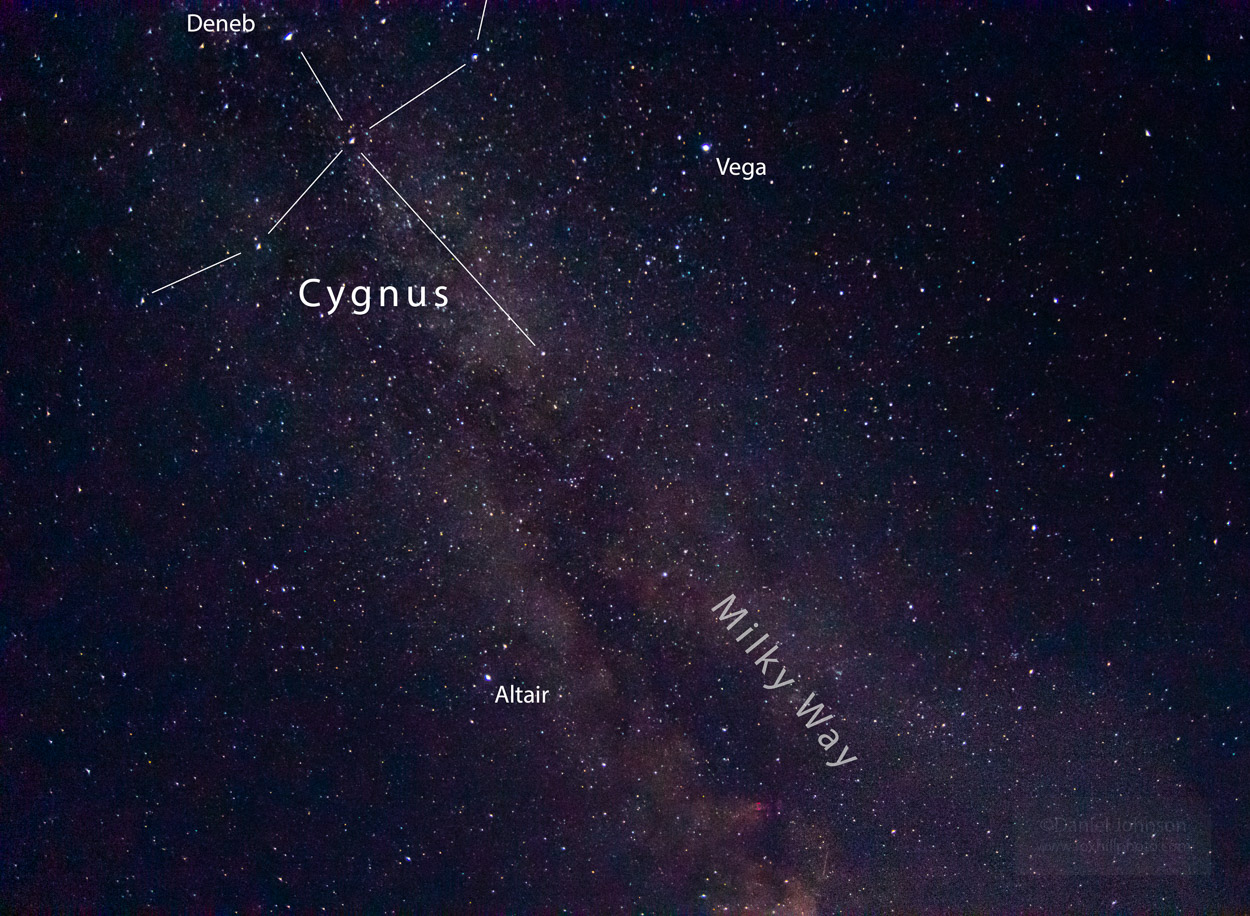
Saturn coming to opposition tonight. I observed 2030-2210 EDT. First Quarter Moon 11-Sep-2024 0606 UT. Enjoyed unaided eye views of the waxing crescent Moon with lovely earthshine in Virgo tonight near 2030 EDT. I used my 90-mm refractor telescope with 14-mm Delos and 1.8x Barlow lens for viewing Saturn. This provides about 129x. Titan and Rhea moons distinct. By 2200 EDT, Saturn elevation angle improved, seeing was better, rings getting thinner. Some of the summer milky way visible above running from Cygnus through Sagittarius tonight. Weather, skies clear, temperature 13C, winds 150/5 knots. Lovely time out under the heavens this evening.
You must be logged in to post a comment.
misha17
September 9, 2024 at 11:08 pm
re: MONDAY, SEPTEMBER 9 -
Good catch on the Pi Scorpii occultation; it was not listed on IOTA's list of worldwide bright star occultations.
This month's Antares occultation occurs a few hours later. It's a daytime event over southern Africa, and an early-evening event over most of Australia (except the Eastern coast).
You must be logged in to post a comment.
misha17
September 9, 2024 at 11:33 pm
Re: "SUNDAY, SEPTEMBER 15
■ The waxing gibbous Moon forms a nearly equilateral triangle with Saturn to its left and Fomalhaut to its lower left."
Just a "heads up" that early the Moon will occult Saturnbin the pre-dawn sky in Tuesday Sept 17th, as seen from the U.S. west of a line going from the Dakotas thru Texas (where disappearance will occur with the Moon low in the Western sky around moonset), as well as the southwest part of Canada. Event will occur in higher skies along the West Coast around 4am local time PDT.
Map and local viewing times here:
http://lunar-occultations.com/iota/planets/0917saturn.htm
The event occurs outside of this week's timeline, but viewers can use the local times this week to find Saturn and get an idea of any objects that might block the view that night.
Look for Saturn's position in the sky about 4 minutes later each night the earlier you try to get a preview.
For example, if the occultation occurs at 5:30am local daylight time on the 17th, it will have the same location at about 5:42am 3 days earlier on the morning of Sept 14th, and at 5:54am 6 days earlier on the morning of Sept 11th.
You must be logged in to post a comment.
You must be logged in to post a comment.