 SUNSET:


Planet Hunter Wins Amateur Research Award
The Chambliss Amateur Achievement Award, issued annually by the American Astronomical Society (AAS) "for exemplary research by an amateur astronomer" if there is a suitable candidate, goes to Darryll LaCourse of Marysville, Washington.
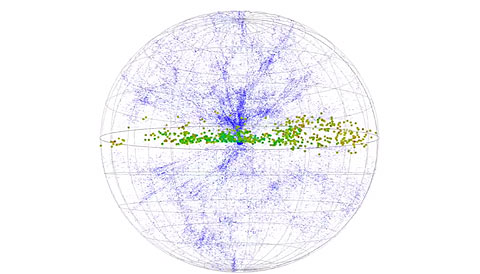
Galaxies Hidden Behind the Milky Way
Astronomers have detected hundreds of galaxies lying hidden behind the Milky Way's disk, many of which belong to the so-called Great Attractor, or Norma Supercluster.

Mirror Assembled for Hubble's Successor
NASA has assembled the primary mirror for the James Webb Space Telescope, a big step on the way to the telescope’s October 2018 launch.

Dark Matter Makes Galaxy Clusters Clump
How much galaxy clusters huddle together depends in part on how fast these clusters formed — and that formation rate depends on dark matter.

Stars Form in Turbulent Times
New images of four circumstellar disks suggest that the star formation process is much more violent than previously thought.
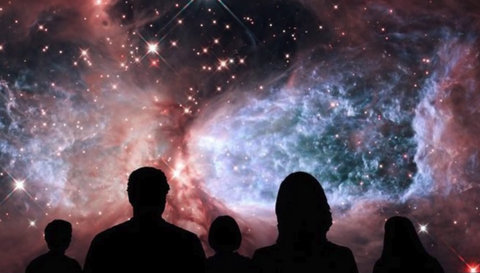
AAS Adopts Worldwide Telescope
The largest national association of astronomers is now the new home of a virtual observatory known as the WorldWide Telescope.

Saturday Morning: Moon, Venus, and Mercury
Two planets and a pretty crescent Moon gather low above the southeastern horizon before dawn on February 6th.

It's Not Over Till The Fast Planet Sinks
This week and early next will be your last chance to see five planets — six if you count Earth — at dawn.
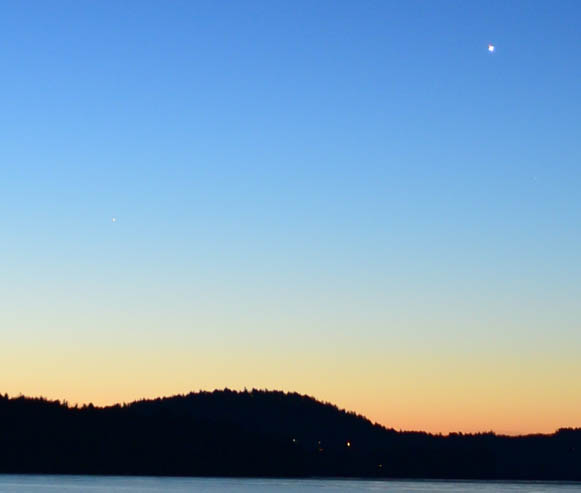
Look Now to See Five Planets at Once!
The first days of February offer your best chance to see all of the naked-eye planets — from Mercury to Saturn — together with the Moon in the predawn sky.

Giant Cloud Came from the Milky Way
The massive Smith Cloud falling toward our galaxy’s disk is likely from our galaxy, not a visitor.
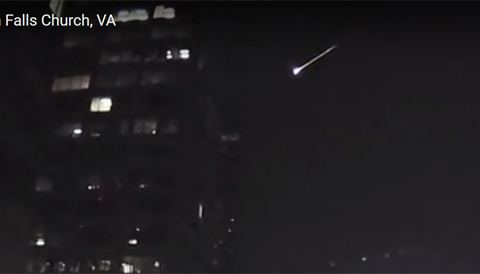
East Coast Bolide Triggers Hunt for Meteorites
A blazing-bright fireball that lit up the early evening sky on January 30th appears to have scattered meteorites near the Pennsylvania- Maryland border. Now the search is on to find them.

A Galaxy Hit-and-Run
Ripples found in the Milky Way’s disk reveal our galaxy survived an ancient hit-and-run. Now, astronomers might have caught the culprit.

Tour February's Sky: Five Planets at Dawn!
This month's audio sky tour starts before dawn, when you can spot all five bright planets by eye, and moves to the sparkling stars seen on winter evenings.

The Case of the Disappearing Quasar
When a quasar, a black hole-fueled beacons that shines from across the cosmos, went dark, astronomers set out to find out why.

Hunting for Planets Around Proxima Centauri
The Pale Red Dot Initiative has begun the search in earnest for exoplanets orbiting the nearest star to Earth besides the Sun.

With Mercury's Arrival, Five Planets in View
Early risers have been patiently waiting for the innermost planet to join four others — and the Moon — in the predawn sky. Now they're all in view.
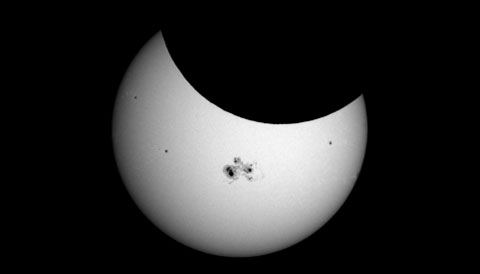
Solar and Lunar Eclipses in 2016
There will be four eclipses in 2016. Highlights are a total solar eclipse on March 9th (visible from Indonesia) and an annular solar eclipse on September 1st (central Africa). But we'll see just two barely-there penumbral eclipses, on March 23rd and September 16th.
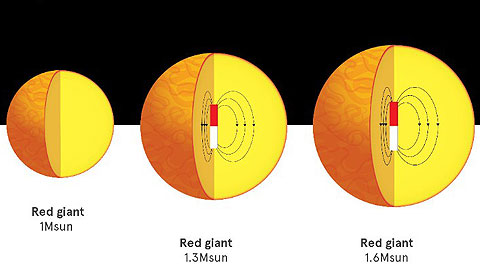
Old Stars' Fossil Fields
Astronomers have confirmed that strong magnetic fields are frozen in place deep inside aging stars called red giants.

Making the Case for "Planet Nine"
Does a massive, extremely distant planet orbit the Sun? A new analysis of distant solar-system orbits argues that it should exist.
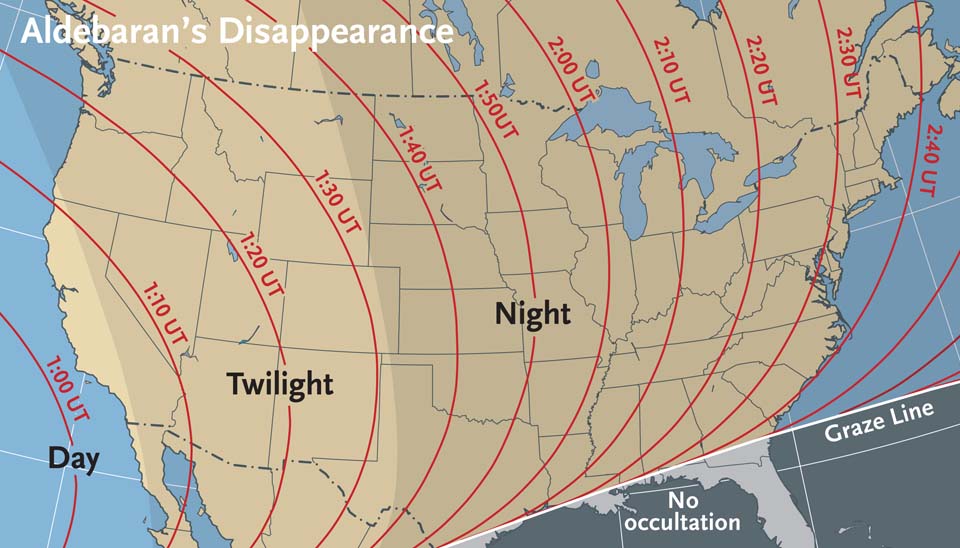
Tonight's Easy Aldebaran Occultation
North Americans have front-row seats when the Moon covers up the brightest star in Taurus.
