 SUNSET:


Get Up Early, See Five Visible Planets at Once!
Over the next two weeks, for the first time in more than a decade, you can see all of the naked-eye planets — from Mercury to Saturn — together in the predawn sky.
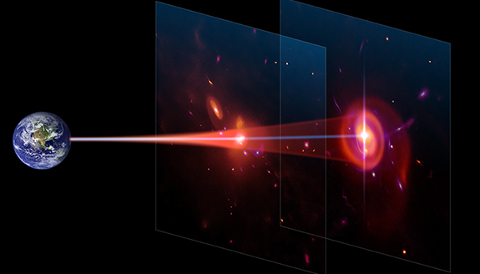
Seeing Shadows of Ancient Galaxies
A new technique lets astronomers measure nearly invisible clouds of hydrogen gas from across the universe.

Brightest Supernova Baffles Astronomers
The most luminous supernova ever discovered, ASASSN-15lh, challenges a popular theory for blazingly bright exploding stars.

Setting Limits to Black Hole Gluttony
Black holes may have a limit to how much they can eat in the public eye.

About The LIGO Gravitational-Wave Rumor. . .
Gossip is racing around the physics and astronomy community: has LIGO finally heard its first black-hole merger? Here’s the reality.

Smack! Booster Impact Site Found on Moon
The Lunar Reconnaissance Orbiter has finally spotted the impact of the Apollo 16 booster, more than 43 years after it happened.

Charting 70,000 Stars in the Milky Way
Astronomers have created an age-map of 70,000 stars spanning our galaxy, ushering in a new era of galactic archaeology.
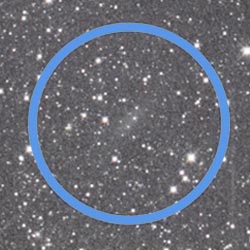
"Strongman" Aussie Discovers Dwarf Galaxy
All amateur Michael Sidonio wanted was a pretty astro-image of NGC 253. What he got instead was credit for discovering a rare dwarf galaxy.

Spotting "Twins" of Superstar Eta Carinae
Astronomers looking for clones of a massive and famously unstable star in the Southern Hemisphere sky have found five in other galaxies.

New Clues in Cooking up Planets and Stars
An early peak at a forming star system reveals tantalizing clues about its origin.
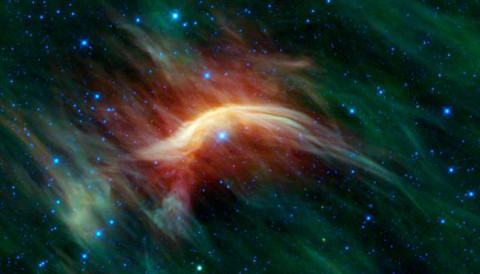
Telltale Shock Waves from Runaway Stars
Astronomers are now finding dozens of fast-moving runaway stars by searching for the bow shocks they create in interstellar gas and dust.

Solar System Featured on New U.S. Stamps
The U.S. Postal Service has unveiled new stamps, to be issued later this year, that feature 10 solar-system objects — including Pluto.
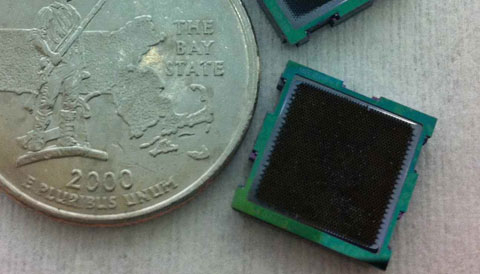
CubeSats: Future Solar System Explorers?
An innovative and tiny thruster design could prove the future of interplanetary exploration with the tiny satellites known as CubeSats.
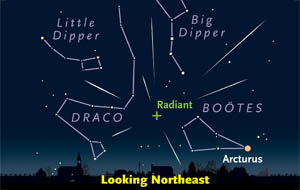
Quadrantid Meteors Start 2016 with a Bang
The Quadrantid meteors, the year's least-observed major meteor shower, should be in plain sight when it peaks early on January 4th.
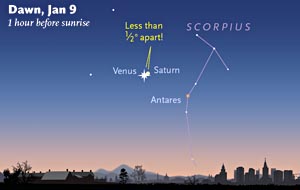
Tour January's Sky: Venus & Saturn Pair Up
The first month of 2016 offers a close pairing of Venus and Saturn before dawn, a strong meteor shower, and a parade of bright stars after sunset.
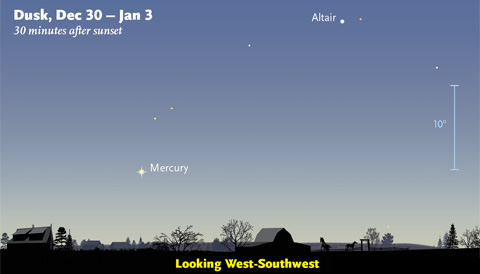
Mercury Shines at Dusk This Weekend
Mercury is usually a shy and elusive catch for naked-eye skywatchers, but for the next few days it shows itself boldly if you look at the right time.

NASA's Budget Gets a Boost
An unexpected omnibus spending package for fiscal year 2016 raises NASA's funding.
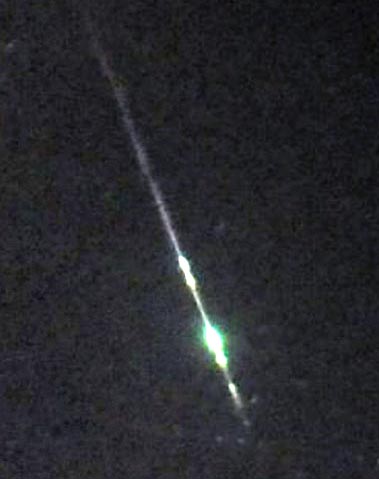
Meteor Showers in 2016
Sky & Telescope predicts that the two best meteor showers in 2016 will be the Quadrantids in early January and the Perseids in mid-August.
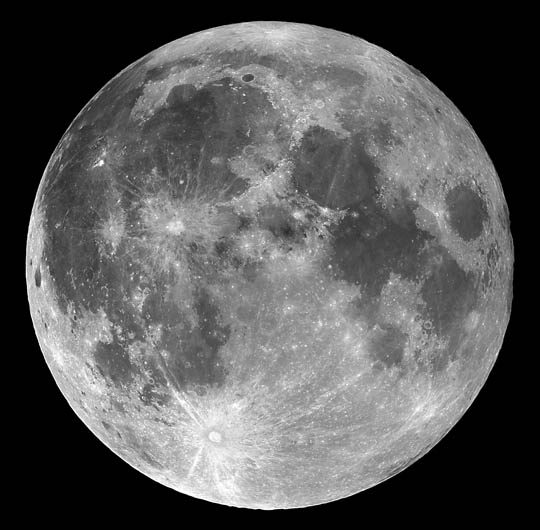
What to See with Your New Telescope During 2015 Holidays
Thousands of telescopes are given and received as gifts during the holidays. But once you've assembled your new treasure, then what? Moon, stars, planets? The editors of Sky & Telescope magazine point the way.

Martian Gullies: Triggered by Dry Ice?
Are enigmatic gullies seen on many steep Martian slopes caused by liquid water or instead by episodic coatings of frozen carbon dioxide?
