 SUNSET:


Star-Counting in the Galactic Bulge
Astronomers have taken a careful census of the smallest stars in our galaxy’s center.

Mystery Signal from a Black Hole-Powered Jet
Astronomers have spotted what appears to be a regular signal coming from the blazar PG 1553+113.

V774104: Solar System's Most Distant Object
An ultra-deep survey has turned up a sizable object situated nearly 10 billion miles from the Sun — more distant than any known solar-system object.
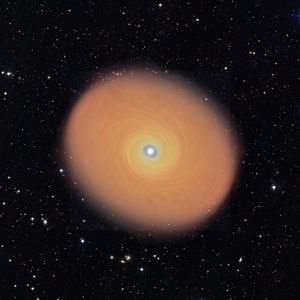
The Origin of Massive Stars
High-mass stars may outshine and outweigh the Sun, but observations show all stars may have had a similar beginning.

Leonid Meteors in 2015: Modest but Moonless
This year's Leonid meteor shower, which peaks tonight, will offer modest numbers of "shooting stars" — but might reward you with some dazzling fireballs.

Unique Scope Searches for Space Junk
NASA's new remote observatory located on a windswept island in the mid-Atlantic provides a critical capability for tracking space junk.
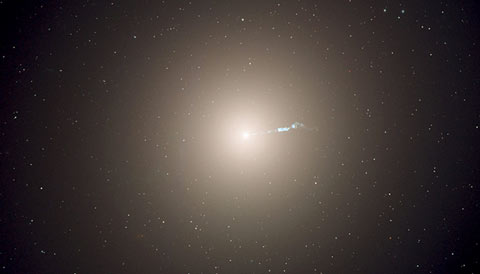
Astronomers Take Galaxy’s Pulse
Astronomers have caught a giant elliptical galaxy “shimmering” as its stars pulsate.

Pulsars' Gamma Rays Highlight Mysteries
The Fermi Gamma-ray Space Telescope has discovered that almost all of the highest energy photons in the Large Magellanic Cloud come from two pulsars.

Where and When Will Rosetta Crash?
As ESA's comet orbiter enters its final year of operations, mission managers are deciding its fate.

Catalina Comet Sails Into Northern Skies
Comet Catalina returns this month with naked-eye potential. Follow its every move with our guide and maps.

Pluto's Cold Atmosphere and "Volcanoes"
Four months after New Horizons' historic flyby, mission scientists have been amazed by unexpected discoveries — and by how some preconceptions about Pluto were flat-out wrong.

Mars Losing Gas to Solar Wind
NASA’s Mars orbiter MAVEN has painted a detailed picture of how the solar wind robs the Red Planet of its atmosphere.
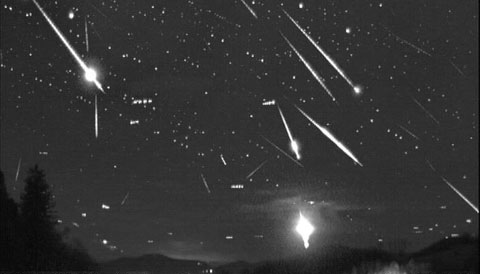
Taurid Fireballs Continue!
Big bits of Comet Encke are streaking into Earth's upper atmosphere and attracting attention around the world, as the Taurid fireball display of 2015 continues.

Milky Way: Young Stars in an Old Bulge
The presence of stars just 100 million years old in the Milky Way Galaxy’s central regions confirms our galaxy’s nonviolent past.
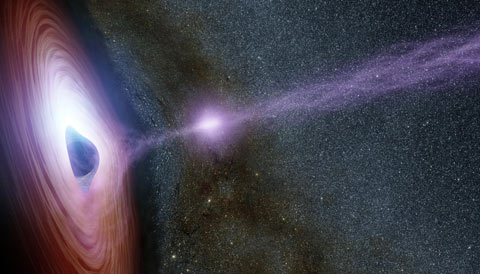
How a Black Hole Flares
X-ray observations suggest that flares happen when a black hole's "atmosphere" contracts and launches away from it.

Seeing Spots on a Red Giant Star
Astronomers have gathered enough observations to produce an exquisite image of another star’s surface.
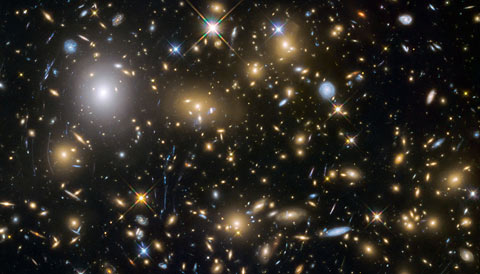
Small Galaxies Helped Light Up Universe
Hubble observations confirm that much of the light that broke up the early universe’s hydrogen came from the smallest galaxies.

Mystery Object to Reenter Earth's Atmosphere
WT1190F will burn up over the Indian Ocean on November 13th, giving researchers an unprecedented opportunity to follow its path — and figure out where it came from.
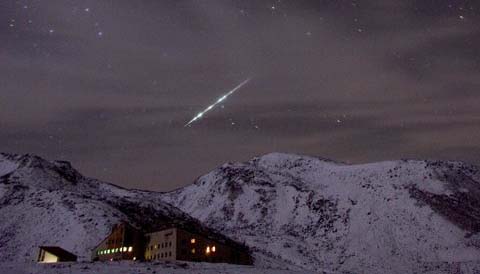
Be Alert for Taurid Fireballs This Week
If you see a really bright autumn fireball, it might be a Taurid meteor — a fragment of Comet 2P/Encke.
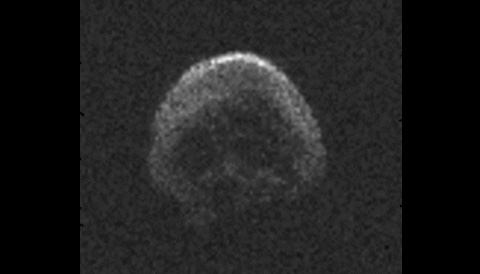
2015 TB145 — Rogue Asteroid or Dead Comet?
Astronomers can't decide whether the sizable object known as 2015 TB145, which is cruising past Earth today, is a renegade asteroid or a dead comet.
