 SUNSET:

Did Asteroids Once Rain Down on Earth?
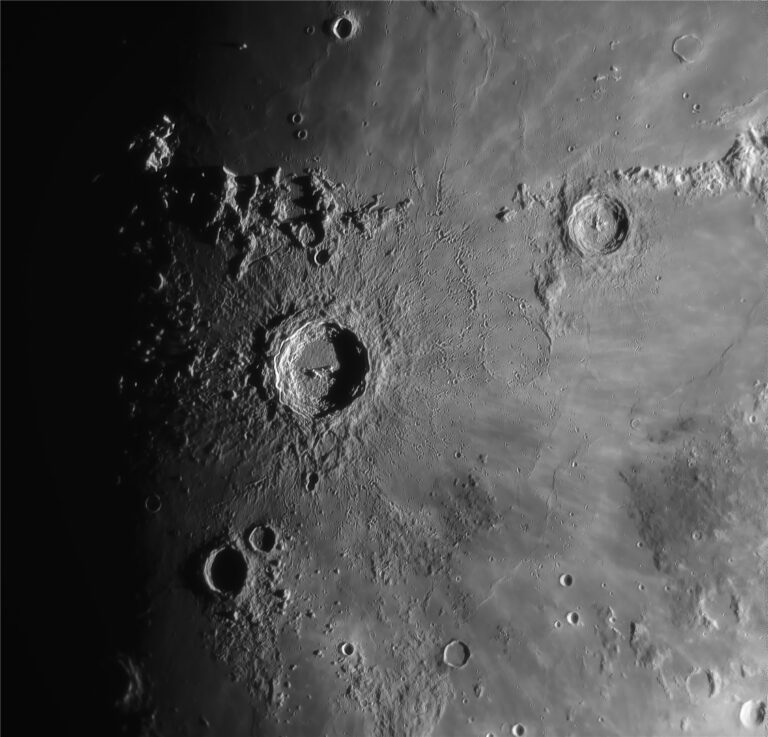
A surge of asteroids might have peppered the inner solar system some 800 million years ago, in a short-lived shower that left its mark — literally — on Earth and its neighbors.

Hints of Life on a Potential Ocean Planet
Astronomers might have detected hints of life on a faraway planet — but they need more observations before they can say for sure.

Icy Rivers May Have Flowed on Ancient Mars
A polar cap of carbon-dioxide ice may have provided the thermal blanket needed for rivers and a huge lake to form in the planet’s southern highlands.

Dino-Era Asteroid Came from the Outer Solar System
A new chemical analysis confirms the Chicxulub impactor was a fragile type of asteroid that formed in the outer solar system, unlike several other ancient impactors.

What Mud Cracks Mean for Life on Mars
Mud cracks are evidence for sustained wet-dry cycles on ancient Mars, which might have provided conditions amenable to life (with caveats).

Where to Look for Life: Homing in on the Habitable Zone
Scientists are refining the definition of the habitable zone in an effort to aid future efforts at finding life.

Analysis of Asteroid Ryugu Reveals Prebiotic Compounds
Prebiotic compounds previously found in meteorites have now turned up in pristine samples from the asteroid Ryugu, confirming their extraterrestrial origin.

Scientists Wonder: Is the Origin of Life Extraterrestrial?
A new analysis method has revealed DNA building blocks in meteorites, suggesting that these prebiotic molecules might have formed during the solar system's earliest years.

Largest Molecule Yet Found in Planet-forming Disk
The detection of a complex organic molecule in the disk around an infant star suggests prebiotic chemistry starts in the space between stars.

Is the Phosphine Biosignature on Venus a Calibration Error?
The already tentative detection of phosphine is under heavy scrutiny from the scientific community. A problem with the ALMA data hasn't helped.

Race to Venus: How We’ll Verify Phosphine
Confirming phosphine's presence on Venus is difficult from Earth . . . and that makes a good case for a mission to our sister planet.

Potential Biosignature Found in Venus’s Clouds
Astronomers might have found a potential indication of life in the clouds of Venus.

Winds and Tides Drive Sea Waves on Titan
Sunlight glittering off rough patches of sea on Saturn’s largest moon indicates ever-changing waves.

Could There Be Life Under a Hydrogen Sky?
Scientists have discovered that life could survive within a hydrogen-dominated atmosphere. The finding is not necessarily a surprise but could have implications for the search for life.

Searching for Alien Needles in the Cosmic Haystack
Humanity’s search for signs of extraterrestrial intelligence has been underway, in one form or another, for decades. But how much searching have we really done?
Source for Europa Geysers Missing
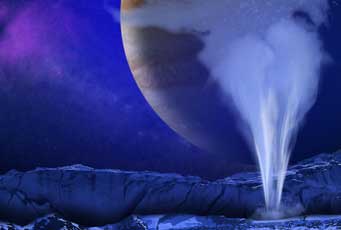
A new look at old data suggests there’s something missing from suspected plumes on Europa: a heat source.

Potential Trouble for Life on Icy Moons
A lack of dry land on moons such as Europa and Enceladus might make it difficult to seed oceans with phosphorus, an element essential for life as we know it.

Planet-Protection Policies: Due For Revision?
A new National Academies study assesses NASA's efforts to protect neighboring worlds from contamination and recommends ways the space agency could do a better job.

Identifying Life from Varying Atmospheres
There’s no hiding — changes in Earth’s atmosphere over the seasons are a dead giveaway to the fact that Earth hosts life. Now a new study explores whether we might use atmospheric seasonality like Earth’s to detect life on other planets. Looking for Change Most of the searches for life…

Organics Inside Enceladus: Complex Enough for Life?
Scientists aren't comfortable yet saying that organics on Saturn's icy moon arose from life, but they have an idea of what to look for next.
