 SUNSET:


Astronomers Detect Strong Magnetic Fields Around M87’s Black Hole
Event Horizon Telescope data support the idea that magnetic fields control how black holes feed and grow.

Ingenuity Mars Helicopter Set for Historic Flight
NASA is getting ready to deploy Ingenuity, the first helicopter mission to take to alien skies.

The Milky Way’s Local Arm Is Longer Than We Thought
New maps of the Milky Way suggest the Local Arm that we call home is longer than expected — now upgraded to a major spiral feature (but not quite an arm).

A Supermassive Black Hole on the Move
This supermassive black hole is restless, and astronomers want to know why.

Bright Nova Erupts in Cassiopeia
A new nova in Cassiopeia, discovered on March 18th, is bright enough to see in a small telescope.
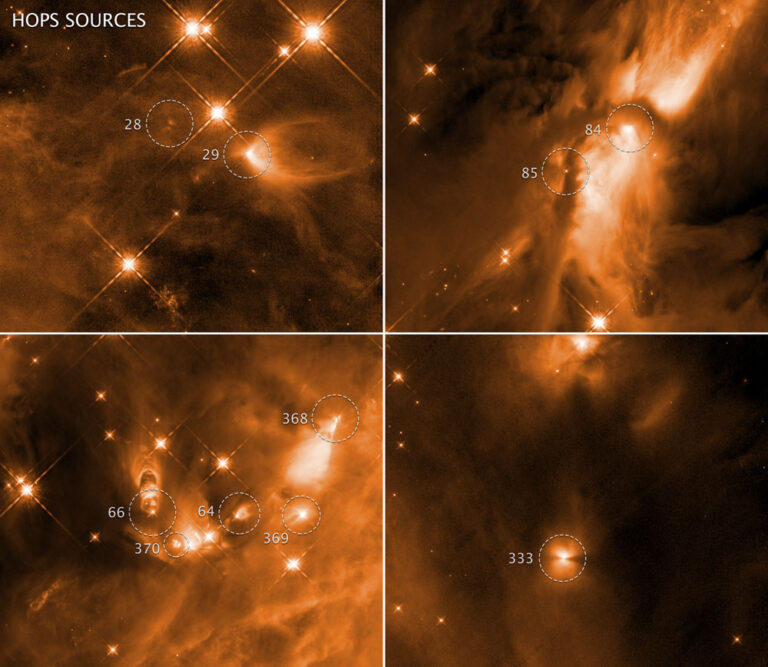
Astronomy in Pictures: Jupiter's Aurora, Cosmic Threads & Newborn Stars
This week in pictures: Astronomers have watched auroral storms at Jupiter, imaged strands of the cosmic web, and seen stellar fireworks off the sword of Orion.

This Week's Sky at a Glance, March 19 – 27
The waxing Moon shines with Mars and Aldebaran on Friday evening the 19th. From there the Moon marches east day by day – first between the horn stars of Taurus, then across Gemini to sidle up to Castor and Pollux on the 22nd.

Is an Ocean of Mars Water Trapped in the Planet’s Crust?
A new study suggests that by 3 billion years ago, most of the Red Planet’s water was locked away in minerals, and it has stayed there ever since.

New Studies Agree: The Universe Is Expanding Faster Than Expected
Measurements of elliptical galaxies provide a new way of calculating the current expansion rate of the universe. And the results are adding to a growing controversy.

Exploring Bright Galaxy Groups in Leo
Leo, the Lion, stands high in the southern sky during the early spring. We visit some of the constellation's brighter galaxy clumps then go asteroid hunting.

Can We Expect Seven Interstellar Visitors Per Year?
A new study estimates the number of interstellar objects that fly through the inner solar system every year, and it could be quite a lot.

Karma Asteroid Family Might Be Sending Members Near Earth
New simulations have identified the Karma family of asteroids in the main belt as a potential source of near-Earth asteroids.

Zodiacal Dust Seen from Earth Might Come from Mars
Much of the solar system’s interplanetary dust — seen as zodiacal light from Earth — might come from Mars.

This Week's Sky at a Glance, March 12 – 20
The waxing Moon passes between Mars and Aldebaran in the evening sky. Arcturus, the "Spring Star," climbs up in the east, while wintry Orion tilts down in the southwest.
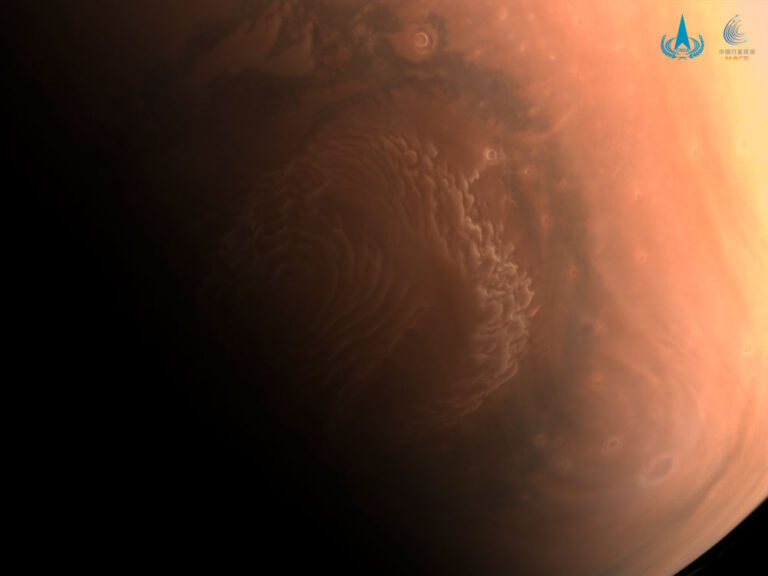
See the Latest Stunning Images from Mars
NASA's Perseverance rover, China's Tianwen 1, and the United Arab Emirates' Hope orbiter share their latest photos from Mars.

Arecibo's To-be-determined Future
As cleanup operations are underway at Arecibo Observatory in Puerto Rico, some scientists are proposing a replacement for the esteemed radio dish.

Meet Alnilam, Orion’s Belt Buckle
Alnilam, the middle star of Orion's distinctive belt, is a distant supergiant that will (eventually) end its life in a supernova.

What — and Where — Is the North Polar Spur?
Astronomers make the case that a gigantic ridge of gas sticking out of the galactic plane was blown out by a cluster of nearby supernovae.

Perseverance's Fortnight of Firsts on Mars
NASA's Perseverance rover sends back postcards aplenty following its arrival on Mars as it prepares to explore Jezero Crater.

Asteroid Apophis Pays Earth a Visit This Week
When a potentially hazardous asteroid glides safely past Earth on March 6th, astronomers will conduct a dress rehearsal for a dramatic close-miss pass in 2029.
