 SUNSET:

 5
5As wildfire season expands, observers across much of the country try to make do.
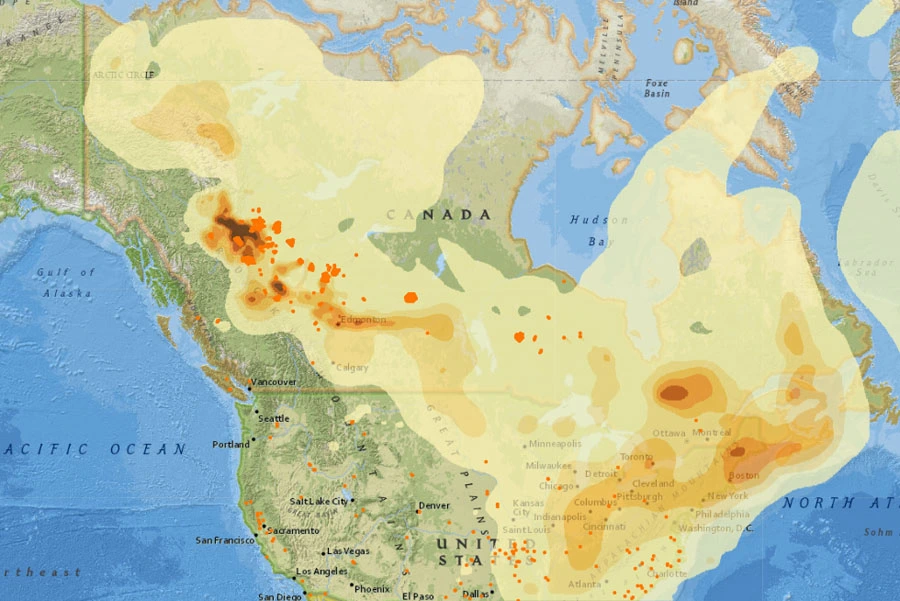
BlueSky Canada project and firesmoke.ca
The bad news arrived the night of May 29th. I drove to a dark site to observe and photograph the northern lights only to discover that a pall of Canadian wildfire smoke had concealed them from view. Time-exposures revealed faint wisps of aurora in a star-sparse sky. The smoke has been with us in varying degrees every night since and doesn't look to dissipate anytime soon. To monitor sky transparency, I count the number of stars visible from a dark, rural location. On May 30th, I extricated a measly 17 stars with effort. Two nights later, my tally rose to 24.
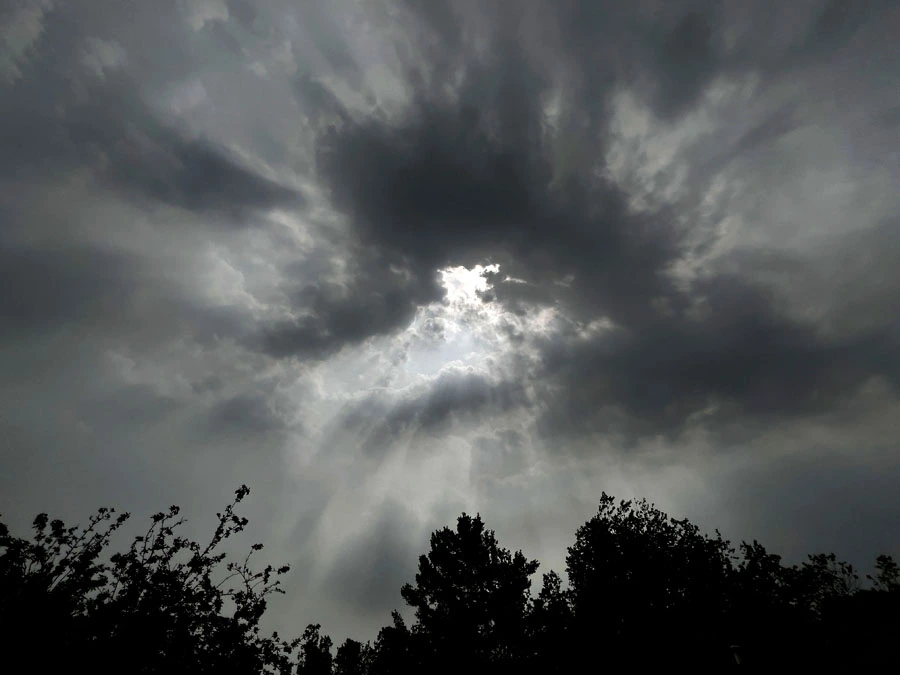
Bob King
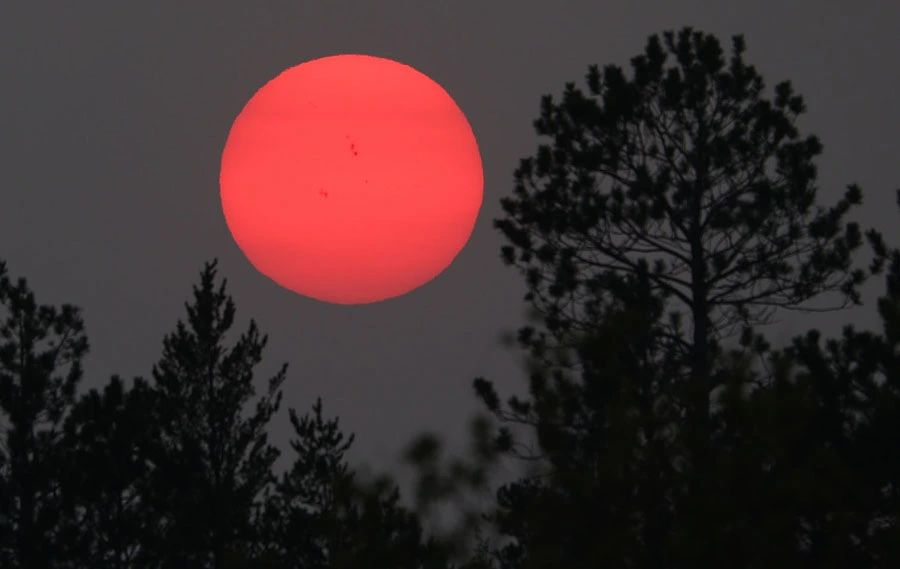
Occasionally, the smoke thins, the stars thicken, and the daytime sky regains a healthier blue hue. Still, I fear we're stuck with this fire-induced miasma for much of the summer. While the northern U.S. is particularly susceptible to wildfire smoke because it borders Canada, winds can spread the eye-burning haze far and wide. Tongues of brown-colored smoke have dimmed the Sun along the East Coast, Central Plains, Midwest, and Appalachia. Forest fires in California further extend the burning season, making widespread smoky skies a fact of life through the early fall.
While human health effects, coupled with images of hazy cityscapes and the glaring-red noontime Sun are often reported on in the media, amateurs are keen to another facet of the issue — the wholesale disappearance of the stars. Light pollution is bad enough but add in smoke and observing gets sketchier yet. These days, I track the weather and study satellite imagery to search for a clearing.
Bob King
Until the sky resumes its usual transparency, I've removed all deep-sky objects from my visual observation list except for higher-altitude globular and open clusters. Fortunately, some current targets still hold their own under poor skies. These include the Sun (both white-light and hydrogen-alpha viewing), the Moon, Venus and Saturn in the morning sky, and brighter variables and double stars. Astroph0tography with smart telescopes, while compromised, remains doable by increasing exposure times.
While seeing the Sun or Moon turn cherry-red long before either sets is an incredible sight, I miss seeing the evanescent colors of the twilight transition that add so much to the charm of a sunrise or sunset. Wildfire smoke absorbs these hues, effectively neutralizing the scene.

Bob King
That said, don't miss the low-arcing Strawberry Moon on June 11th. It rises in Sagittarius a little past full phase more than 5° south of the ecliptic, at declination –29.2°, close to the southernmost extreme of its range. No full Moon will track lower across the sky for Northern Hemisphere observers this year and for the next couple decades. The event is part of the current major lunar standstill, which you can read more about in the June issue of Sky & Telescope magazine.
Stellarium
Double Stars for Polluted Skies
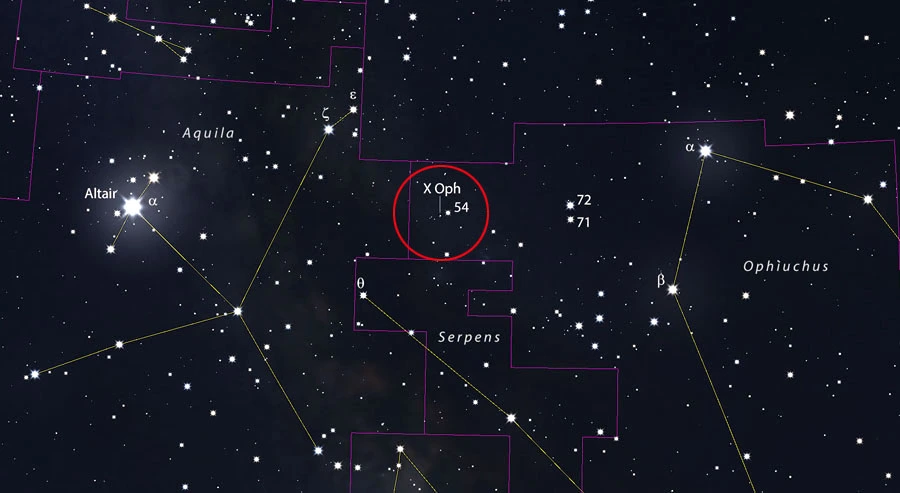
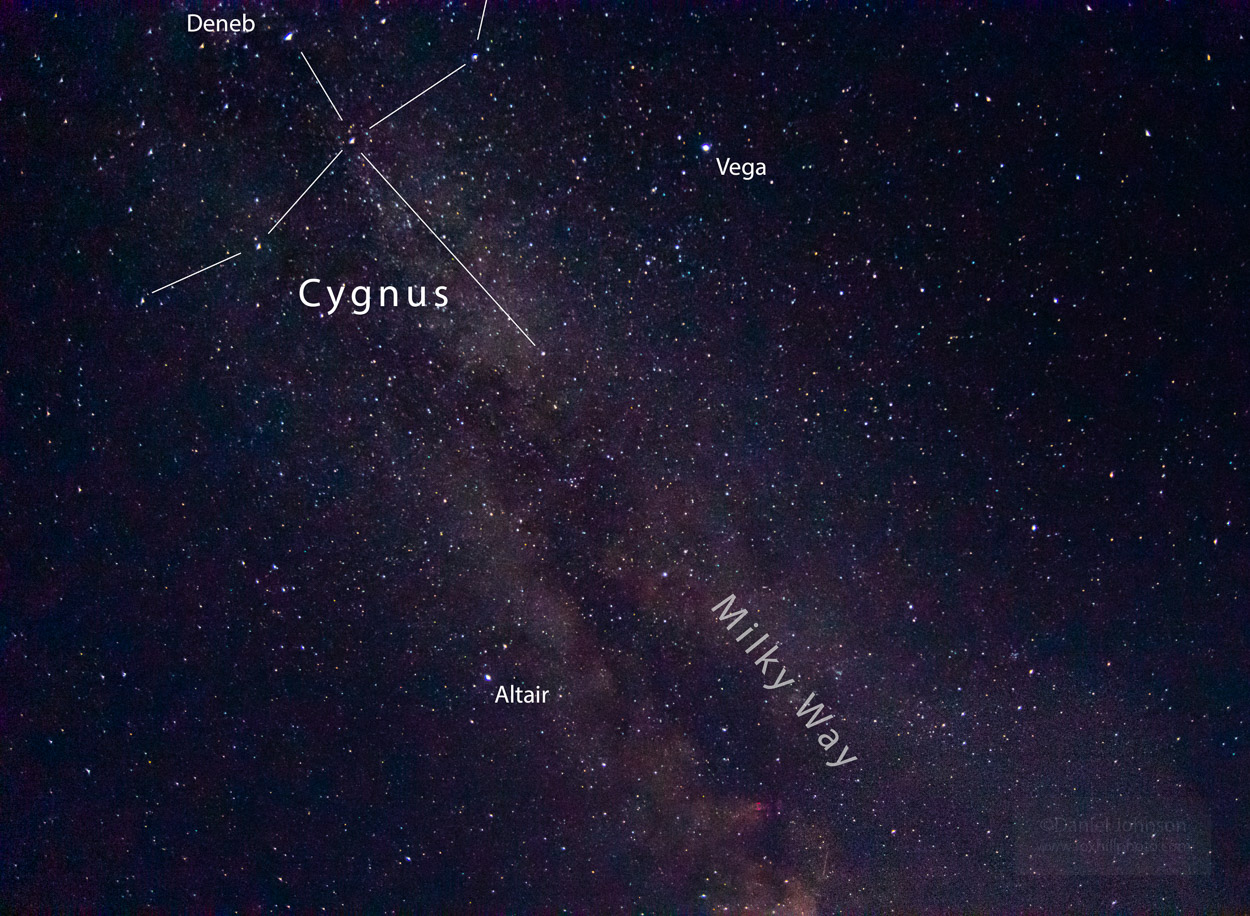
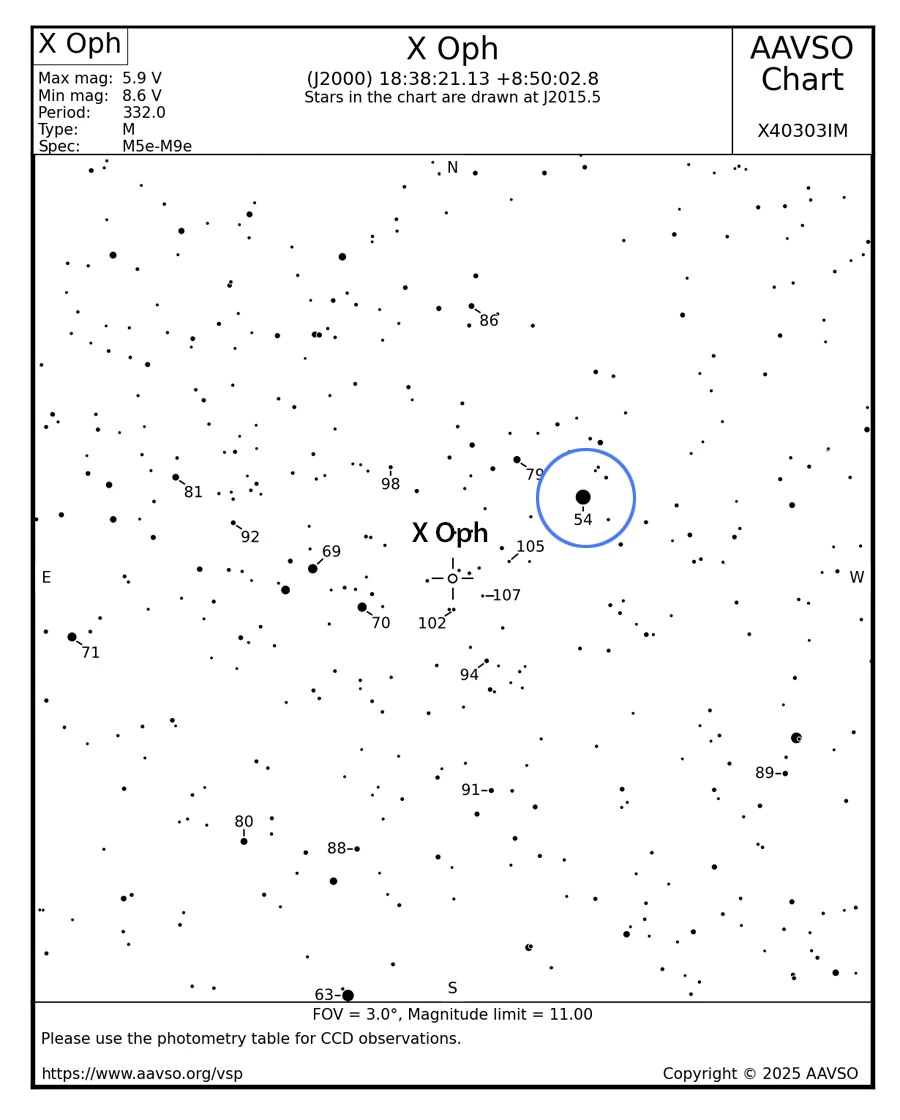
If your skies are degraded, and you're hanging your head about what to observe, let me suggest a clutch of delightful double stars located within a few degrees of the bright star Vega. I was inspired to choose Vega because on smoke-filled nights, it's one of the few stars that shines through the soup. Just point your scope at Lyra's prime luminary and star-hop from one pair to the next. As a variable-star aficionado, I also suggest X Ophiuchi, a bright, Mira-type variable located in northeastern Ophiuchus near the Aquila border. It varies from magnitude 5.9 to 8.6 with a period of 332 days. In mid-June the red giant reaches its peak at around magnitude 6.5 — perfect for smoky nights. A pair of 50-mm binoculars will help coax it into view.
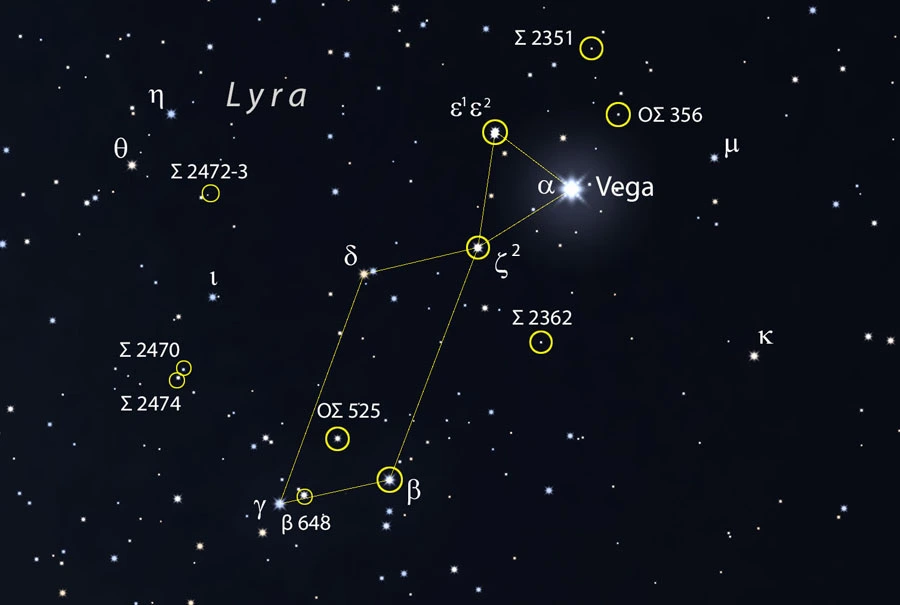
Stellarium with annotations by Bob King
Vega-centric double and multiple stars
| Star | RA | Dec. | Mag. primary | Mag. secondary | Separation | P.A. | Notes |
| OΣ 356 | 18h 33.3m | +40° 10′ | 7.3 | B=9.2 C=10.9 | AB=28.3″ AC=48.1″ | AB=302° AC=9° | Optical triple |
| Σ2351 | 18h 36.2m | +41° 17′ | 7.6 | 7.6 | 5.0″ | 160° | Optical but very convincing! |
| Σ2362 | 18h 38.4m | +36° 03′ | 7.5 | 8.7 | 4.4″ | 187° | Possible double |
| ε1ε2 Lyrae ε1 = AB ε2 = CD | 18h 44.3m | +39° 40′ | A=5.2 C=5.3 | B =6.1 D=5.4 | AB =2.2″ CD =2.3″ | AB =345° CD =75° | "Double-Double" physical quadruple. Pairs 209″ apart |
| ζ2 Lyrae | 18h 44.8m | +37° 36′ | 4.3 | 5.6 | 43.7″ | 150° | Physical |
| β Lyrae | 18h 50.1m | +33° 22′ | 3.6 | 6.7 | 45.7″ | 149° | Physical |
| OΣ 525 | 18h 54.9m | +33° 58′ | 6.1 | 9.1 | 1.8″ | 130° | Possible |
| β 648 | 18h 57.0m | +32° 54′ | 5.3 | 8.0 | 1.2″ | 225° | Physical |
| Σ2470 | 19h 08.8m | +34° 46′ | 7.0 | 8.4 | 13.8″ | 267° | Optical "Double-Double" with Σ 2474 |
| Σ2474 | 19h 09.1m | +34° 36′ | 6.8 | 7.9 | 16.0″ | 262° | Physical |
| Σ2472 | 19h 08.6m | +37° 55′ | 8.4 | C=10.3 D=10.5 | AC=75″ AD=79″ CD=6.2″ | AC=348° AD=344° CD=294° | Physical CD pair is Σ 2473 |
Climate change has made fires more frequent and deadly across Canada and the western U.S. in recent years. Warmer summers coupled with less (or erratic) rainfall have parched the forests and soil, making them more susceptible to lightning and human-caused fires. Where I live in Minnesota, smoky nights were an occasional nuisance from the 1980s through the early 2000s. However, since about 2015, summertime wildfire smoke has become the norm for days and sometimes weeks on end. If you're suffering from the same, hang in there. You've got company.
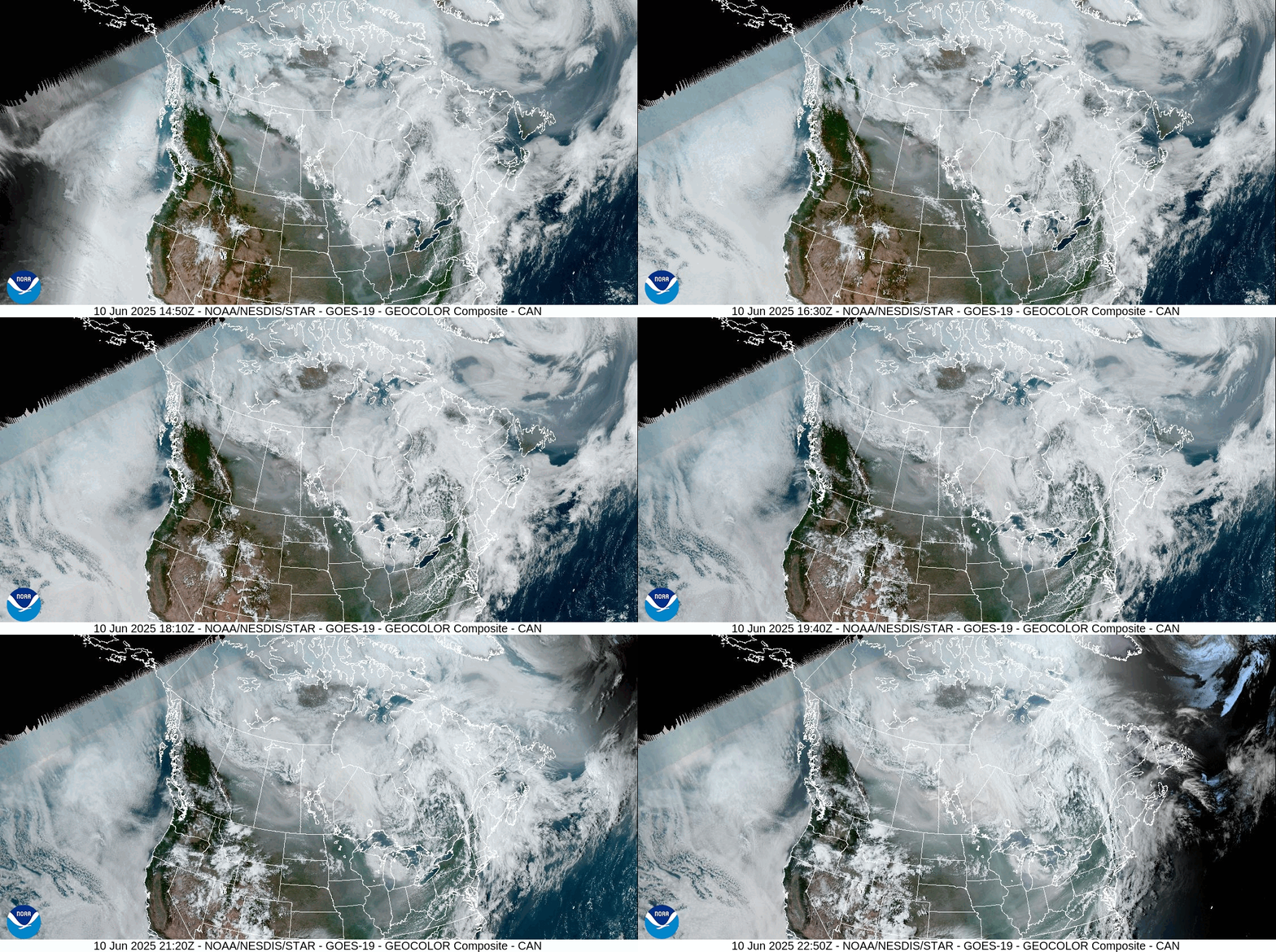
NOAA
About Bob King
I love the sky (day and night) and have been a skywatcher and amateur astronomer since childhood. I'm also a long-time member of the American Association of Variable Star Observers (AAVSO) and Astronomical League. I pen the Astro Bob blog and have written four books: Night Sky with the Naked Eye (2016); Wonders of the Night Sky You Must See Before You Die (2018) and Urban Legends from Space (2019) and Magnificent Aurora, published in 2024. The universe invites us on an adventure every single night. To accept the invitation, we only need look up.



Comments
Jim-Gasser
June 12, 2025 at 10:42 am
Yes, hang in there. I feel a tad better knowing I have company under smoky skies, somewhat surprisingly in Ohio. Being almost 68 years old I can anecdotally attest to the fact that when I was starting in astronomy as a kid, “smoked-out” skies was not part of our summer scene. I try to point this out at my outreach events. In the 60s and 70s concerns for air pollution (smog) was the primary long term worry. Now it’s light and smoke. Appreciate you recommending double stars and some photography, but I miss the glory of just gazing at the stars under a crystal sky…
You must be logged in to post a comment.
Bob KingPost Author
June 15, 2025 at 1:00 pm
Hi Jim,
So true. After 15 smoky nights I finally got to see the stars under a smokeless sky on June 13th. I was honestly taken aback at how bright they appeared. They sight taught me how quickly we can become adapted to smoke and light-pollution as the norm.
You must be logged in to post a comment.
OwlEye
June 18, 2025 at 8:10 pm
Hi Jim,
I agree with you. I lived in Delphos, Ohio, from August of 1971 to August of 1983, and I never noted any extended periods of smoke. I am curious, from where in Ohio do you hale?
You must be logged in to post a comment.
OwlEye
June 18, 2025 at 5:58 pm
Hi Bob,
Yes, our skies have been one of the latest victims of global warming. Here in northeast Kansas, we have had our summer days and nights smoked out since 2020. That July, I was so excited to see and image the Great Comet NEOWISE, but alas, it was very difficult to observe and photograph.
I'm wondering, when will the western US be set ablaze this year?
However, you optimistically point out that there are many celestial objects out there not as dependent upon transparent skies as deep-sky objects and comets.
I am looking forward to autumn and winter skies already!
Regards,
Doug Z
You must be logged in to post a comment.
Bob KingPost Author
June 18, 2025 at 9:21 pm
Hi Doug,
Thanks for your comment. My only "for certain" dark seasons are spring and fall. Summer has become quite smoky, and the reflected light (due to light pollution) from snow cover where I live makes for poor transparency.
You must be logged in to post a comment.
You must be logged in to post a comment.