 SUNSET:

 0
0The highly anticipated Comet Tsuchinshan-ATLAS will come into evening view for Northern Hemisphere observers starting October 11th.
Note to Editors/Producers: This release is for viewers in the U.S., Canada, and elsewhere from latitudes 25° to 50° north. This release is also accompanied by high-quality graphics; see the end of this release for the images and links to download.
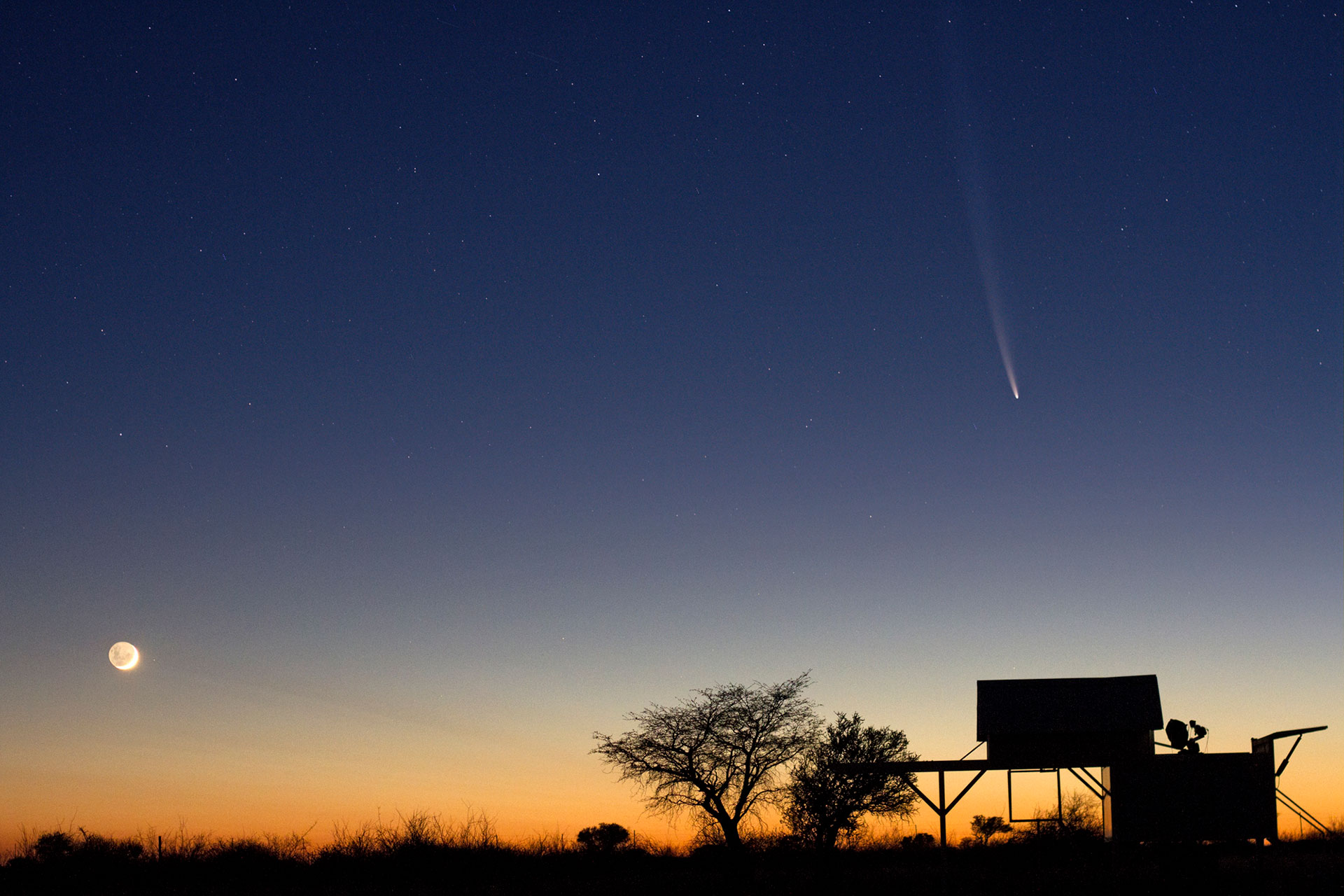
For the first time in years, we're about to see an easily visible comet. Friday should bring the first evening glimpse of the comet, low in the west during twilight. The comet will appear higher in the sky and become easier to spot through the weekend. By early next week, it will be at its best for viewing.
For tens of thousands of years Comet Tsuchinshan-ATLAS (pronounced tsih-chin-SHAHN), also known as C/2023 A3, has been falling in toward the Sun. Astronomers discovered it in early 2023 as a tiny, distant speck in large telescopes. Having just swung around the Sun on September 27th, it's now passing its closest by Earth, coming within 44 million miles of us on October 12th. For the next days, it will be showing off during its brief time of glory in the Sun's warmth and light.
How to See the Comet
"As soon as October 11th, ambitious comet spotters may pick up the comet during twilight just above the western horizon," says Sky & Telescope Contributing Editor Bob King. "Binoculars will help you see the comet throughout its appearance."
About 40 minutes after sunset on Friday, find a spot with a good view down to the western horizon. The first thing that will catch your eye will be the bright planet Venus, the Evening Star — that's your starting point. Hold your fist out at arm's length; the comet is about 2½ fists to Venus's right. The comet will still look tiny in Friday's twilight — like a hazy star with a small tail — and will set while twilight is still in progress.
But that's just the warm-up.
The next evening, on Saturday, October 12th, Tsuchinshan-ATLAS will be a little higher and easier to find, and it will remain in view until a little later in twilight. Every evening thereafter, the comet will appear higher and more obvious. As twilight fades on Monday, October 14th, it will be two fists to the upper right of Venus (if seen from the northern U.S.) or to the right of Venus (if seen from the southern U.S.). As twilight turns to night, the comet will remain in view, its long, straight tail pointing up from the horizon.
The following few days should provide the best views as the comet gains height in our skies — despite light from the waxing gibbous Moon.
Around October 20th, a window of true darkness begins to open up between twilight and moonrise if you're far from the skyglow of city lights. But by then the comet, now high in the sky, will have started to fade and shrink. It will diminish into the distance in the following days, becoming invisible to the unaided eye later in the month even under ideal, dark-sky conditions.
Comet Origins & Fate
The comet came by its name from its discovery at both China's Purple Mountain Observatory (tsuchinshan means "purple mountain") and South Africa's Asteroid Terrestrial-impact Last Alert System (ATLAS). The two teams picked up the comet independently in early 2023, when it was still beyond Jupiter's orbit and some 50,000 times fainter than the faintest stars visible to the unaided eye.
The comet's solid nucleus, the source of the whole show, is a dirty space iceberg, probably just a few miles wide. It fell in toward the Sun from the cold and dark outer solar system, originating in a region referred to as the Oort Cloud. As the comet nears the Sun's warmth, some of the ices in its nucleus (water, frozen carbon dioxide, and other volatiles) evaporate. The ensuing haze of sunlit dust and fluorescing gas forms the comet's visible head and streaming tail, which can be many millions of miles long.
In September, Comet Tsuchinshan-ATLAS was visible to the unaided eye before dawn in the Southern Hemisphere, then before dawn in the northern parts of the world, brightening all the while. It swung around the Sun on September 27th and, fortunately for us, enters the Northern Hemisphere's evening sky while still glowing brightly. But as it recedes from both Earth and the Sun, it will dwindle relatively quickly — there's no hope of seeing it with the unaided eye on Halloween evening. It will probably remain visible through binoculars through early November. Its orbit is only weakly gravitationally bound to the Sun, so it will spend future ages coasting ever farther out of the solar system, probably never to return.
More Information
Read more about this grand event in the October 2024 issue of Sky & Telescope, and see S&T's online coverage on the comet.
Contact Us
Bob King, Contributing Editor to Sky & Telescope
+1 218-391-5113, [email protected]
Susanna Kohler, Communications Manager and Press Officer, American Astronomical Society
+1 202-328-2010 ×127, [email protected]
Illustrations
Sky & Telescope is making the illustrations below available to editors and producers. Permission is granted for nonexclusive use in print and broadcast media, as long as appropriate credits (as noted) are included. Web publication must include a link to skyandtelescope.org.

Sky & Telescope illustration
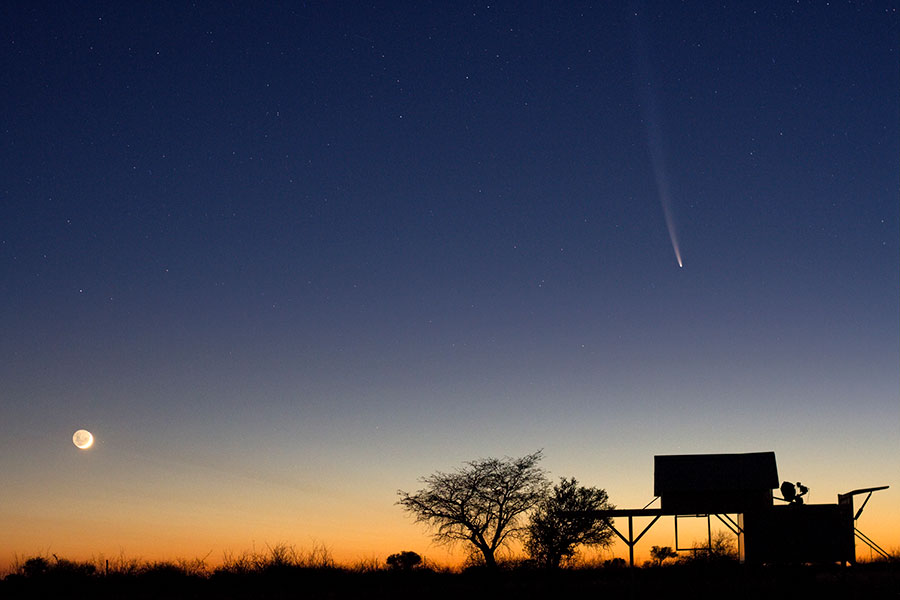
Gerald Rhemann / Michael Jaeger
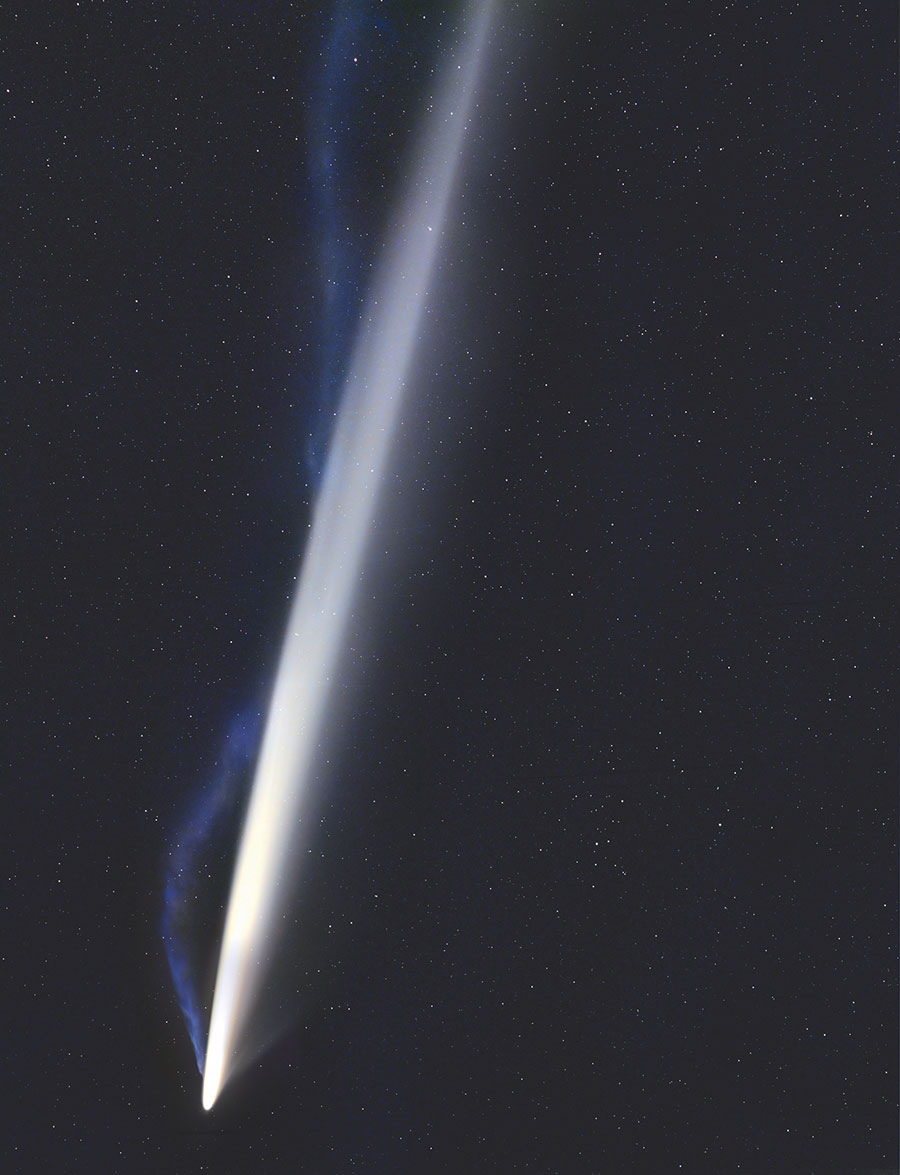
Gerald Rhemann / Michael Jaeger
For skywatching information and astronomy news, visit skyandtelescope.org or pick up Sky & Telescope magazine, the essential guide to astronomy since 1941. Sky & Telescope and skyandtelescope.org are published by the American Astronomical Society, along with books, star atlases, posters, prints, globes, apps, and other products for astronomy enthusiasts, sold at shopatsky.com.
The American Astronomical Society (AAS), established in 1899, is a major international organization of professional astronomers, astronomy educators, and amateur astronomers. Its membership of approximately 8,000 also includes physicists, geologists, engineers, and others whose interests lie within the broad spectrum of subjects now comprising the astronomical sciences. The mission of the AAS is to enhance and share humanity’s scientific understanding of the universe as a diverse and inclusive astronomical community, which it achieves through publishing, meetings, science advocacy, education and outreach, and training and professional development.





Comments
You must be logged in to post a comment.