 SUNSET:


Saturday Morning: Moon, Venus, and Mercury
Two planets and a pretty crescent Moon gather low above the southeastern horizon before dawn on February 6th.

It's Not Over Till The Fast Planet Sinks
This week and early next will be your last chance to see five planets — six if you count Earth — at dawn.
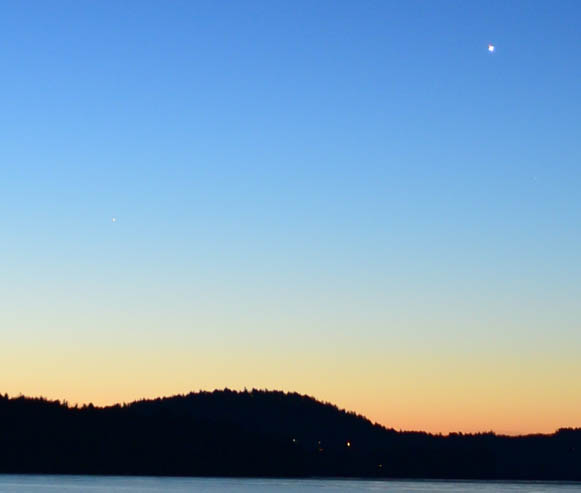
Look Now to See Five Planets at Once!
The first days of February offer your best chance to see all of the naked-eye planets — from Mercury to Saturn — together with the Moon in the predawn sky.

This Week's Sky at a Glance, January 29 – February 6
The last-quarter Moon rises around 1 a.m. Sunday night, in company with Mars. By the dawn of Monday the 1st they're high in the south.

Tour February's Sky: Five Planets at Dawn!
This month's audio sky tour starts before dawn, when you can spot all five bright planets by eye, and moves to the sparkling stars seen on winter evenings.
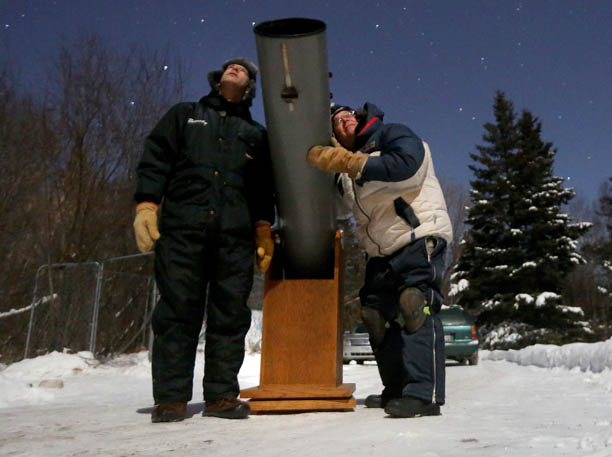
How To Stay Warm Observing In Winter
Does the cold make you think twice about winter observing? Here are a few tips on how to do it in comfort.

With Mercury's Arrival, Five Planets in View
Early risers have been patiently waiting for the innermost planet to join four others — and the Moon — in the predawn sky. Now they're all in view.
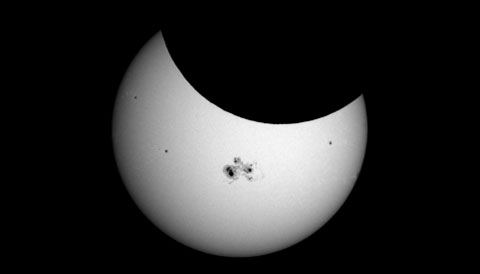
Solar and Lunar Eclipses in 2016
There will be four eclipses in 2016. Highlights are a total solar eclipse on March 9th (visible from Indonesia) and an annular solar eclipse on September 1st (central Africa). But we'll see just two barely-there penumbral eclipses, on March 23rd and September 16th.
This Week's Sky at a Glance, January 22 – 30
See all five planets at dawn! The nearly-full Moon shines in Gemini Friday evening — with Castor and Pollux to its left and Procyon to its lower right.
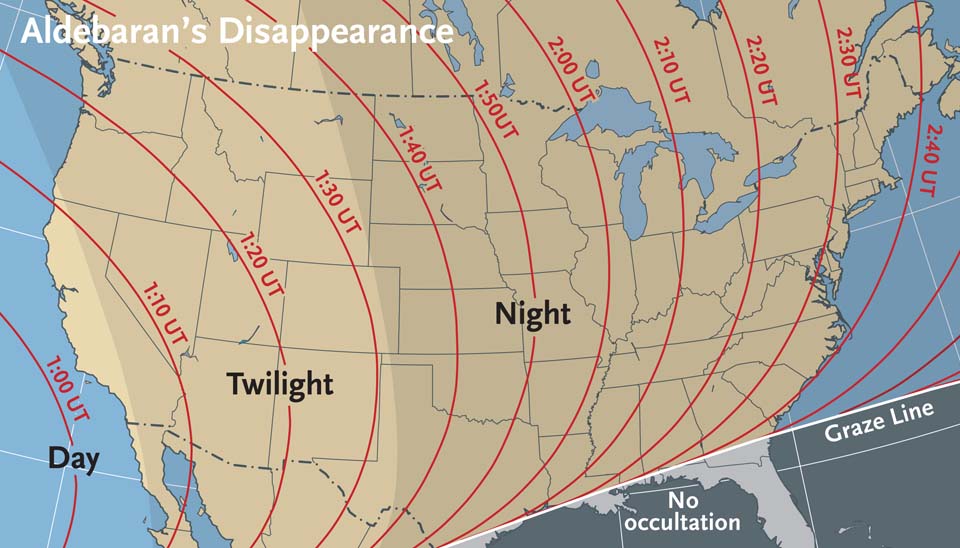
Tonight's Easy Aldebaran Occultation
North Americans have front-row seats when the Moon covers up the brightest star in Taurus.

Get Up Early, See Five Visible Planets at Once!
Over the next two weeks, for the first time in more than a decade, you can see all of the naked-eye planets — from Mercury to Saturn — together in the predawn sky.
This Week's Sky at a Glance, January 15 – 23
The Moon shines in dim Pisces upper left of the Great Square of Pegasus. Does the half-lit Moon look just a trace bigger than usual? It's about at perigee.

Asterisms for Winter Nights
Asterisms appeal to our playful side but also serve as key waypoints in the sky for identifying fainter stars and constellations.
This Week's Sky at a Glance, January 8 – 16
Comet Catalina (C/2013 US10) is fading but still within view. A special treat on January 9th: Venus and Saturn just half a degree from each other.

Picking Plums in the Galactic Anticenter
In winter, we face the Milky Way's anticenter, a little-explored region offering goodies for telescopes both large and small. Few give much thought to the Milky Way's anticenter, a lonely locale 180° opposite the busy metropolis of Sagittarius, where the summer Milky Way glitters like Vegas. On winter nights, Sagittarius lies behind us, hidden by Earth's…
This Week's Sky at a Glance, January 1 – 9
Comet Catalina (C/2013 US10) remains visible very high in the southeast before the first light of dawn. For more to see, look to Orion in prime view.
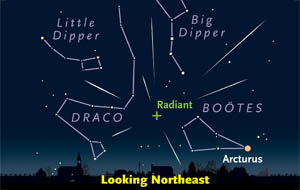
Quadrantid Meteors Start 2016 with a Bang
The Quadrantid meteors, the year's least-observed major meteor shower, should be in plain sight when it peaks early on January 4th.
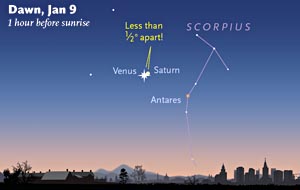
Tour January's Sky: Venus & Saturn Pair Up
The first month of 2016 offers a close pairing of Venus and Saturn before dawn, a strong meteor shower, and a parade of bright stars after sunset.
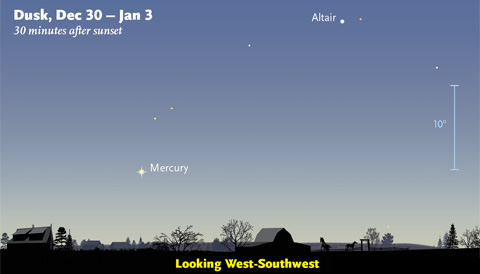
Mercury Shines at Dusk This Weekend
Mercury is usually a shy and elusive catch for naked-eye skywatchers, but for the next few days it shows itself boldly if you look at the right time.
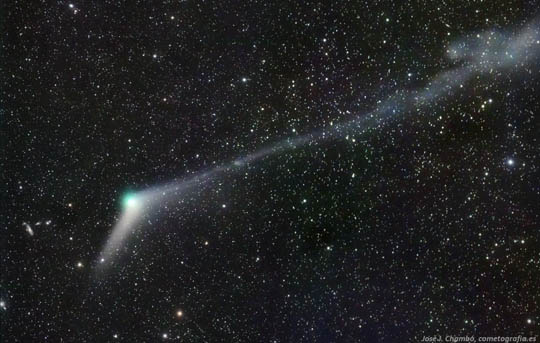
Comets To Catch in 2016
A look ahead to see what new and returning comets will spice up the new year in 2016.
