 SUNSET:

Stargazer's Corner: Adventures Under the Night Sky
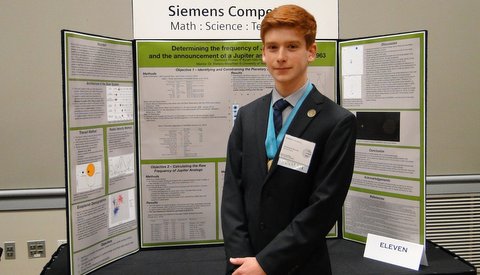
High School Student Discovers New Exoplanet
Dominick Rowan, a senior in the Science Research program at Byram Hills High School in New York, helped discover a Jupiter-mass exoplanet in a 6.5-year orbit around its star and calculate the frequency of Jupiter analogs in other systems.
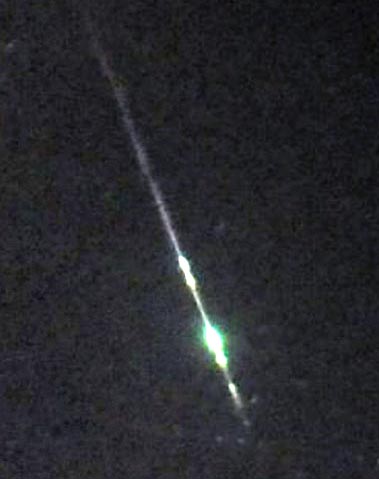
Meteor Showers in 2016
Sky & Telescope predicts that the two best meteor showers in 2016 will be the Quadrantids in early January and the Perseids in mid-August.
This Week's Sky at a Glance, December 25 – January 2
The Christmas Moon, a day past full, hangs in Gemini. Look for Castor and Pollux to its left. High above shines the constellation Auriga.
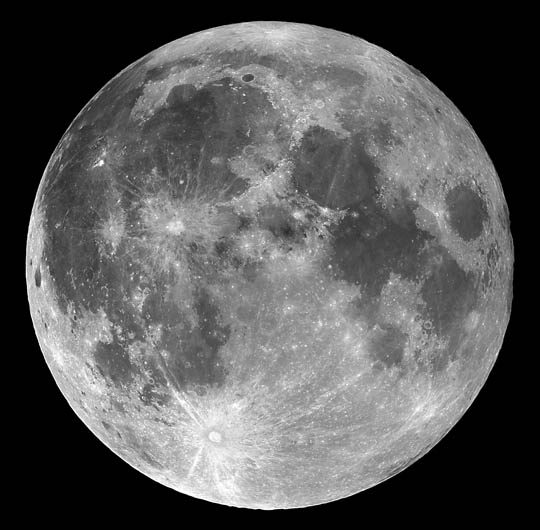
What to See with Your New Telescope During 2015 Holidays
Thousands of telescopes are given and received as gifts during the holidays. But once you've assembled your new treasure, then what? Moon, stars, planets? The editors of Sky & Telescope magazine point the way.
This Week's Sky at a Glance, December 18 – 27
Friday evening, the first-quarter Moon shines under the left side of the Great Square of Pegasus. Can you see the Moon moving with respect to this line as the hours go by?
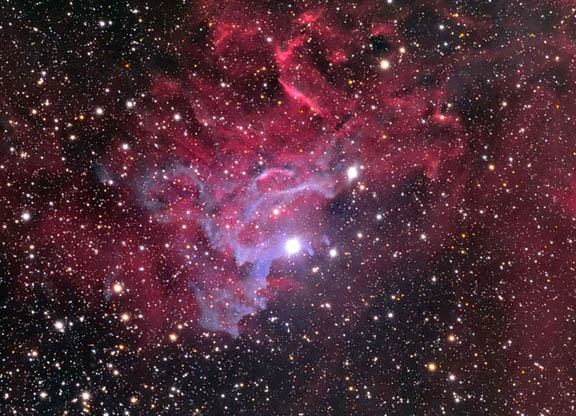
Run Away With These Runaway Stars
Three stars that once belonged to Orion flew the coop millions of years ago, but you can catch up with them with binoculars the next clear night.

This Week's Sky at a Glance, December 11 – 19
Sirius is the brightest star in the night sky. Have you ever tried to catch Sirius rising? It rises between 7:30 and 8:30 p.m., depending on where you live.

Tale of Capella and the Two Red Dwarfs
Bright Capella plays it close to the vest when it comes to companions, but with a good map and steady skies you can track down its dwarf binary.

Geminids in 2015: Moonless and Marvelous
The nights of December 13th and 14th offer dark nights for this popular under-appreciated meteor display.

Rate the Darkness of Your Sky
A new website shows how light pollution spreads around the globe — using data gathered by its users.
This Week's Sky at a Glance, December 4 – 12
The Summer Triangle remains in the western sky these cold evenings. Its brightest star is Vega; look above for Deneb and farther to Vega's left is Altair.
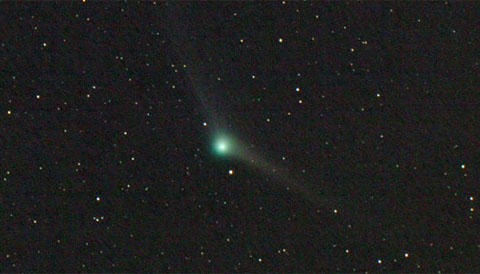
Get a Predawn Peek of Comet Catalina
Our current visitor from the Oort Cloud, rising into northern skies at last, can be glimpsed with binoculars low in the east before dawn. Spotting it will be especially easy on December 7th.
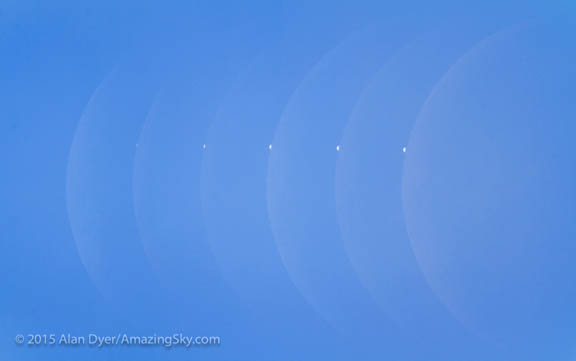
Moon Occults Venus on December 7th
After taking us to Comet Catalina's doorstep, the Moon covers Venus in a spectacular daytime occultation visible from most of North and Central America on Monday, December 7, 2015.
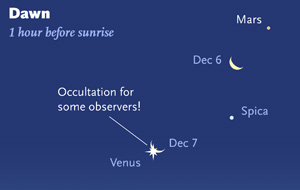
Tour December's Sky: Planets and Meteors
This month offers great variety in the night sky: planets (and a comet!) before dawn, a strong meteor shower, and a parade of bright stars after sunset.
This Week's Sky at a Glance, November 27 — December 5
Before and during dawn, Venus shines within 5° of Spica from Saturday through December 2nd. Look also for star Gamma Virginis just to Mars's left.

Moon Illusion is All in Your Head
Is perception reality? Not when it comes to the Moon illusion. See the truth with your own eyes at the rising of the next full Moon.
This Week's Sky at a Glance, November 20 – 28
Before dawn Saturday morning, look east for Jupiter and Venus. Between them is little orange Mars. Look carefully: very close to Mars is the star Eta Virginis.

Watch a Black Hole Eat Dinner
S5 0716+71, a bright blazar currently in a feeding frenzy, invites you over for dinner the next clear night.

Leonid Meteors in 2015: Modest but Moonless
This year's Leonid meteor shower, which peaks tonight, will offer modest numbers of "shooting stars" — but might reward you with some dazzling fireballs.
This Week's Sky at a Glance, November 13 – 21
The waxing crescent Moon hangs in the southwest after sunset. As twilight fades, can you make out any last stars of summery Sagittarius to its left? Bring binoculars!
