 SUNSET:

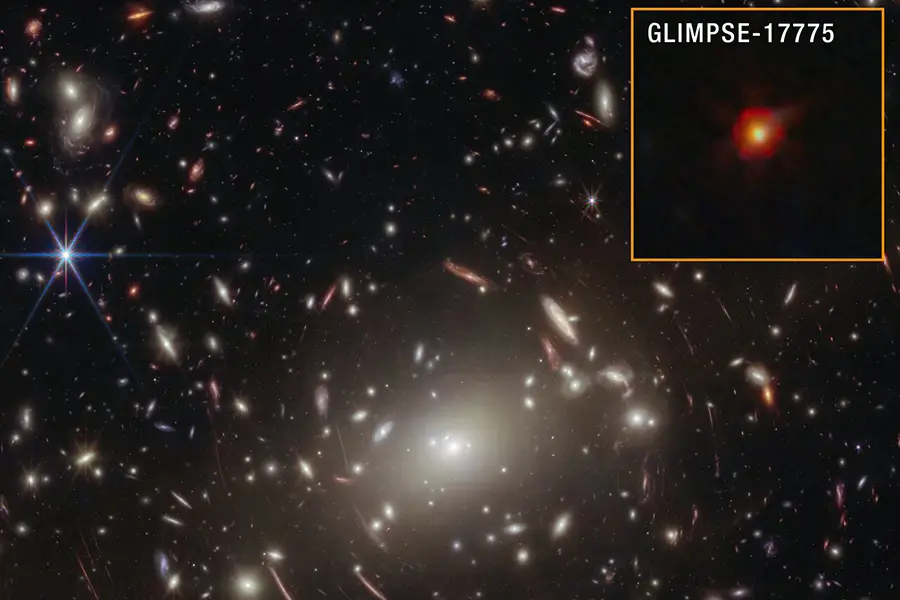
"Little Red Dot" Is a Cocooned Black Hole
A deep spectrum of a mysterious "little red dot" reveals a supermassive black hole cocooned in gas so dense it's opaque — but glowing in the infrared.
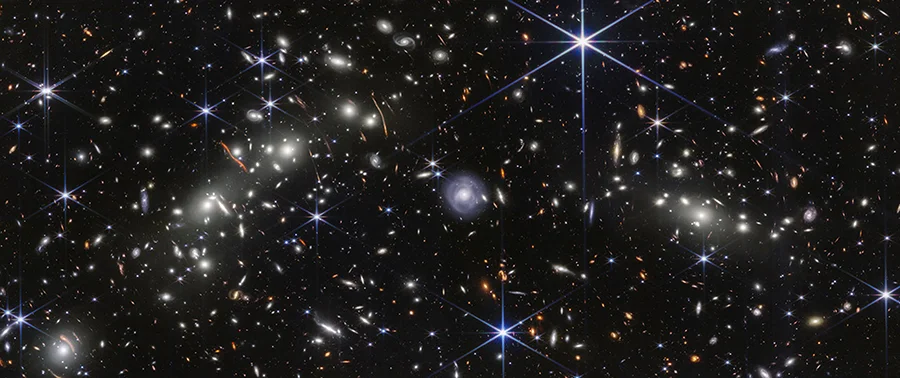
Webb Telescope Reveals Brown Dwarfs Masquerading as Early Galaxies
Two objects that appeared to be galaxies residing in a universe about 150 million years old turn out to be brown dwarfs in the Milky Way.
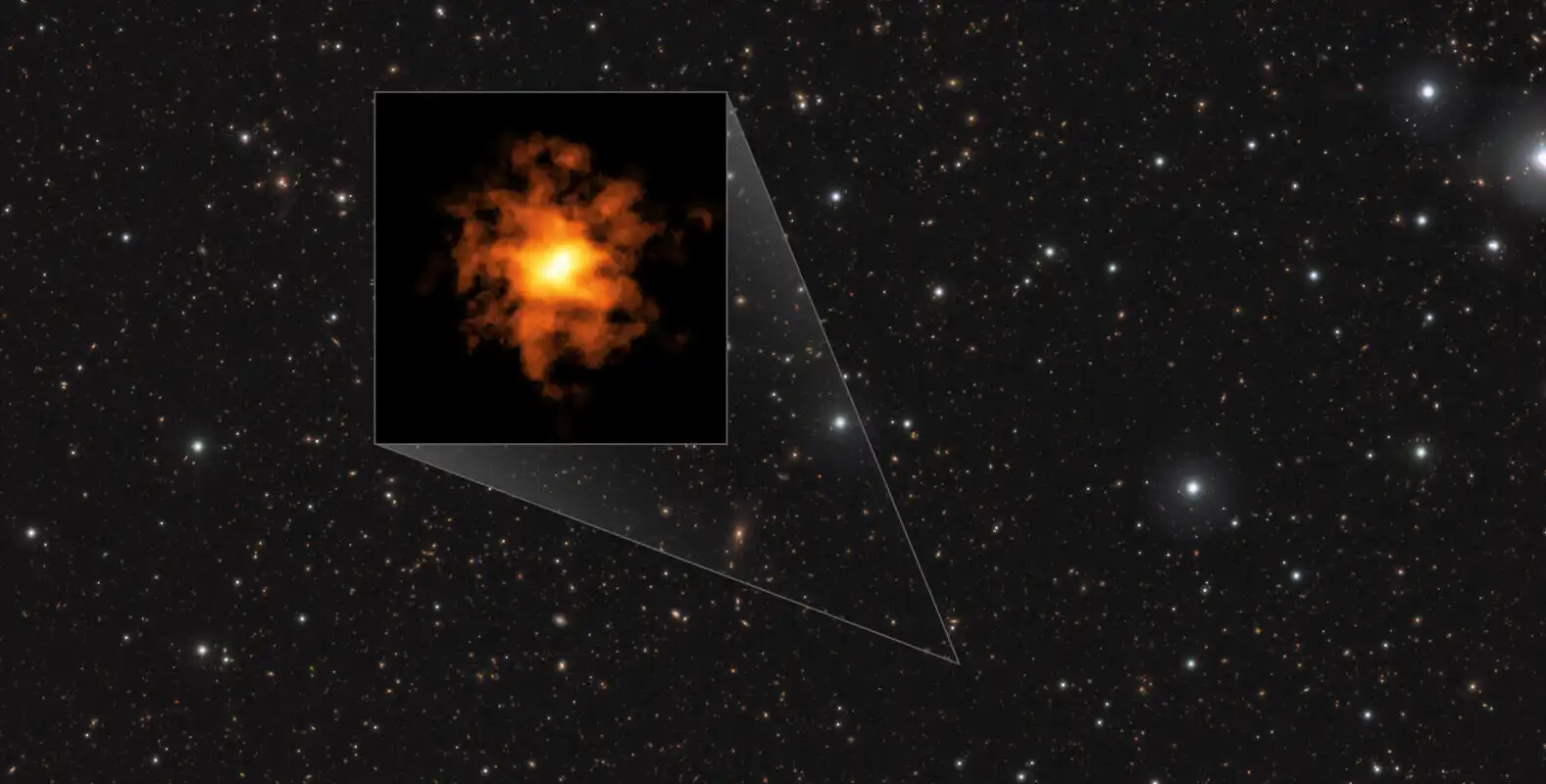
Early Galaxies Were Messy, New Study Finds
Astronomers have found that star-forming galaxies in the early universe were far messier than modern-day disk galaxies.

Early Galaxy Hosts Black Hole with the Mass of 50 Million Suns
Astronomers using the James Webb Space Telescope have confirmed that, just 800 million years after the Big Bang, there is a galaxy that contains a supermassive black hole — and not much else.

Most Distant Galaxy Confirmed in New JWST Images
New James Webb Space Telescope data shows us what the earliest known galaxy in the universe looks like.

Barred Spiral Galaxy Discovered in the Early Universe
The discovery of a barred spiral galaxy in a universe just a couple billion years old suggests that galaxies formed and evolved much more quickly than current theories suggest.

Cosmic Fog Lifted Earlier Than Expected
New observations show that the universe's first light penetrated the fog of the cosmic dark ages just 330 million years after the Big Bang.

Mysterious “Little Red Dots” Give Clues to Early Black Holes’ Formation
A new look at small red galaxies known as “little red dots” reveals that they’re surprisingly abundant in the early universe.

Webb Telescope Images Massive Early Galaxies, Still Finding More Than Expected
Webb Telescope data are still turning up more massive galaxies in the early universe than astronomers expect.

Trio of Early Galaxies Test Our Ideas of Cosmic Evolution
Some galaxies hailing from the infant universe may already hold vast populations of old stars.

Spiral Galaxies May Be a Dime a Dozen in the Early Universe
A new study with data from the James Webb Space Telescope found that galaxies may have started forming spirals far earlier than astronomers previously thought.

Webb Telescope Finds Strangely Bright Galaxies at Cosmic Dawn
Another record-breaker: Two galaxies date to only 300 million years after the Big Bang. How did they grow so big and bright so quickly?

The Milky Way Might Have Started Out Shaped Like a Pickle
Faraway dwarf galaxies in the universe's distant past — which will become modern Milky Ways — have an unexpectedly stretched-out appearance.

New Observations Reveal Galaxies Near and Far
Astronomers at this month's big winter conference explored intriguing small galaxies at various points in cosmic history.

Are These the Most Distant Galaxies Yet Seen?
Two fuzzy red objects in the early universe may be galaxies shining at us from only a few hundred million years after the Big Bang.

Most Distant Black Hole Yet
Astronomers have discovered a supermassive black hole scarfing down gas just 690 million years after the Big Bang.

About Those 2 Trillion New Galaxies . . .
The news that astronomers find the universe has 10 times more galaxies than previously thought? There's less to this than the headlines say.

ALMA Pans for Galactic Gold in the Hubble Ultra Deep Field
ALMA, the largest telescope array in the world, took a look at the Hubble Ultra Deep Field, and revealed the cosmic history of star formation.

Hubble Finds Most Distant Galaxy Yet
Astronomers using the Hubble Space Telescope have measured a precise distance to a galaxy dwelling in the cosmic dawn.
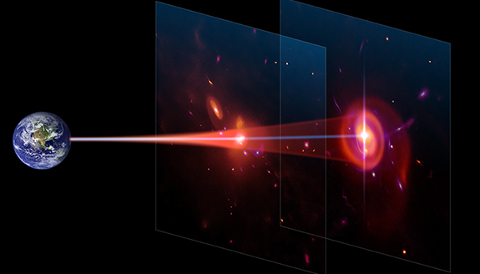
Seeing Shadows of Ancient Galaxies
A new technique lets astronomers measure nearly invisible clouds of hydrogen gas from across the universe.
