 SUNSET:

 0
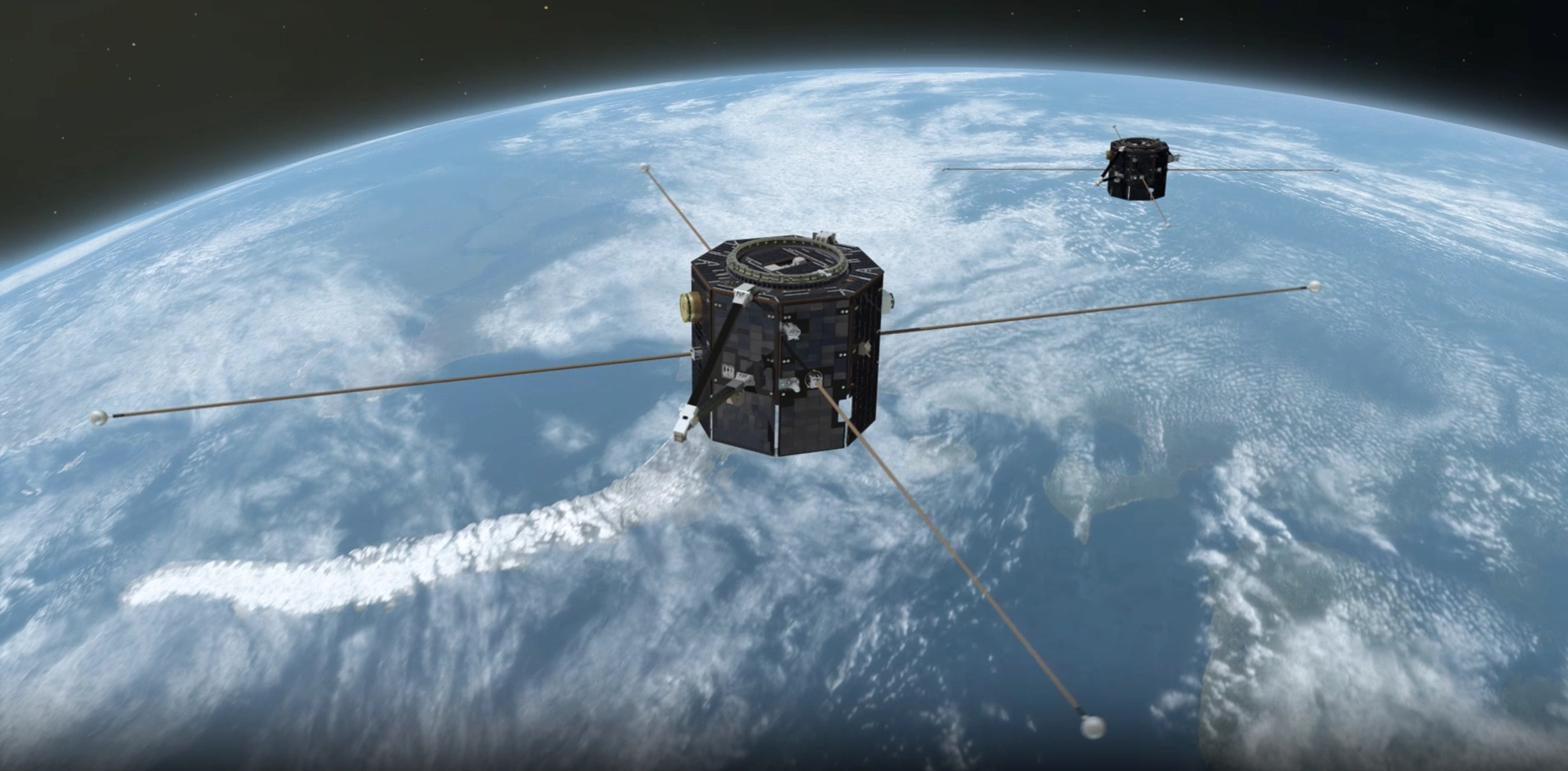
0NASA’s TRACERS spacecraft will look at the snap of magnetic field lines at the boundary between the solar wind and Earth’s magnetic field.
University of Iowa / Andy Kale
A new mission seeks to understand a key segment of space weather activity: The twin Tandem Reconnection and Cusp Electrodynamics Reconnaissance Satellites (TRACERS) spacecraft will probe the the sudden reorganization of magnetic fields, called magnetic reconnection, and its interaction with Earth’s atmosphere.
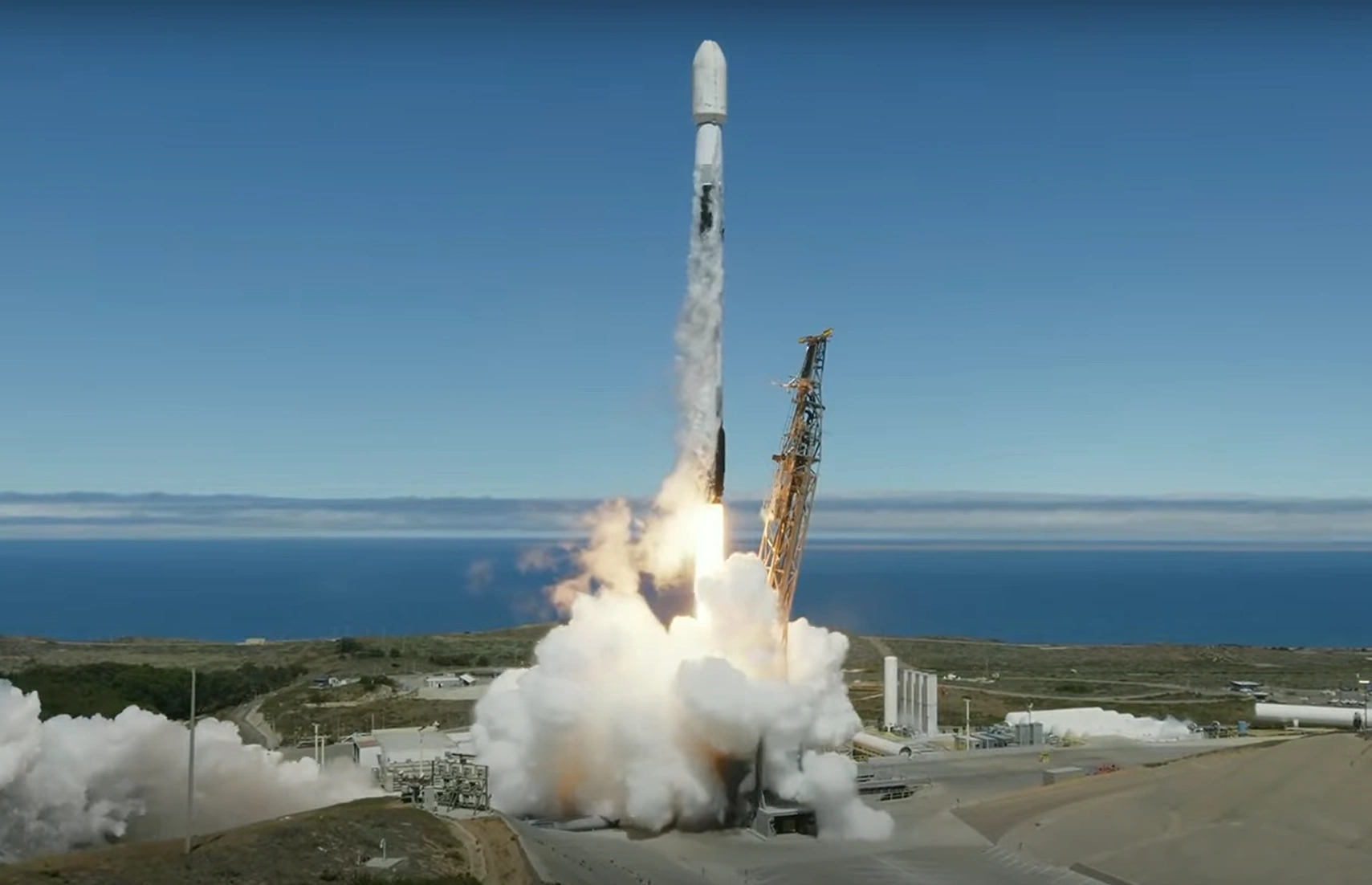
The SpaceX Falcon 9 rocket with TRACERS and other small satellite ride-shares lifted off from pad SLC-4E at Vandenberg Space Force Base on Wednesday, July 23rd at 18:13 Universal Time (UT). The Falcon Stage 1 booster landed successfully back at Vandenberg after boosting the payload into orbit. The timeline calls for the 11 spacecraft onboard to deploy over a one hour span, starting at 54 minutes after liftoff.
SpaceX
“TRACERS aims to tackle fundamental questions about magnetic reconnection, the fundamental process that couples mass, energy, and momentum from the solar wind into near-Earth space and drives space weather,” says David Miles (University of Iowa). “TRACERS data will be made publicly available in line with NASA’s open data policy. ” (Find the latest data at the TRACERS portal and the Space Physics Data Facility.)
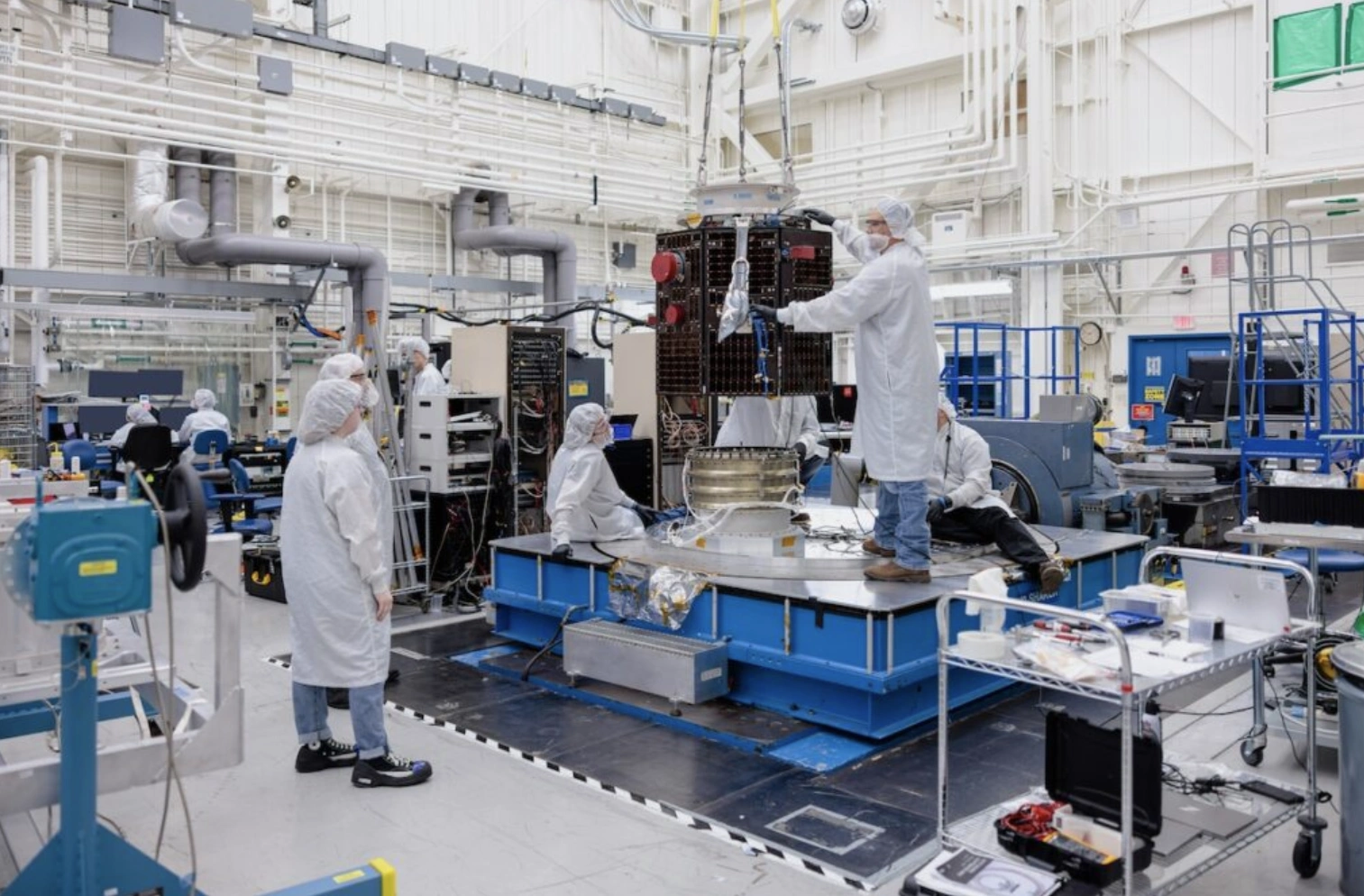
The TRACERS mission is led by the University of Iowa, which has a long history of space-weather missions, while the Millennium Space Systems aerospace company built the spacecraft. The mission was selected for development under NASA’s Small Explorer Program in 2019 with a cost cap of $145 million.
Millennium Space Systems
Researchers aim to use TRACERS to understand magnetic reconnection along Earth's magnetopause, where the solar wind meets Earth's magnetic field. Completing a low-Earth orbit every 90 minutes, the twin TRACERS spacecraft take snapshots of activity as they pass through the polar cusps, where solar particles stream in to our planet's upper atmosphere. Solar activity should still be strong, as we’ve only just passed the peak of the Sun's activity in Solar Cycle 25. The primary mission will last one year, though fuel reserves could support extended science operations.
“TRACERS will capture data from over 3,250 encounters with the northern magnetospheric cusp, where the Earth’s magnetic field opens to the solar wind,” says Miles, “allowing us to build a robust, statistical understanding of the coupling of the solar wind to near Earth space via the process of magnetic reconnection events.”
The spacecraft follow the same orbital track, but separated in space and time. “The tight spacing of the spacecraft, ranging from 10 to 120 seconds, will allow us to distinguish between the phenomena that are changing in time versus those that are moving in space,” says Miles. They can thus measure what effect magnetic changes have on the polar cusps in both a spatial and temporal sense.
Understanding the impact of space weather on the Earth environment is crucial to improving forecasts. Space weather can cause radio blackouts and effect everything from satellites in orbit to power grids, and even systems such as automated farming equipment, which rely on GPS.
The three specific science objectives for the mission are;
- Determine the impact of solar wind conditions on magnetic reconnection at the magnetopause boundary;
- Measure the reconnection rate and determine how it evolves over time;
- Understand the relationship between when and where magnetic reconnection occurs and what the conditions are in the polar cusps.
Other small satellite missions are launching with TRACERS, including:
- Athena Economical Payload Integration Cost (EPIC) will monitor the outgoing thermal emission from the Earth in effort to understand its role in climate and weather modeling.
- The Polylingual Experimental Terminal (PexT) will test a reliable method for switching space communications networks, analogous to how modern mobile phones have hand-off capabilities while traveling in motion.
- The Relativistic Electron Atmospheric Loss (REAL) will analyze what are known as "killer electrons," which zip around Earth and pose a hazard to satellites.
Two other recently launched missions studying the Sun and space weather are NASA’s Polarimeter to Unify the Corona and Heliosphere (PUNCH) and the Electrojet Zeeman Imaging Explorer (EZIE).
“TRACERS has a complementary relationship with PUNCH and EZIE,” says Miles. “PUNCH focuses on the solar corona and heliosphere to track the origin of the solar wind that arrives at the Earth. EZIE examines electrojets in Earth’s atmosphere, which are driven by the energy transfer of magnetic reconnection. By combining our data on magnetic reconnection in the cusp with their observations, we create a holistic view of energy flow from the Sun through the magnetosphere and into the atmosphere.”
Now, TRACERS will get to work, probing a little-known facet of the space weather process.
About David Dickinson
David Dickinson is a freelance science writer, high school science teacher, retired enlisted U.S. Air Force veteran and avid stargazer. He currently resides with his wife Myscha in Bristol, Tennessee. David also writes science fiction in his spare time. He posts as @AstroDave on BlueSky about space news and sky-watching worldwide.



Comments
You must be logged in to post a comment.