 SUNSET:

 2
2It’s time again for the annual August meteor-shower fest: the Perseids. This year’s display should be a beauty with only minor moonlight and a special surprise at dawn.

Sky & Telescope
Days have been so hot this summer, I've been spending even more time out at night than usual just to cool off. Benefits are many and include breathing in that irresistibly perfumed air, standing under the arch of the Milky Way in shirt sleeves, and lots of stargazing. Becoming as nocturnal as a bat may be a good habit to develop as we approach the peak of one of the year's richest meteor showers: the Perseids. I've never stayed out all night to watch this annual cosmic spitball spectacle. This time, I'm giving it serious thought.

Gerald Rhemann
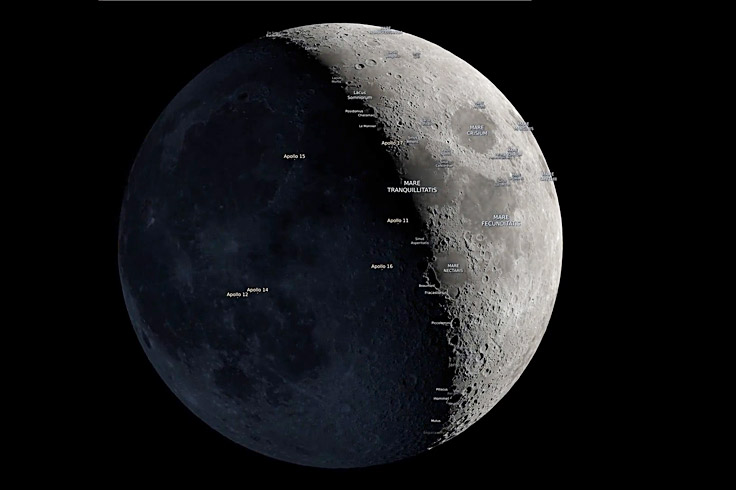
There's plenty of motivation to do so. The Moon will be shy of first quarter in Libra and will set between 11 p.m. and 11:30 p.m. local time, well before the Perseid meteor shower peaks in the early morning hours of August 12th. Either way its modest light won't have a significant impact on the shower. From a wickedly dark location, with no Moon and the radiant at the zenith, skilled observers might see 100 Perseids per hour. Since most of us live with varying amounts of light pollution a more realistic expectation would be half that rate. I typically see from 30–40 meteors per hour from my Bortle 4.5 site — plenty enough to keep the shower's joy factor pegged at 10.

Copyright Radu M. Anghel
The International Meteor Organization puts maximum at between 13 and 16 UT (9 a.m. to noon EDT) on August 12th, making the night of August 11–12 the best time for observers in the Americas to catch the peak. Given that maximum occurs well into August 12th, the following evening — August 12–13 — will likely also be a good one. In any case, the shower is active until about August 24th, so your chance of catching sight of a Perseid any clear night is virtually assured.
Numbers are typically lower in the evening when the radiant is low in the northeastern sky because many downward-directed meteors are cut off by the horizon. Generally, the later you're up the more meteors you'll see. Earth's night-time hemisphere turns into the direction of the planet's orbital motion after midnight, which increases the number of hits, both from the shower and unrelated sporadic meteors. Particles don't have to play catch-up during the wee hours — we meet them head-on.

Stellarium
From latitude 40° north, the radiant peaks high in the northeastern sky at more than 60° altitude around the start of dawn. That's why observing from midnight till dawn usually means seeing more meteors than during evening hours. But whether you're out at 10 p.m. — a great time to share with the kids — or hooting with the owls at 3 a.m. the only equipment you'll need are a blanket and reclining chair. A pair of binoculars to poke around the sky during lulls wouldn't be a bad idea either. Or even some favorite music. Shower meteors always come in spurts separated by spells of inactivity that can last up to a few minutes. On the surface these empty times might seem boring, but the temporary lack of action only heightens our anticipation for the next arrival.

Bob King
The Perseid meteor shower is known for occasional outbursts, which occur when Earth's path cuts across filaments — local enhancements in meteoroid density — within the comet's orbital debris trail. Several are expected during this year's shower, notably around 9 UT (5 a.m. EDT) on August 12th. Additional trail crossings may occur between 4 UT and 11 UT (midnight to 7 a.m. EDT) on the same date. Observers are encouraged to monitor the shower closely for increased numbers at these times. For ways to record and contribute your visual, video, and radio observations of the Perseids, visit the American Meteor Society and click on the Programs tab.

NASA / Preston Dyches
I hope the weather's ideal, and you see lots of Perseids. For me, the shower is yet another example of how the best things in life are free.
About Bob King
I love the sky (day and night) and have been a skywatcher and amateur astronomer since childhood. I'm also a long-time member of the American Association of Variable Star Observers (AAVSO) and Astronomical League. I pen the Astro Bob blog and have written four books: Night Sky with the Naked Eye (2016); Wonders of the Night Sky You Must See Before You Die (2018) and Urban Legends from Space (2019) and Magnificent Aurora, published in 2024. The universe invites us on an adventure every single night. To accept the invitation, we only need look up.




Comments
Tom Hoffelder
August 6, 2024 at 7:08 am
Hello Bob, excellent article as always! I like to spend some time watching as soon as it gets dark enough to see the bright ones, which is approximately a half hour after sunset (the end of civil twilight). As you noted, not nearly as many will be seen, but if a bright one passes overhead, it can traverse the entire sky. Just one of those is worth the effort! And being in
"the north" like you, Maine in our case, we don't have to wait for the radiant to rise since it is circumpolar. One problem we may have that you won't is someone named Debby.
You must be logged in to post a comment.
Tom Hoffelder
August 6, 2024 at 8:57 am
Regarding earthgrazers, since the peak is 10:30 AM EDT on the 12th, that is a little closer to end of civil twilight that day, then it is on the 11th.
You must be logged in to post a comment.
You must be logged in to post a comment.