 SUNSET:

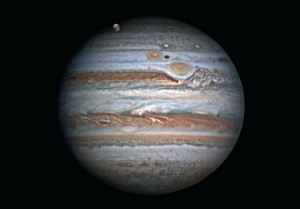
Astrophotography: Tips & Techniques
Redeeming Color Planetary Cameras
Advances in imaging technology should make amateurs give these cameras a second look.

Astrophotography: Tips & Techniques
Piecing Together the Sun & Moon
Here’s an easy technique for creating expansive images of the Sun and Moon using modest sensors.

Astrophotography: Tips & Techniques
Shooting with Modified, Astrophotography DSLR Cameras
Expanding the spectral response of your camera opens up many new imaging opportunities.

Kavli Foundation Q&A: Pluto Revealed
Three experts joined The Kavli Foundation for a live Q&A to discuss New Horizons' long journey to the distant and fascinating world of Pluto.

Astrophotography: Tips & Techniques
Image Processing with CCDStack 2
Improve your deep-sky images with this innovative program.

Insights from S&T's Family of Planet Globes
Pictures are great, but there's nothing like holding another world in your hands to appreciate its unique characteristics. True confession: even from childhood, I have always been a map junkie. Sure, I use GPS these days, but my car is still stuffed with road maps. The National Geographic Atlas of…

Astrophotography: Tips & Techniques
Observing with Astro Video Cameras
Video can boost your telescope’s reach by leaps and bounds.

The Kavli Foundation Q&A: What Ignites Supernova Explosions?
We finally know the ingredients that fire up a particular kind of supernova. Four researchers explain why a better understanding of how certain stars die can help reveal the evolution of the cosmos and its galaxies.
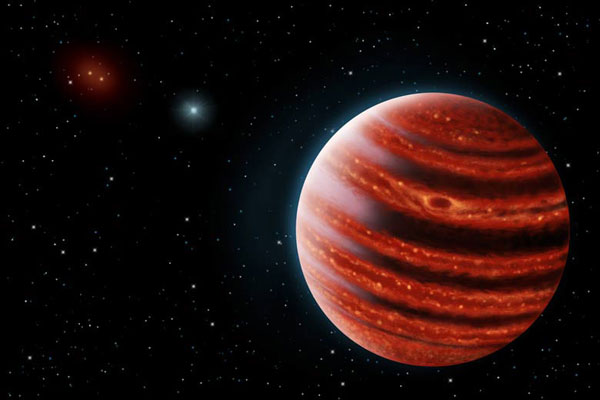
The Kavli Foundation Q&A: Jupiter-like Exoplanet 51 Eridani b
A new exoplanet closely matches what astronomers think Jupiter looked like in its infancy. Astrophysicist Bruce Macintosh of the Kavli Institute for Particle Astrophysics and Cosmology at Stanford discusses why this discovery might help us understand how planets arise.

Astrophotography: Tips & Techniques
The 5 S's of CCD Imaging: Capture Amazing Deep-Sky Images
Follow these simple suggestions to get the most out of your CCD images.

Astrophotography: Tips & Techniques
Tips for Shooting Great Nightscapes
Capturing the Earth and sky in one great composition is surprisingly easy.

Astrophotography: Tips & Techniques
Deep-Sky Imaging with your DSLR Camera
Getting started in DSLR astrophotography has never been easier.

Binoculars for Astronomy: Ultimate Guide to Selecting and Buying
Ordinary binoculars are your ideal "first telescope." And they're so versatile that even seasoned stargazers find them indispensable.

Astrophotography: Tips & Techniques
Planetary Imaging with Your DSLR Camera
Chances are you already own a great planetary camera, but didn’t know it.

The Kavli Foundation Q&A: Dwarf Galaxies and the Quest for Dark Matter
Satellite dwarf galaxies orbiting the Milky Way should help scientists better grasp the universe's evolution while also homing in on dark matter's identity.

Kavli Foundation Q&A: The Large Synoptic Survey Telescope
Courtesy of The Kavli Foundation, Sky & Telescope is featuring an in-depth Q&A with two astrophysicists and a theoretical physicist on what the Large Synoptic Survey Telescope will teach us about dark matter and dark energy.
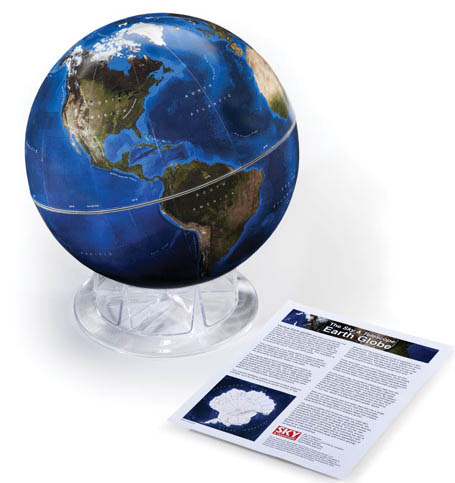
Introducing Sky & Telescope's Earth Globe
Satellite imagery and other datasets come together to show our home planet from mountaintop to ocean bottom.
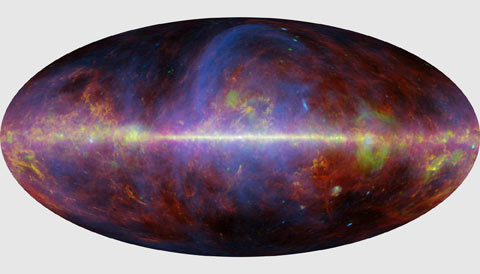
The Kavli Foundation Q&A: Insights Into Cosmic Inflation
Recently, two high-profile experiments released new data and analyses of the universe’s earliest light. Here, three preeminent scientists discuss the latest results, what they mean for the theory of cosmic inflation, and what we can expect to learn about the very early universe in the coming decade.

The Kavli Foundation Q&A: What Has Planck Taught Us About the Early Universe?
Scientist George Efstathiou weighs in on the latest results from the Planck satellite and what they say about cosmic inflation, the first stars, and more.
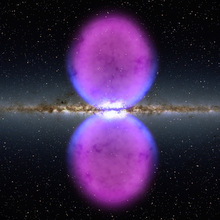
Q&A: Understanding the Fermi Bubbles
Sky & Telescope features a Q&A between The Kavli Foundation and three astrophysicists who discovered two enormous and unexpected structures radiating from the center of our galaxy. They discuss what these mysterious bubbles can tell us about the history of the Milky Way and how they could help in the search for dark matter.
