 SUNSET:


Equipment: Guides & Recommendations
Finger Lakes Instrumentation at NEAF 2016
Dennis di Cicco and Finger Lakes Instrumentation’s Gregory Terrance take a look at the latest features of the company’s venerable MicroLine and ProLine CCD cameras and accessories

The Kavli Foundation Q&A: How Did Nature's Heaviest Elements Form?
The Kavli Foundation hosted a Q&A with three astronomers to probe the recent discovery of hard-to-produce heavy elements in a nearby dwarf galaxy. The discovery sheds light on stellar histories and galactic evolution.

Mars: Closest, Biggest, and Brightest in a Decade
Mars shines low in the southeast at nightfall, closer to Earth than it has been since November 2005. A Sky & Telescope press release.

May 9th's Transit of Mercury: How and When to See It
Use a telescope to spot Mercury's silhouette crossing the Sun's disk on May 9th for the first time since 2006. View it live using S&T's exclusive webcast.

At the 25th Northeast Astronomy Forum
The editors of Sky & Telescope made our annual pilgrimage to last weekend’s Northeast Astronomy Forum. Here are our tales of the voyage to Pluto, the newest gadgets, and encouraging encounters with readers.

Fred Espenak: Great American Eclipse of 2017
Get ready for the great American eclipse of 2017 with expert advice from "Mr. Eclipse", Fred Espenak.

Alan Stern: The Exploration of Pluto
Alan Stern discusses the New Horizons flyby of Pluto in July 2015 and what ongoing analysis continues to reveal about this fascinating world.

Hans Koenigsmann: SpaceX, Exploration through Innovation
Hans Koenigsmann, the Vice President of Flight Reliability for SpaceX, talks about current and near-future space travel.
Alice Bowman: Reaching for New Horizons
New Horizons Missions Operations Manager Alice Bowman talks about the spacecraft's historic voyage to Pluto and beyond.
David Shoemaker: The Confirmation of Gravitational Waves
Dr. David Shoemaker discusses the groundbreaking observation of gravitational waves in September 2015 and the future of gravitational wave astronomy.

Bernard Kutter: Enabling a Robust Space Economy
Where are the space highways of tomorrow? What technology leaps will open cislunar space to commercial development? ULA's Bernard Kutter talks about the path toward a space economy.

Comet 252P/LINEAR Soars Into Predawn View This Week
A nearby comet is moving into view for Northern Hemisphere skywatchers. Despite bright moonlight nearby, you can try to spot it with binoculars and Sky & Telescope's exclusive finder chart.

Citizen Science for the Great American Solar Eclipse
Solar scientists hope an armada of amateur astrophotographers can record the inner corona’s evolution throughout the 2017 total solar eclipse.
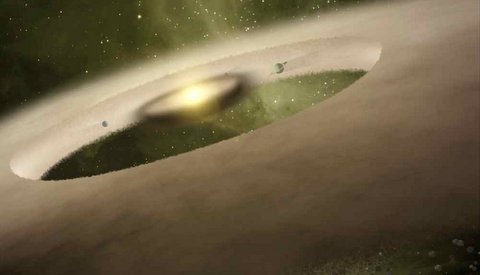
Kavli Q&A: How Do Planets Form?
Learn how powerful new telescopes and techniques are enabling scientists to probe planets in the earliest stages of development.

Ripple Effect: Gravitational Waves Begin to Reveal a Hidden Universe
To mark the start of a new era of astronomy, three principal LIGO researchers speak with The Kavli Foundation on their epic discovery and how it will transform the way we see the cosmos.

Adaptive Optics: Before and After
To expand on the feature article on adaptive optics in our May 2016 issue, we're including here a full gallery of before-and-after images. The effect of the technology is immediately visible - and astounding.

Citizen Science: Projects & Collaboration
The Kavli Foundation Q&A: How Does Citizen Science Drive Discovery?
Crowd-sourcing the universe: Thanks to online portals, legions of volunteer astronomers are turning their eyes to the sky and doing extraordinary science. Three scientists discuss the future of citizen astronomy.
Equipment: Guides & Recommendations
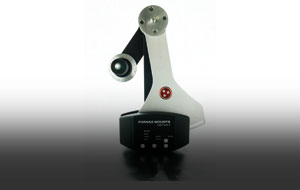
LighTrack II Portable Camera Tracking Head
Fornax Mounts announces the LighTrack II, a portable camera tracking head for nightscape astrophotography.

Get Ready for America's Coast-to-Coast Total Solar Eclipse in 2017
Where will you be on August 21, 2017 - when a total solar eclipse will be seen from Oregon to South Carolina? Find out what you need to know now to start planning for the big event.

Equipment: Guides & Recommendations
Vixen Optics Ultra Wide Eyepieces
The SSW Ultra Wide Eyepiece series ($349 each) provides an expansive 83° apparent field of view with eye relief of 13 mm.
