SUNSET:

Sky & Telescope Videos
Many topics in astronomy are ideally explained in print — but not all. For instance, it's a lot easier to show how to use a telescope than to put it into words. And watching an author talk about an abstruse topic often helps bring it to life. Below you'll find…
Sky & Telescope July 2011
FEATURED ARTICLES Sketching M51 For seeing all that's in the eyepiece, nothing beats sketching.By Howard Banich Where the Hot Stuff Is Volcanism takes a variety of forms on other worlds.By Rosaly Lopes Neptune Comes Full Circle Neptune's discovery is one of the greatest stories in astronomy lore.By C. Renée James…

Where The Hot Stuff Is
Rosaly LopesEarth might be the only world in the solar system with complex life, but it certainly isn’t the only world that has experienced volcanism. Thanks to interplanetary missions, scientists have discovered that Mercury, Venus, the Moon, Mars, Io, Enceladus, and maybe Titan have experienced volcanic activity. Io and Enceladus…
Great Red Spot Transit Table 2012-2013
Transit times for Jupiter's Great Red Spot are listed through December 2012.
Sky & Telescope June 2011
FEATURED ARTICLES The Great Telescope Race In the 19th century, the U.S. changed from a backwater to an astronomical juggernaut.By Trudy E. Bell The AAVSO's New Sky Survey Star magnitudes in deep catalogs are currently unreliable. The AAVSO aims to fix that.By Arne Henden The Far Country The Serpent's head…
Astronomy in Antarctica
Observational astronomy has always been a romantic, rigorous profession. Caroline Herschel recorded her brother's observations by candlelight, shivering through the damp British winter. Edwin Hubble and Walter Baade spent long, cold, hours peering through a guidescope, keeping the giant telescope on Mount Wilson on track as it took the pictures…
Sky & Telescope May 2011
FEATURED ARTICLES Orion's Robo Dobsonian Good things happen when Go To pointing meets a mass-market Dobsonian.By Gary Seronik Spiinning Hearts of Darkness Astronomers are measuring the rotation rates of black holes to determine their formation and history.By Laura Brenneman End of the Cosmic Dark Ages A novel radio array may…

Video: Laura Brenneman on Black Holes
Laura Brenneman, author of the article "Spinning Hearts of Darkness" in the May 2011 issue of Sky & Telescope, discusses the surprising subtleties of black-hole spin with S&T's Robert Naeye.
Sky & Telescope April 2011
FEATURED ARTICLES Star Trails from the Top of the World TWAN ambassadors host star parties and photograph the night sky in Nepal's High Himalaya.By Babak A. Tafreshi Photometry for All in the Digital Age You can make valuable scientific contributions to astronomy with an off-the-shelf digital camera.By Brian Kloppenborg and…
Sky & Telescope March 2011
FEATURED ARTICLES Astronomy's Crystal Ball A recent report will set the research agenda for the coming decade.By Robert Zimmerman Binocular Sights for City Nights Plan well, and even a light-polluted sky offers rewards for binocular astronomy.By Hugh Bartlett It's a Duesy Here's the tale of how a nearly forgotten telescope…
Sky & Telescope February 2011
FEATURED ARTICLES The Perfect Solar Superstorm Solar storms in 1859 wreaked havoc on telegraph networks worldwide and produced auoras nearly to the equator. What would a recurrence do to our modern technological world?By Daniel N. Baker & James L. Green Solar Radio Astronomy It's relatively easy to observe the Sun…

Sky & Telescope Errata: 2011
This article lists all known errors in issues of Sky & Telescope for 2011.
Sky & Telescope January 2011
FEATURED ARTICLES Planetary Magnitudes A planet's light curve gives important clues to its composition.By Anthony Mallama Where Did Earth's Water Come From? The evidence of ice in asteroids indicates that there may be much more water in the solar system than previously thought.By Kristina Grifantini Hot New Products for 2011…
Sky & Telescope December 2010
FEATURED ARTICLES Meade's 8-inch LightSwitch Scope When it comes to "smart" scopes, this one is at the head of the class.By Dennis di Cicco December's Great Lunar Eclipse All of North America experiences a total lunar eclipse on the night of Decmber 20-21.By Alan MacRobert Binocular Sights for City Nights…

Dan Durda Talks About Asteroid Deflection
Dan DurdaWhat would happen if astronomers found a large asteroid on a collision course with Earth? In the December 2010 issue of S&T, planetary scientist Dan Durda of the Southwest Research Institute describes a number of methods that could be used to avert disaster. In a follow-up to Dan’s article,…
Sky & Telescope November 2010
FEATURED ARTICLES The Universe of Archimedes To estimate the size of the universe, Archimedes invented an entirely new way to express big numbers.By Alan Hirschfield Closing in on E.T. SETI hasn't picked up any signals from extraterrestrials yet, but new technologies are greatly increasing the odds.By Seth Shostak Legal Aliens…
Sky & Telescope October 2010
FEATURED ARTICLES NASA's New Airborne Observatory Flown on a Boeing 747, SOFIA will carry infrared astronomy to new heights.By Luke Keller and Jürgen Wolf The Hunt for Super-Earths Astronomers are finding and studying worlds just a little larger than ours.By Sara Seager Beneath the Shroud of Venus With careful planning,…
Naked-Eye Exoplanet Host Stars
As of August, 2010, more than 470 exoplanets have been found. The authors have put together a list of 20 naked-eye stars that host exoplanets. Point out some of these at your next star party, and wave hello — who knows, someone may be waving back. The internet is awash…

Sara Seager Talks about Super-Earths
Sara SeagerThe count of known planets outside the solar system continues to rise. At the time of this writing in mid-August, the tally stands at about 470. But it’s not just the rising number of known worlds that demonstrates the remarkably rapid progress in exoplanet research. Astronomers are finding new…
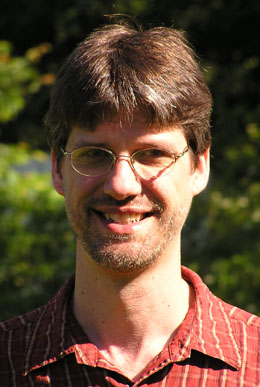
Luke Keller Talks about SOFIA
Luke Keller NASA's Stratospheric Observatory for Infrared Astronomy, better know as SOFIA, is gearing up for its science mission. The flying observatory and its 2.5-meter telescope saw first light from the air this past May. Later this year it will begin science flights in earnest, and in the coming decades…