 SUNSET:


Sky at a Glance | July 6th, 2007
Venus and Saturn are sinking toward the horizon in the western twilight. But bright Jupiter, on the other side of the sky, comes into its own after dark.
Your Audio Sky Tour: July 2007
All this month you have to head out late to see the sky really dark. But if you do, you'll be rewarded with views of three planets and a constellation that definitely leaves an impression. Host: S&T's Kelly Beatty. (6MB MP3 download: running time: 6m12s)
Sky at a Glance | June 29th, 2007
Venus and Saturn begin the week having a beautiful, eyecatching conjunction in the western twilight. Watch them draw apart day by day thereafter. On the other side of the sky, Jupiter is shining brightly ever higher in the southeast — with Antares to its lower right.

Dust Storm Erupts on Mars
Earlier this week amateur astronomers watching Mars spotted a large — and growing — dust cloud over the planet's southern hemisphere.
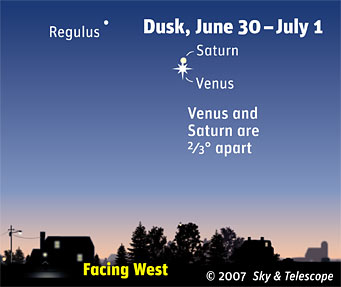
The Evening Star Greets the Ringed Planet
On Saturday and Sunday evening, for observers all around the world, Venus and Saturn will fit together comfortably in the field of view of most telescopes at 50x. That's ample magnification to show both Saturn's magnificent rings and Venus's crescent phase.
Strangers in the Night
Stargazers aren't the only people who do bizarre though harmless things outside at night.
Sky at a Glance | June 22nd, 2007
It's happening at last. The two planets of the western twilight, Venus and Saturn, close the gap between them and reach conjunction on June 30th. On the other side of the sky, Jupiter is shining ever higher in the southeast.
Sky at a Glance | June 15th, 2007
In the fading glow of sunset, Saturn is closing in on bright Venus, while for several evenings, the waxing crescent Moon marches by. On the other side of the sky, Jupiter is getting ever higher in the southeast.
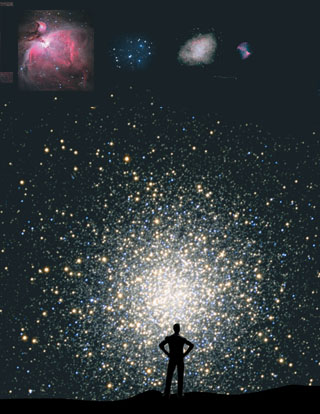
Cosmic Perspectives
Here's some data to give you perspective on your favorite deep-sky targets.
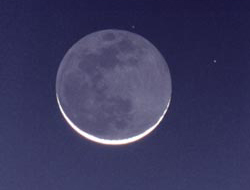
Morning and Evening Crescent Moons
On Thursday and Friday, June 14 and 15, North American skywatchers have a rare chance to catch sight of "opposing crescent" Moons.

Venus's Daytime Vanishing Act on Monday
Brilliant Venus will disappear behind the dark limb of the crescent Moon on Monday, June 18th, for observers in the Middle East and India — and in daytime for Europe and the northeastern tip of North America.

Crescent Moon to Occult Regulus Tuesday
When a star or planet ducks behind the Moon, it's a dramatic celestial sight. This month many lucky viewers will have the chance to see either a planet (Venus) or a bright star (Regulus) play peekaboo.
Sky at a Glance | June 8th, 2007
Bright Venus in the western twilight is closing on in Saturn. Regulus makes it a three-point lineup. And late in the week, the waxing crescent Moon starts to march up toward them.
Sky at a Glance | June 1st, 2007
Bright Venus is sinking down a little in twilight, still near Castor and Pollux. Look for Mercury far to its lower right. Saturn shines high to Venus's upper left. And on the other side of the sky, Jupiter is at opposition.
Your Audio Sky Tour: June 2007
If you head out after dark in early June, you have a chance to see four planets at once. Find out how to spot them when you listen to this month's audio tour of the evening sky. Host: S&T's Kelly Beatty. (6MB MP3 download: running time: 6m23s)
Sky at a Glance | May 25th, 2007
Venus shines in the western twilight with Saturn preparing to dive down to it. Mercury is having a great evening showing far below. Jupiter and Antares form a striking pair in the southeast. And the brightest asteroid is the brightest it's been in 18 years.
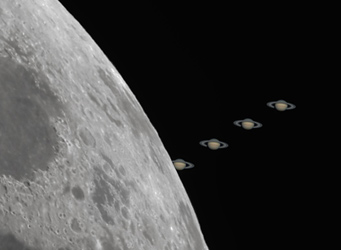
Saturn Plays Hide and Seek
Planetary occultations are among nature's most majestic celestial scenes. One look at an image like this and it's easy to see why.
Sky at a Glance | May 18th, 2007
Venus dazzles in the west at dusk. Saturn shines higher to Venus's upper left, closing in on it week by week. And as evening grows late, watch for turbulent Jupiter rising in the southeast.

Buzz About the "Blue Moon"
About seven times each 19 years, we have two full Moons in a month — and it's happening again now. Not so long ago, nobody would've called the second of these Moons "blue."
