 SUNSET:


The Moon Meets the Pleiades
The Moon will be closing in on Messier 45 tonight; observers along the West Coast may see the Moon pass in front of some of the star cluster.
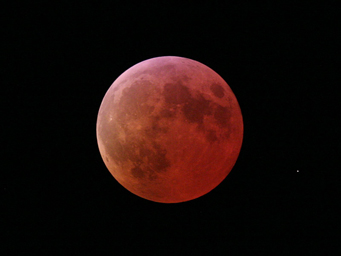
Gazing Upon Earth's Shadow
Skimming near the northernmost edge of Earth's shadow, the Moon experienced a relatively bright eclipse on March 3rd.
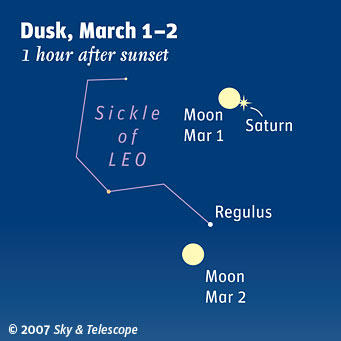
March's Moon Mania
Lunatics be warned! The next three nights will make for some wonderful Moon observing. While floating near the Sickle of Leo, the Lion, you'll see Luna nearly cover a planet, hover gracefully near one of the brightest stars in the sky, and plunge deep into Earth's shadow.
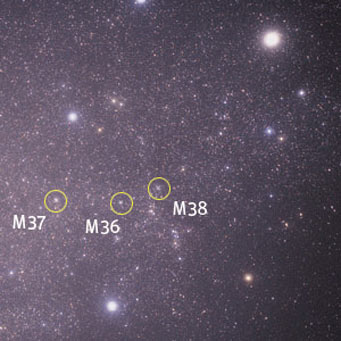
Starry Starry Night
Open star clusters are among the most straightforward deep-sky objects to observe with binoculars, and three wonderful targets for Northern Hemisphere observers ride high overhead as darkness falls at this time of year.
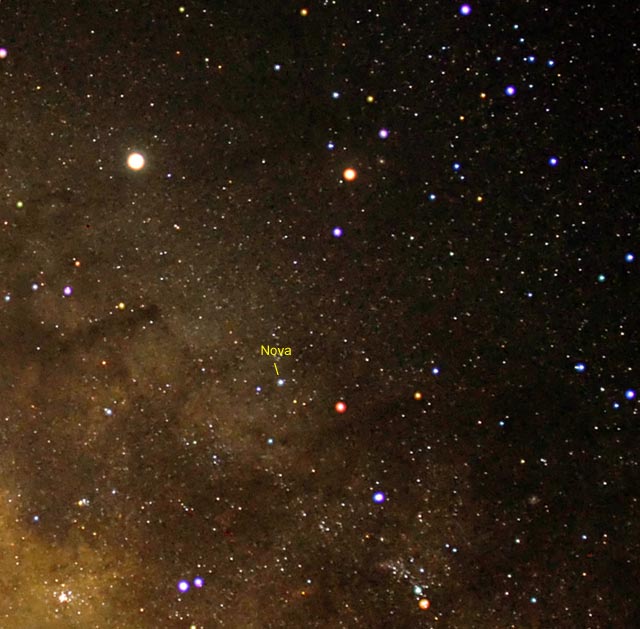
Two Novae in Scorpius
A naked-eye nova erupted in the pre-dawn sky in early February and peaked at magnitude 3.8 on February 16th. As of the 27th it was still an easy binocular target at magnitude 5.4. And in the midst of the excitement, a second, fainter nova went off just below it.
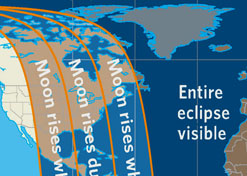
March 3rd's Total Lunar Eclipse
For many of us, the Moon is about to go dark for the first time in 2½ years.

The Best Asteroid Occultation in Decades: A First Report
On the morning of January 26th, at least 20 observers spread from Virginia to northern California timed the occultation of the star 32 Lyncis by the asteroid (372) Palma — in spite of the track shifting nearly half a path-width south of what was predicted.
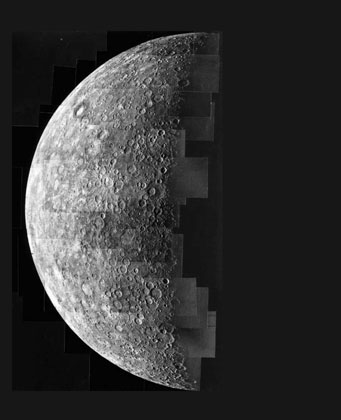
Observe Mysterious Mercury
Mercury, probably the least observed of the eight major planets, is well placed in the evening sky during the first half of February 2007 for observers in the Northern Hemisphere.
Tour December's Evening Sky
Brave the cold and take in the winter's beautiful stars! Download this MP3 file to your iPod or other handheld device to learn how to view the Geminid meteors, Cassiopeia and her dysfunctional family, and more! (5.4MB file; hosted by Kelly Beatty, editor of Night Sky magazine.)
Tour November's Evening Sky
Download this MP3 file to your iPod or other handheld device to learn how to view the transit of Mercury on November 8th, the Leonid meteors, and more! (5.6MB file; hosted by Kelly Beatty, editor of Night Sky magazine.)
Tour February's Sky — By Ear and Eye!
Sure it's cold outside, but on February evenings you can spot wonderful Saturn rising in the east. To find out how, download our podcast to your iPod or other handheld device!
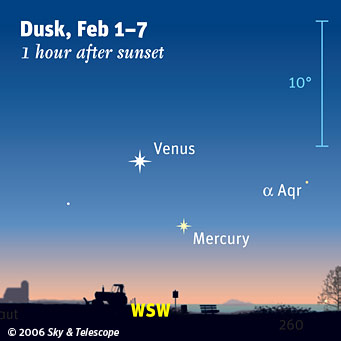
Inner Planets in the Evening
Venus and Mercury shine in the west after sunset. The pair will be closest on Sunday evening.
Get Hooked on the Ringed Planet
It's nearly full Moon, so you might need an excuse to go outside and brave the frigid weather. Here's a great one: treat yourself to the majesty of Saturn. Right now the planetary gem is shining in Leo at magnitude 0.0, and it is currently the brightest it will be for many years to come.
Friday's Stellar Vanishing Act
This coming Friday morning you'll need only binoculars, a clear sky, and the right location to witness the best asteroid occultation visible in the continental US during the last quarter century.

Comet Tail Still Visible Up North
It's been several days since anyone in the Northern Hemisphere saw the head of Comet McNaught. But the comet's tail is so bright and long that numerous northern observers have spotted it two or more hours after the head has set. All you need to try is a site with a good western horizon that's far from any artificial light pollution.
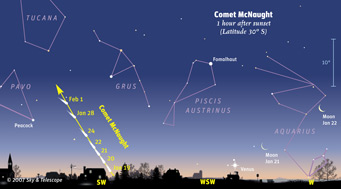
Comet McNaught, Spectacle of the Far-Southern Sky
As of January 18th, Comet McNaught is barely visible from the Northern Hemisphere, but the show is just beginning for observers at mid-southern latitudes.
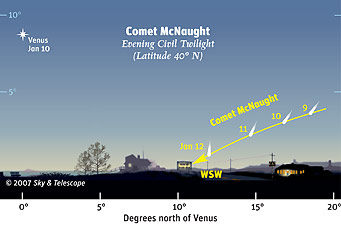
Comet McNaught Heading South
If you live in the Northern Hemisphere, Friday was your last good opportunity to catch Comet McNaught in the evening twilight — though January 13th isn't completely out of the question. On January 14th or 15th, the comet will become a showpiece for observers in the Southern Hemisphere.
Your Comet McNaught Images
Although Friday is the last good chance for folks in the northern hemisphere to catch Comet McNaught, the reports are streaming in and the comet is clearly a hit! Check out our McNaught photo gallery. We've posted more than three dozen of your pictures already — and we are anxious to see more.
S&T Observes Comet McNaught
At latitude 42° north, Sky & Telescope's offices are fairly well placed for viewing Comet McNaught. And since we're in the eastermost major city in North America, we get to see the comet slightly ahead of most of our readers. Here are some of the observations made by S&T editors.
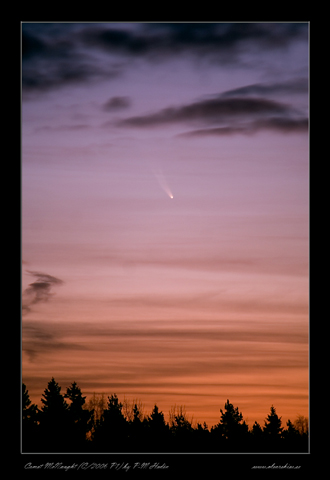
Comet McNaught Brightening
Comet McNaught has brightened rapidly in the last few days. It's now bright, beautiful, and, if you're fairly far north, easy to see at dawn and dusk — if you know where to look and have an unobstructed horizon and perfect conditions. It's now a naked-eye spectacle from far northern latitudes, where the observing geometry is most favorable. The farther south you live, the lower the comet is in the twilight.
