 SUNSET:


This Week's Sky at a Glance, November 25 – December 3
Mars is closest to Earth this week, closer and brighter than we'll see it again until 2033. By late evening it's high overhead in excellent telescopic view.

This Week's Sky at a Glance, November 18 – 26
Orion works its way up from behind the horizon after dinnertime and stands high by late evening. Big bright Jupiter and Mars dominate the sky. Jupiter is under the Great Square; Mars is in the horns of Taurus.

Sneak Peek at Two Promising Comets
Ready to chase comets? We look at two fuzzy solar system travelers that will keep you on your toes all fall and winter long.

This Week's Sky at a Glance, November 11 – 19
The Moon shines in the east with ever-brightening Mars, then it wanes down into the early morning hours to leave the evenings dark for deep-sky observing. Jupiter glares on high. Vega and its binary accompaniments await you in the west.

Election Eclipse — Last Total Lunar Eclipse till 2025
Set the alarm and bring plenty of coffee. We've got a total lunar eclipse coming that you don't want to miss.

This Week's Sky at a Glance, November 4 – 12
The Moon gets totally eclipsed this week as it walks from Jupiter to Mars. Saturn in the evening sky is at quadrature, which means an effect is under way for telescope users....

November: An Eclipse, Meteors & Planets
For most of us, November's switch to standard time means that evening comes early enough to do some casual stargazing before dinnertime. So download or stream our Sky Tour astronomy podcast to find out about this month's lunar eclipse, possible meteor surprises, and much more.

This Week's Sky at a Glance, October 28 – November 5
The Summer Triangle Effect, a double shadow on Jupiter, the waxing Moon photobombs the solar system's two giants, an Algol dip — plan your skywatching week.
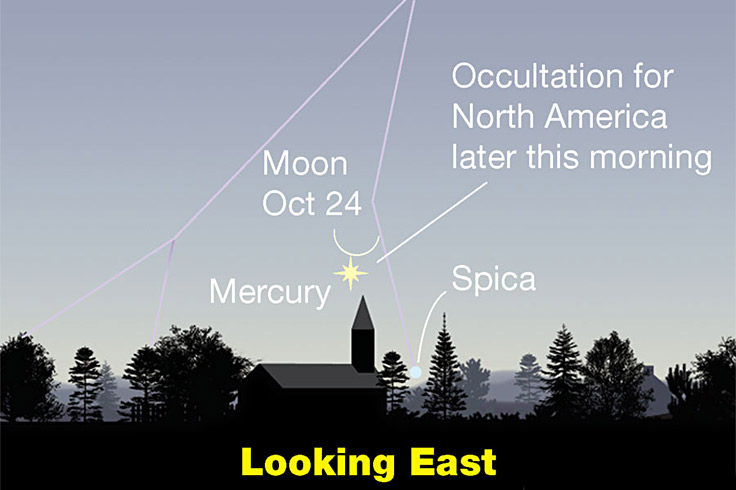
This Week's Sky at a Glance, October 21 – 29
Jupiter remains near its maximum possible size, and Mars continues to grow. Below Jupiter shines the Frog Star. And this week, Arcturus becomes the Ghost of Summer Suns.

All About the Dust — Orionids and Zodiacal Light
It doesn't take much to create a spectacle when it comes to astronomical observation. Just a pinch or two of dust.

The Hows & Whys of Solar Eclipses
Take a few minutes to become an eclipse expert for family and friends.

This Week's Sky at a Glance, October 14 – 22
These moonless evenings open the sky for good constellation spotting and deep-sky probing. Pegasus flies high. Draco eyes Vega. And it's time for the Orionid meteors.

This Week's Sky at a Glance, October 7 – 15
The bright Moon this week passes Jupiter, then Mars. Deep-sky darkness starts returning to the evening sky on the Thursday the 13th. The bulky Andromegasus Dipper is on autumn display.

Astronomy and Stargazing Projects
Observing the Full Moon: Fringe Benefits
The upcoming Hunter's Moon reminds us of the many ways we can enjoy observing our humble satellite.

Meet Scheat, the Peak of Pegasus
Meet Scheat, the orange giant star that peaks the Great Square of Pegasus in autumn skies in the Northern Hemisphere.

October: Make Way for Jupiter
October is a great time of year to do some casual stargazing. The stars and planets are waiting for you — all you need is this month’s Sky Tour astronomy podcast. Just download or stream the audio file and take it with you outside.

This Week's Sky at a Glance, September 30 – October 8
The Moon poses with Antares at dusk. A few nights later, lunar sunrise unveils the sharp black line of the Straight Wall in Mare Nubium for small-telescope users. Saturn, Jupiter, and Mars span the evening sky. Mercury climbs onstage at dawn.

This Week's Sky at a Glance, September 23 – October 1
Cygnus and the Milky Way cross the zenith after the end of twilight. Saturn, Jupiter, and Mars await your scope through the night. A thin crescent Moon poses favorably at dawn — because it's cupped.

Jupiter's Exceptionally Close Opposition
A sentinel in the autumnal sky, Jupiter marks its closest opposition since 1963.

This Week's Sky at a Glance, September 16 – 24
The late-night Moon aligns with Mars and Aldebaran. Delta Cephei pulses on high. And constellations all over the sky signal the change from summer to fall.
