 SUNSET:


The Black Hole Files with Camille Carlisle
Black Holes in Early Universe Are Too Big
JWST observations of the universe as it was 12 to 13 billion years ago indicate that the black holes at the centers of small, early galaxies were more massive than expected.

Astronomy in Space with David Dickinson
China Launches Einstein X-ray Observatory
China’s Einstein Probe, an X-ray astronomy mission, heads to orbit.

Astronomy in Space with David Dickinson
Peregrine Mission Launches Successfully, But Misses the Moon
The first launch of the United Launch Alliance Vulcan-Centaur rocket attempted to send Peregrine Mission One moonward, but a propulsion problem has likely stymied that goal.

Astronomy in Space with David Dickinson
Top Space Missions to Watch for in 2024
Humans' return to cis-lunar space and a flagship spacecraft to Europa are among the missions to come in 2024.

Explore the Night with Bob King
Catch Luyten's Star and the Quadrantid Meteor Shower
Relish the slow, steady pace of nearby Luyten's Star then switch things up with speedy meteors from a well-timed shower.

Astronomy in Space with David Dickinson
First Launch of 2024: India Flies New X-Ray Satellite
ISROs XPoSat will unlock the secrets of the X-ray universe.

Astronomy in Space with David Dickinson
As an Asteroid-Hunting Mission Approaches Its End, What's Next?
The pioneering NEOWISE observatory celebrates a milestone, even as the end of the mission draws near.

Explore the Night with Bob King
Vesta Sets Sail Across Orion
Look who's visiting this winter in Orion: Vesta, a bright asteroid with a dark side.

Explore the Night with Bob King
Get Ready to Greet the Geminid Meteor Shower!
The year's most spectacular meteor shower is upon us. Prepare to enjoy the Geminids under a dark, moonless sky, when you might see more than 100 meteors per hour.

Explore the Night with Bob King
Watch Uranus's Moon Titania Cover a Star Monday Night
Observers across much of the U.S. and Canada have a unique opportunity Monday night, November 20–21, to see Uranus's brightest moon occult a star.

Astronomy in Space with David Dickinson
Samples of Asteroid Ryugu Show Signs of Ancient Water
The distribution of elements seen in the samples of Ryugu brought back by Hayabusa 2 hints at a wet past.

Jupiter's Great Red Spot Just Keeps Getting Smaller
Jupiter's Great Red Spot may be reaching a milestone this year by shrinking to its smallest size in recorded observational history.

Why We Look Up with Jennifer Willis
To the Stars, Through (or Despite) Hardship
Ad astra per aspera — to the stars through hardship. The saying applies universally, but personally, it might hit home in different ways.

Astronomy in Space with David Dickinson
Bits of Theia Might Be in Earth's Mantle
A "smoking gun" for the ancient calamity that formed Earth’s large Moon may still exist deep in the mantle of our planet.

Explore the Night with Bob King
How to See Freaky Starlink "Cluster Flares", Plus the Latest on Comet Lemmon
Alien invasion or flares from satellites in multiple orbits? It depends on your point of view. We also check in on Comet Lemmon, poised to possibly reach binocular-visibility.

The Black Hole Files with Camille Carlisle
Black Hole Rain
The planned LISA gravitational-wave detector might discover a shower of hundreds of small black holes falling in galactic centers.

Explore the Night with Bob King
Orionid Meteors Fly; Two Moons Shadow Jupiter
Bundle up and enjoy the Orionid meteor shower under moonless skies this week. Don't miss the warm-up act, either, when two of Jupiter's moons pair up in a captivating double-shadow transit.

Astronomy in Space with David Dickinson
First Look at Material from Asteroid Bennu on the Ground
The Osiris-REX sample collection team reveals the first look at material collected from the asteroid Bennu.
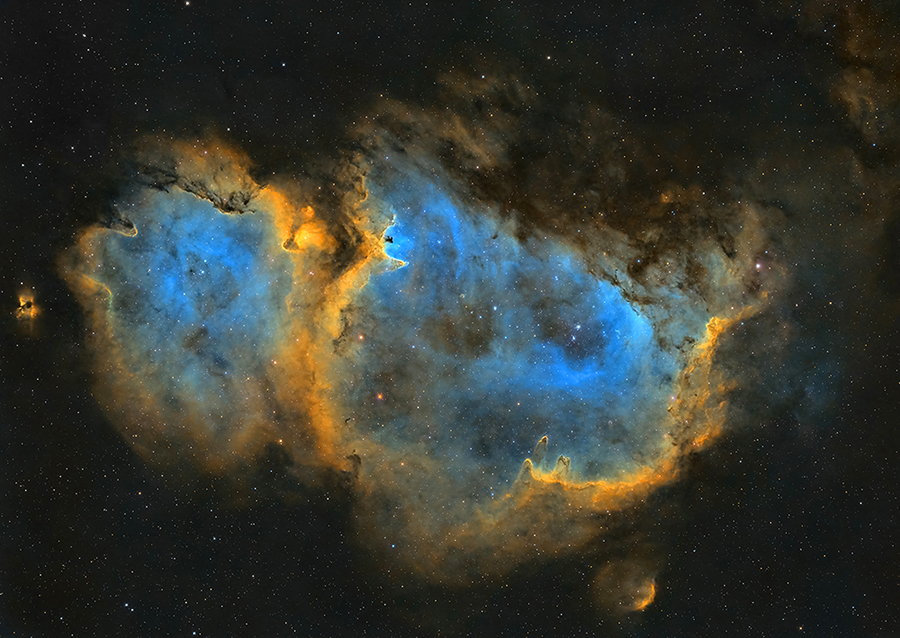
Why We Look Up with Jennifer Willis
The Stars Are Waiting
Making room for astronomy in my life has felt like coming home — as if the universe has left a literal light on for me.

Explore the Night with Bob King
Comet 12P/Pons-Brooks (aka the "Millenium Falcon" Comet) Flares Again!
Comet 12P/Pons-Brooks has awakened again from its recent slumbers with a fresh outburst. It's now bright enough to see in a modest telescope.
