 SUNSET:


This Week's Sky at a Glance, March 7–16
A late-night total eclipse of the Moon highlights the coming week, and never mind that this is a minimoon. Sirius holds the meridian at nightfall, just as the Winter Triangle tips to balance on its brightest point.

This Week's Sky at a Glance, February 28 – March 9
The Moon passes four bright planets this week, starting as a thin crescent below Mercury on February 28th, passing by Venus this weekend, and visiting Jupiter and Mars later in the week.

This Week's Sky at a Glance, February 21 – March 2
Venus, after standing alone, is joined by the crescent Moon and low little Mercury in twilight late this week. Higher in the night, Jupiter and Mars continue in their distinctive triangles.

This Week's Sky at a Glance, February 14 – 23
Jupiter makes a triangle with Aldebaran and the Pleiades. Mars makes a nicer triangle with Pollux and Castor. The pre-dawn Moon hangs with Spica, then Antares.

See Crescent Venus This Valentine's Day
In a delightful cosmic coincidence, Venus will shine brightest on Valentine's Day.

This Week's Sky at a Glance, February 7 – 16
Watch the bright Moon step past Mars, Castor, and Pollux. They bunch up on Sunday evening the 9th. Then on Tuesday and Wednesday, "full moon" spans two evenings.

Planets “Parade” with Waxing Moon
The "planet parade" isn't over yet — the waxing Moon will pair with the planets in the coming week, with a pretty Venus-Moon pairing on February 1st.

This Week's Sky at a Glance, January 31 – February 9
The waxing crescent Moon pairs up with Saturn, then Venus. On the night of the 5th the Moon occults some of the Pleiades. Looking wider, the Winter Hexagon fills much of the February sky.

Take a Look at R Leonis, Leo's Giant Ticker
Big, bright and red, the Mira variable R Leonis portends the Sun's fate. A pair of binoculars is all you need to get acquainted.

This Week's Sky at a Glance, January 24 – February 2
Mars pulls away from Pollux this week. The winter Milky Way crosses the zenith. Lepus, the Hare under Orion's feet, offers a famous nearby double star and a rare winter globular cluster.

Comet ATLAS Caught in the Act of Disintegration
Nucleus falls to pieces, but the comet continues on!

This Week's Sky at a Glance, January 17 – 26
Brilliant Mars, just past opposition, outshines its neighbors Pollux and Castor in the east. Venus and Saturn pull apart in the southwest. Orion dominates the high southeast after dinnertime, with searing white Sirius sparkling below it.

Grab Your Binoculars for Comet ATLAS's Brief Sunset Show
Northern Hemisphere skywatchers can now spot this horizon-skirting comet. It's a beauty.

See January's "Planet Parade," plus Comet ATLAS Now Visible in Daylight
With lots of planets and a bright comet vying for our attention, January is an exciting month for skywatchers!

This Week's Sky at a Glance, January 10 – 19
After occulting the Pleiades last Thursday, the Moon will occult Mars for the continental U.S. on Monday evening, January 13th. In the southwestern twilight, Saturn and Venus draw together toward conjunction. Jupiter shines high.

Comet ATLAS (C/2024 G3) — Catch it if You Can
Grab your binoculars for a chance to see Comet ATLAS as it plunges toward perihelion.

This Week's Sky at a Glance, January 3 – 12
The waxing Moon passes Venus and Saturn, then next Thursday evening it occults the Pleiades! Sirius rises at nightfall, and Algol dips twice.

Solar and Lunar Eclipses in 2025
Although no total solar eclipses occur this year, skywatchers can look forward to two total lunar eclipses — including one that will be visible across North America.
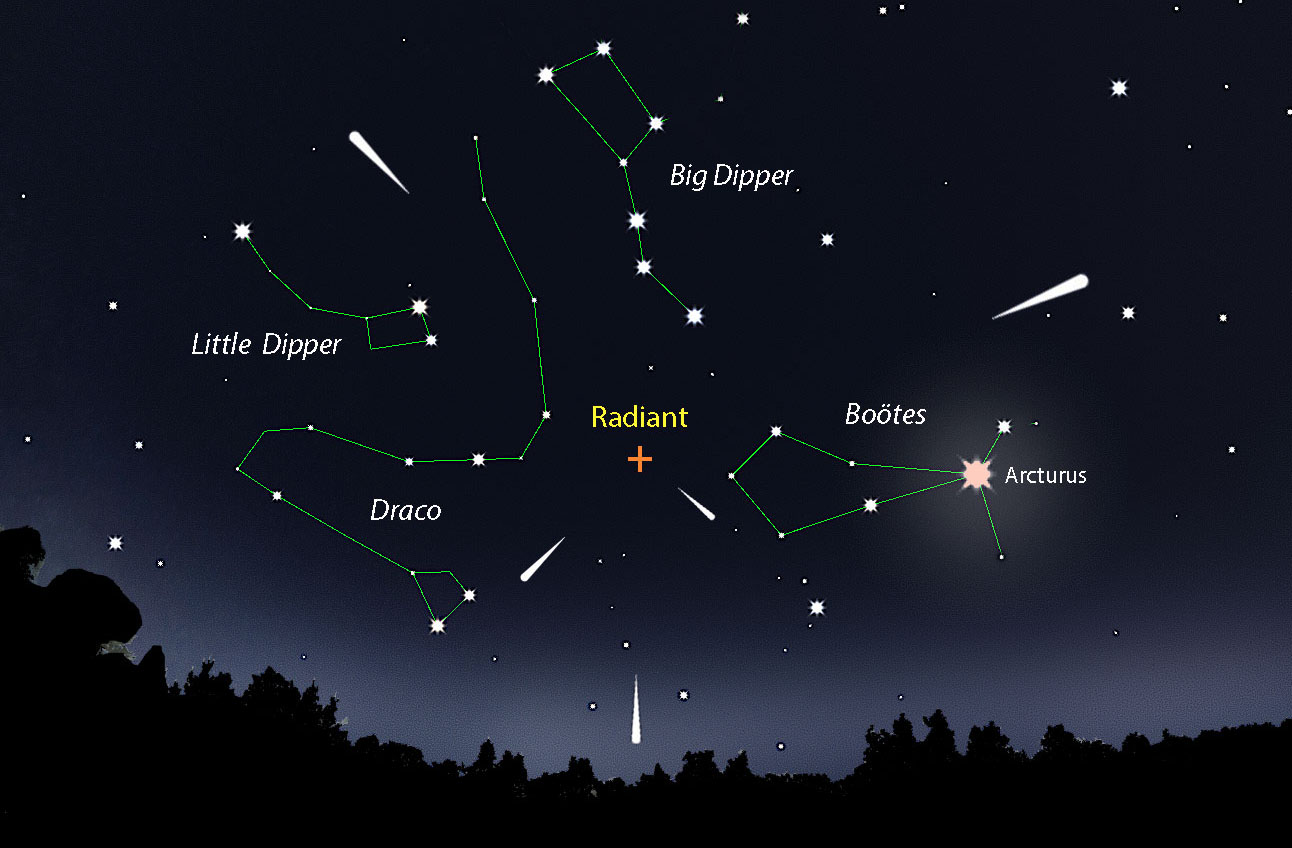
Watch Quadrantid Meteors Fly and the Moon Occult Saturn
The annual Quadrantid meteor shower kicks off the new year under moonless skies. European observers will see the Saturn occultation in person; the rest of us via livestream.
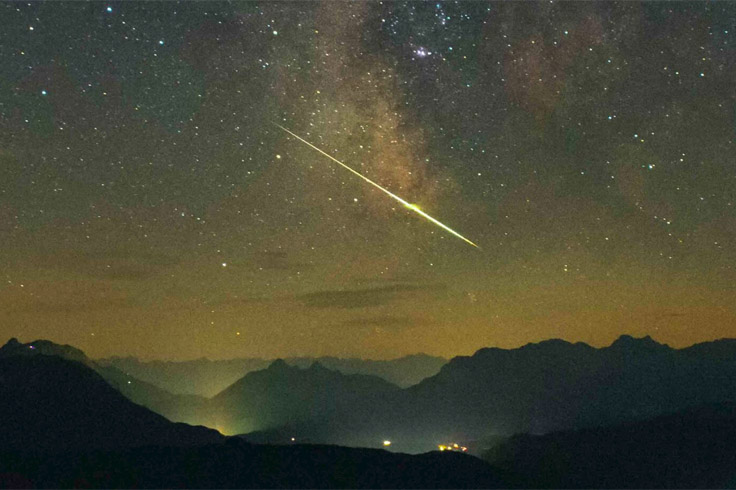
The Best Meteor Showers in 2025
You’ll fight a bright Moon to watch August’s beloved Perseid meteor shower in 2025. But it should be an excellent year for December’s strong Geminid shower.
