 SUNSET:


Celebrate Hubble’s 35th Year with This Observing Challenge
Join NASA and the Astronomical League in a fun new observing challenge that celebrates Hubble's 35th anniversary.

Webb Telescope Watches Rippling Dust Shells
After more than a year in production, a new cosmic film, starring the massive star Wolf-Rayet 140, is out.

Grab Your Binoculars for Comet ATLAS's Brief Sunset Show
Northern Hemisphere skywatchers can now spot this horizon-skirting comet. It's a beauty.

Blue Ghost Lunar Lander Heads to the Moon
The first two lunar missions of 2025 — Firefly's Blue Ghost and iSpace's second Hakuto R mission — are now headed to the Moon.

Galaxy-mapping Gaia Satellite Ends Science Operations
After more than a decade in space, the European Gaia spacecraft will end its observations this week. Astronomers are still busy preparing final data blasts.

Industrial Project Threatens Dark Chilean Skies
An industrial megaproject in Chile is threatening the pristine darkness over Paranal, one of the world’s most important observatories.

Black Hole Sprouts Jets in Unprecedented Event
Astronomers have witnessed X-ray rumblings and a powerful plasma “burp” following a supermassive black hole’s meal.

Pluto and Charon May Have Formed in a “Kiss-and-Capture”
Pluto and Charon may have formed differently than we thought

See January's "Planet Parade," plus Comet ATLAS Now Visible in Daylight
With lots of planets and a bright comet vying for our attention, January is an exciting month for skywatchers!

This Week's Sky at a Glance, January 10 – 19
After occulting the Pleiades last Thursday, the Moon will occult Mars for the continental U.S. on Monday evening, January 13th. In the southwestern twilight, Saturn and Venus draw together toward conjunction. Jupiter shines high.

New Mercury Images from BepiColombo's Flyby
The BepiColombo mission has sent back one last preview before it enters orbit around its final destination: Mercury.

Comet ATLAS (C/2024 G3) — Catch it if You Can
Grab your binoculars for a chance to see Comet ATLAS as it plunges toward perihelion.

Astronomy in Space with David Dickinson
NASA's New Plans For Returning Samples from Mars
As Perseverance continues to explore Mars, the NASA and ESA agencies are deciding how best to retrieve the samples it has been collecting.
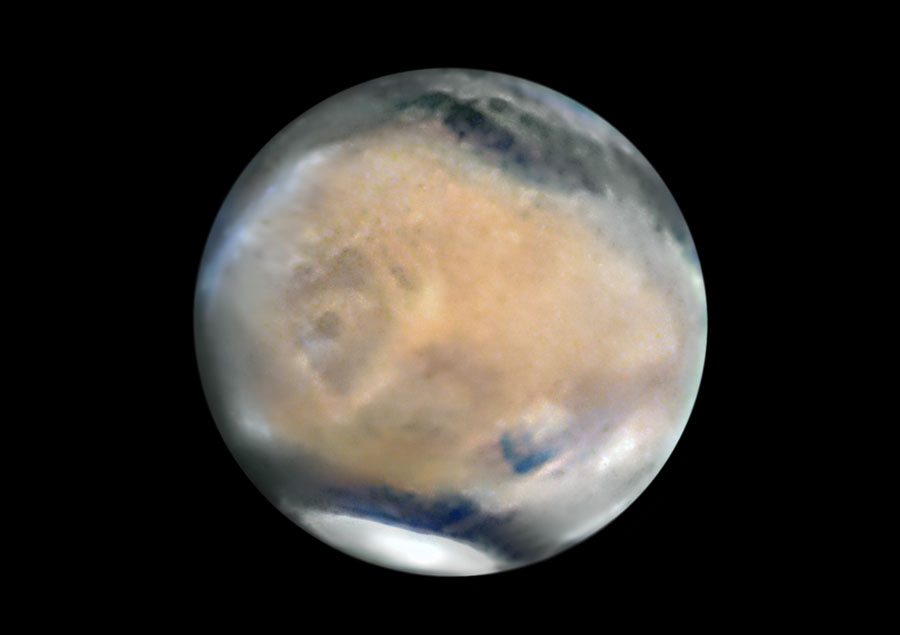
Mars Extravaganza — Occultation and Opposition Rolled into One!
Mars is big and bright again! In a spectacular preview to its upcoming opposition, the full Moon occults the Red Planet on January 13th.

TRAPPIST-1b Atmosphere Debated; Some Stars Take Their Time Forming Planets
In this roundup of recent exoplanet news, we look at whether a famous world is really so airless and at just how long planets take to form.
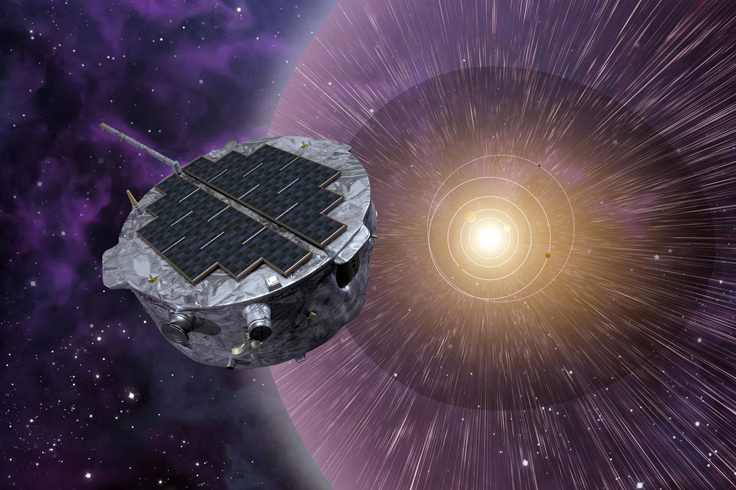
Space Missions to Watch in 2025
Space-weather sentinels, commercial lunar missions, and lots of planetary flybys are on tap this year.

This Week's Sky at a Glance, January 3 – 12
The waxing Moon passes Venus and Saturn, then next Thursday evening it occults the Pleiades! Sirius rises at nightfall, and Algol dips twice.

Solar and Lunar Eclipses in 2025
Although no total solar eclipses occur this year, skywatchers can look forward to two total lunar eclipses — including one that will be visible across North America.
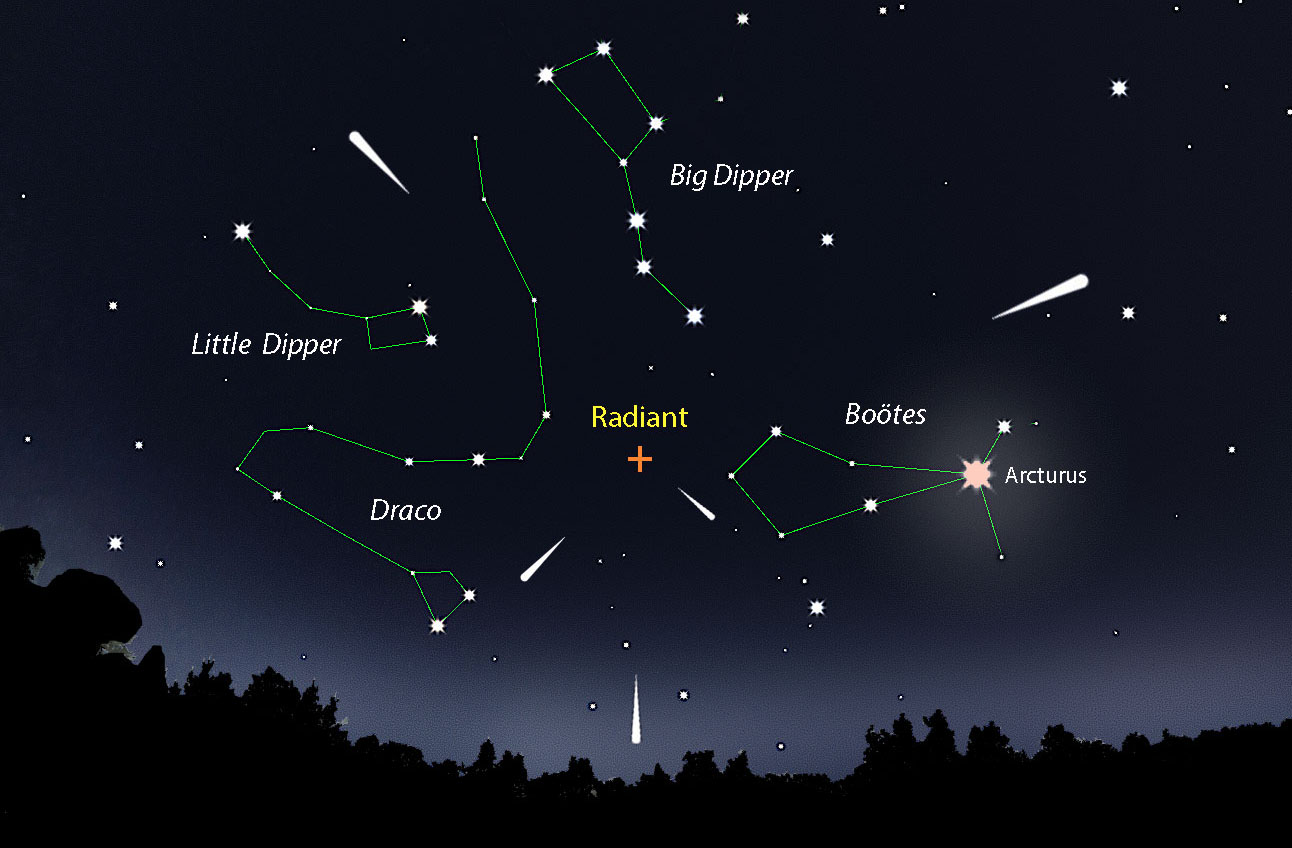
Watch Quadrantid Meteors Fly and the Moon Occult Saturn
The annual Quadrantid meteor shower kicks off the new year under moonless skies. European observers will see the Saturn occultation in person; the rest of us via livestream.

January Podcast: Mars Meets the Moon
Every January millions of us resolve to do something different or better in the coming year. So make a resolution to do more stargazing this coming year! And there’s no better way to get a good start than by heading outside with our 12-minute monthly romp across the stars and planets that can be seen overhead. Give Sky Tour a try!
