 SUNSET:


This Week's Sky at a Glance, October 13 – 22
The week's big event is the Moon stepping on the Sun on Saturday the 14th. But the Moon's not done. Several days later it steps squarely on the handle of the Sagittarius Teapot, then on Herman's Cross. Show-off. Image: S&T's Sean Walker resolves Io half lit as it slips into Jupiter's shadow.
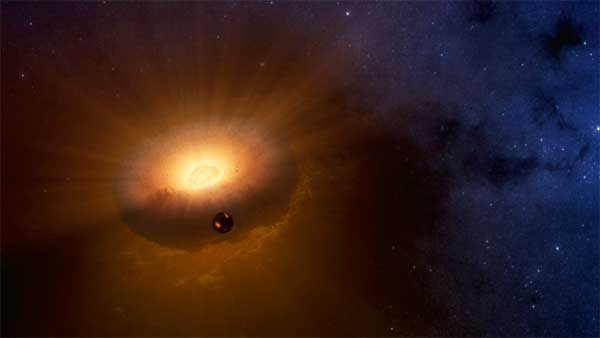
Two Worlds Have Ended in a Planetary Collision — and a New One Has Begun
A star's sudden brightening and, two years later, its sudden dimming point to a cataclysmic collision between two large worlds.

Hubble Telescope Witnessed Intergalactic Flash of Light
An explosive flash of blue light briefly appeared in intergalactic space, thousands of light-years from the nearest galaxy.

First Look at Material from Asteroid Bennu on the Ground
The Osiris-REX sample collection team reveals the first look at material collected from the asteroid Bennu.

When It's Eclipse Decision Time, How Do You Decide Where to Go?
Satellite imagery will prove invaluable in making decisions on the day of the annular solar eclipse.

Comet 12P/Pons-Brooks (aka the "Millenium Falcon" Comet) Flares Again!
Comet 12P/Pons-Brooks has awakened again from its recent slumbers with a fresh outburst. It's now bright enough to see in a modest telescope.

The History of Baily’s Brilliant Beads
Discover the observations of astronomer Francis Baily as he watched sunlight bead along the lunar limb during an 1836 annular eclipse.

This Week's Sky at a Glance, October 6 – 15
A partial/annular eclipse of the Sun washes across the Americas on Saturday the 14th. Four days before, the waning Moon and Venus pair up in early dawn with Regulus glimmering between them.

In a First, Astronomers Directly Image the Cosmic Web
Astronomers have directly imaged emission from the cosmic web, the filamentary structure that underlies the universe.
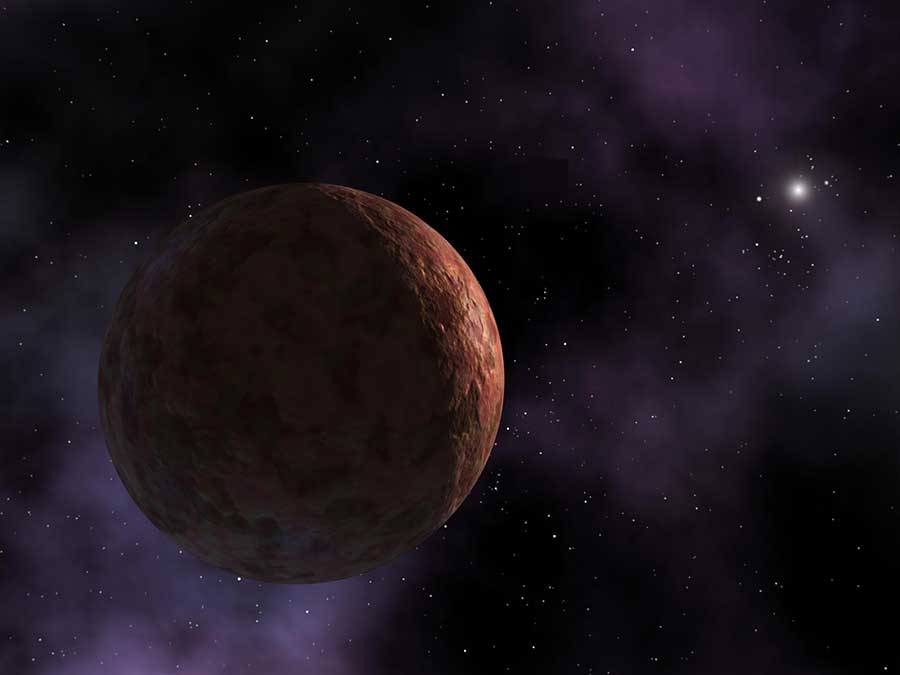
“Planet X” May Have Left Our Solar System Billions of Years Ago
A new understanding of far-off worlds in the outer solar system suggests that if "Planet X" ever existed, it has long since left the vicinity.
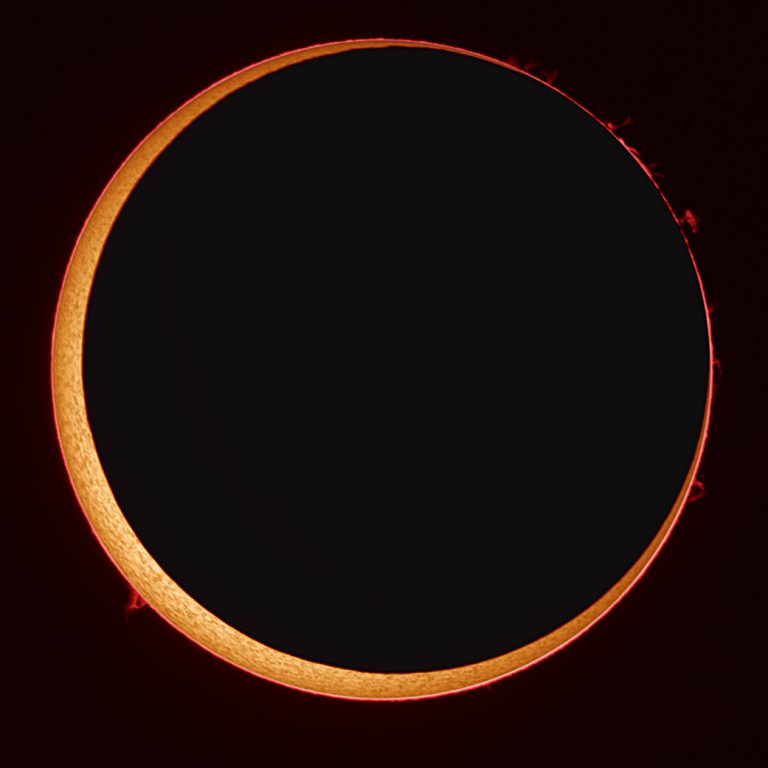
DIY Weather Forecast for the October 14th Eclipse
The October annular eclipse is coming up, and the most important requirement will be clear skies. Here's how to forecast the weather.

Comet Hartley Comes Home Again; Gegenschein-gazing
Get acquainted with Comet 103P/Hartley. It's been a dozen years since its last bright apparition. While you're at it challenge yourself to spot the elusive gegenschein.

The Bright BlueWalker 3 Satellite Threatens Astronomy
The bright BlueWalker 3 satellite, a prototype for the even larger Bluebird satellites, is one of the brightest objects in the sky.

Astronomers Find Stars Cast Away from Galactic Neighbors
After decades of searching, scientists have found stars accompanying the gas streaming from two smaller galaxies that orbit our Milky Way.

October Podcast: Jupiter & Saturn Dance at Dusk
This month’s big celestial news might be the annular solar eclipse that will be seen in the Americas, but everyone can share the fun of casual stargazing by streaming or downloading October’s Sky Tour astronomy podcast.

This Week's Sky at a Glance, September 29 – October 8
The Moon pairs with Jupiter, then the Pleiades, as it departs the evening sky. That leaves a dark-sky Milky Way crossing the zenith, where Cygnus the Milky Way Swan flies southward for fall.

How Did Two Hot and Super-dense Neptunes Form?
Astronomers have discovered two Neptune-size planets that are denser than rock and in searingly close orbits to their star. How did these odd worlds form?

Travel Diary: Astronomical Adventures in the Canaries
The week of September’s new Moon, a passel of astro-enthused passengers explored one of the world’s premier observing locations.

Psyche Asteroid Mission Set for Launch October 5th
NASA’s newest mission is bound for the metallic asteroid of the same name. The metal-rich rock offers us a view of asteroid interiors.

Stellafane Star Party Celebrates Their Centennial
As hundreds of astronomers made their annual pilgrimage to the “shrine to the stars” this year, the Springfield Telescope Makers were preparing to celebrate Stellafane's 100th anniversary.
