 SUNSET:


60-Second Astro News: Entering Asteroid Orbit & Imaging Io's Volcanoes
This week in astronomy news, the spacecraft Osiris-REX reached orbit around asteroid Bennu while the Juno probe snapped photos of volcanic plumes from Jupiter's moon Io.

60-second Astro News: Most Distant Solar System Object & Saturn's Disappearing Rings
In astronomy news this week, astronomers announce the most distant solar system object discovered to date and estimate the limited lifetime of Saturn's spectacular rings.

60-Second Astro News: TESS's First Exoplanet, Asteroid Hides a Galaxy
TESS finds its first exoplanet — a super-Earth around bright nearby star Pi Mensae — and astronomers watched an asteroid hide a galaxy to get the details on the asteroid's size, shape, and orbit.

Super-Earth Discovered in (Fictional) Vulcan System
Thirty years ago, Gene Roddenberry, of Star Trek fame, and three astronomers made the case that the orange-hued star 40 Eridani A ought to host Vulcan, Mr. Spock's home. Now, a robotic survey has discovered a planet around that very star.
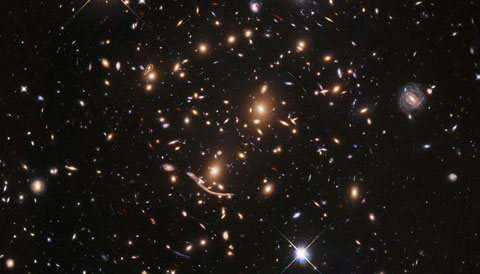
60-Second Astro News: Starbirth, Stardeath, and the Evolution of Galaxies
Starbirth and stardeath light up a nearby galaxy while faraway galaxies twist and bend in these new images from NASA's Hubble and Chandra space observatories.

What Makes Supernovae Superluminous?
A new technique gives astronomers a closer look at what makes some stellar carnage so incredibly luminous.
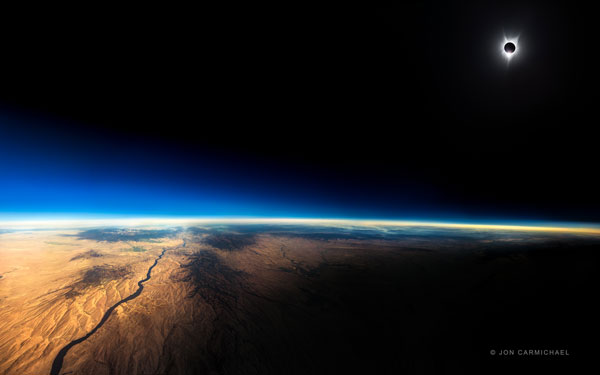
60-second Astro News: Three Stunning Astronomy Pictures
In astronomy news this week: A stunning just-released photo of last year's eclipse, 15,000 galaxies revealed in Hubble's new ultraviolet view of the deep sky, and watching star formation in action in the spiral galaxy M74.

Mind the Gap: Gaia Mission Reveals the Insides of Stars
Astronomers have discovered a hiccup in stellar luminosities that may point to a new understanding of stellar structure.
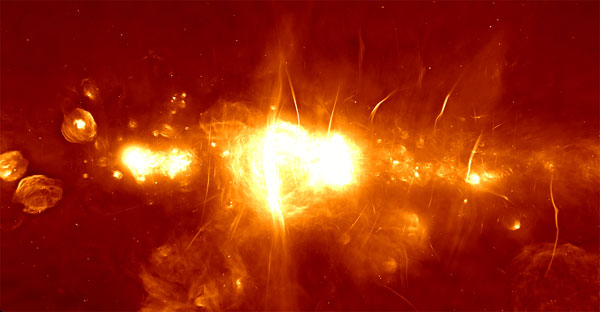
60-Second Astro News: Must-See Images of the Week
Catch up on this week in astronomy news with a trio of images: a pair of near-Earth asteroid twins, ground-based views that beat Hubble's, and the tumultuous galactic center.

60-Second Astro News: Impact Shaped Ice Giant, Jupiter's Moons Cause Complicated Aurorae & Eta Carinae, the Cosmic Ray Gun
This week in astronomy: Simulations show what kind of cataclysmic impact shaped the ice giant Uranus's evolution, new observations from Juno reveal complex auroral patterns due to Jupiter's moons, and NuSTAR provides conclusive evidence that the superstar Eta Carinae acts as a cosmic-ray accelerator.

Wheel-spoke Magnetic Field in Supernova 1987A
Researchers have mapped the magnetic field in Supernova 1987A, shedding light on how stellar blasts act as particle accelerators.

Best Test of General Relativity on Galaxy Scales
Astronomers have conducted the best, galaxy-scale test of general relativity yet, and it rules out some (but not all) theories of modified gravity.
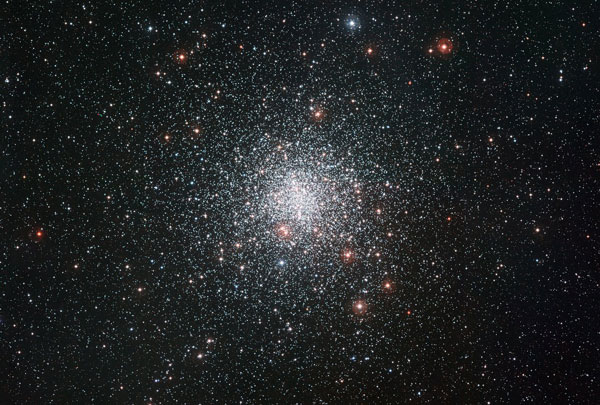
60-Second Astro News: Old Stars, New Clues, and New Dark-Sky Place
This week: Stars in the Milky Way's outskirts give clues to our galaxy's history, ancient stellar cities might not be as old as they appear, and the International Dark-sky Association awards its 100th Dark Sky Place.

What’s Going On with Tabby’s Star? It’s Complicated
Two new studies — one by a group of high school students — are investigating the strange environment around Tabby's Star.

A Magnifying Glass for a Pulsar
Astronomers have discovered a pulsar that comes with its own magnifying glass — courtesy of its brown dwarf companion that’s being torn to shreds.

NASA's Galileo Measures Plumes on Jupiter's Moon Europa
A new analysis of decades-old data from NASA’s Galileo spacecraft, which reached the Jupiter system in 1995, shows the best evidence yet for plumes from the icy moon Europa.

60-Second Astro News: 3D View of Star-Forming Cloud & A Cloud-Free Exoplanet
This week in astronomy news: Researchers discover the first completely cloud-free exoplanet and a star-forming cloud reveals its structure through vibrations.

14 Galaxies Might Become Universe’s Most Massive Structure
At least 14 galaxies are swarming in the early universe, forming a protocluster with the mass of 10 trillion Suns. It might become one of the most massive structures in the universe.

Happy 28th Birthday, Hubble!
To celebrate Hubble's 28th birthday NASA is releasing a brand-new image of the Lagoon Nebula, a vast stellar nursery.

60-Second Astro News: Tech Advances for Exoplanet Hunters
A mini-satellite demonstrates exoplanet-hunting technology, a superconducting camera tests its abilities to image exoplanets, and bad news for life on Proxima Centauri b.
