 SUNSET:


Election Eclipse — Last Total Lunar Eclipse till 2025
Set the alarm and bring plenty of coffee. We've got a total lunar eclipse coming that you don't want to miss.

All About the Dust — Orionids and Zodiacal Light
It doesn't take much to create a spectacle when it comes to astronomical observation. Just a pinch or two of dust.

The Hows & Whys of Solar Eclipses
Take a few minutes to become an eclipse expert for family and friends.

Observing the Full Moon: Fringe Benefits
The upcoming Hunter's Moon reminds us of the many ways we can enjoy observing our humble satellite.

Meet Scheat, the Peak of Pegasus
Meet Scheat, the orange giant star that peaks the Great Square of Pegasus in autumn skies in the Northern Hemisphere.

Jupiter's Exceptionally Close Opposition
A sentinel in the autumnal sky, Jupiter marks its closest opposition since 1963.

Vega, the Star at the Center of Everything
While we may quibble about how to pronounce its name, there's no denying that Vega is one of the most fascinating and useful stars in the heavens.

Observe Vesta — and Own a Piece of It, Too
Vesta's bright and easy to find in binoculars and maybe even with the naked eye in late summer skies. It's also just as easy to acquire a piece of it without a multi-billion dollar space mission.

Peering Up Into Prairie Skies
The Nebraska Star Party offers truly dark skies enjoyed by veteran observers and first-timers alike.
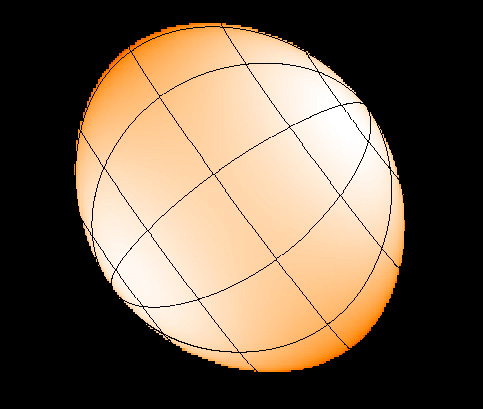
Meet Rasalhague, the Star with the Snake
Rasalhague, a star rotating so fast it has squashed itself, has a fascinating connection to the mythology of healing.

Perseids Are Coming, Full Moon or Not
Don't use a full Moon pass to skip this year's Perseid meteor shower. Right here, right now, we're going to help you make the most of it.

See a Rare Transit of Iapetus on July 17–18
It's tiny. It's challenging. But you won't get the chance to see Iapetus transit the globe of Saturn again until 2037!

Titan Occults a Bright Star, Mira Awakens, and Comet PanSTARRS Shines
Pick one or see them all. July offers a potpourri of celestial events for both naked-eye observers and telescope users that include a rare occultation by Saturn's moon Titan, a bright comet, and Mira at maximum.

Meet The Sun, Our Home Star
In this installment of Meet the Stars, we get to know the nearest one: our Sun. Its properties — like its stability — likely led to life on Earth.

Solar System Gets its Ducks in a Row
We'll have not one but many opportunities to enjoy a rare lineup of the bright planets over the next few weeks. Amazingly, they'll be aligned in order of their distance from the Sun.

Tau Herculid Meteors Surprise and Delight
We touch on the highlights of the memorable Tau Herculid meteor shower and also report on the recent outburst of the recurrent nova U Scorpii.

Update on a Possible Outburst of Meteors
Will there be a new meteor shower on the night of May 30–31? There's only one way to find out.

A New Way to See the Big Dipper
Unlike most asterisms, many of the Big Dipper's stars really are physically connected. They belong to a loosely bound stellar stream called the Ursa Major Moving Cluster.

Total Solar Eclipse: April 8, 2024
On April 8, 2024, North America will be in for a real treat: a total solar eclipse. That’s when the Moon will blot out our nearest star for lucky viewers along a narrow strip of land that stretches from central Mexico, across Texas, up through New England, and into the…

How to Observe and Measure Naked-eye Sunspots
As Solar Cycle 25 ticks up, naked-eye sunspots are becoming more frequent. They're not only fun to observe, but with this simple method you can determine just how big they are. We also have news on a bright supernova!
