 SUNSET:


MAVEN Makes It to Mars
On September 21st, after a 33-minute-long rocket firing, NASA's Mars Atmosphere and Volatile Evolution (MAVEN) spacecraft slipped into orbit around the Red Planet.

Where Will Philae Land on Comet 67P?
European space officials have decided to drop their Philae lander on November 11th onto the small end of the already-active Comet 67P/Churyumov–Gerasimenko. Success is hardly assured.

Curiosity Readies To Climb "Mount Sharp"
Now two years into its exploration of Mars, NASA's big rover has reached the base of the huge mound that scientists hope will reveal the Red Planet's history.

Potent Solar Flare — Auroras Tonight?
On Wednesday, a powerful X-class flare ripped through the Sun's lower atmosphere and sent a blast wave directly toward Earth that should arrive Friday and produce moderate-to-strong auroras over the weekend.

Citizen Science: Projects & Collaboration
A Worldwide Night of Moonwatching
International Observe the Moon Night is an event that encourages people to "look up" and enjoy our nearest neighbor. This year's InOMN is Saturday, September 6th. Here's a quiz: What astronomical object looks amazing no matter what the magnification, never looks exactly the same no matter how often you view…
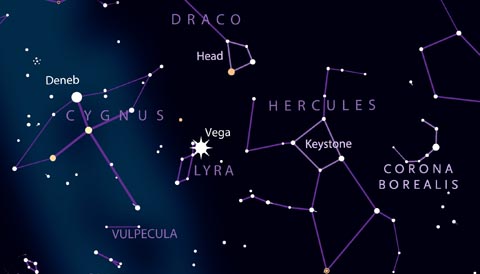
Tour September's Sky: Farewell to Saturn
The astronomical calendar says autumn arrives on September 22nd. It's a season of transition, with plenty of celestial comings and goings in the evening sky. September’s equinox takes place on the 22nd at 10:29 p.m. Eastern Daylight Time. At that moment the Sun shines directly overhead as seen from the…

Voyager 2 at Neptune: A Silver Anniversary
On August 25, 1989, a NASA spacecraft made its fourth and final planetary encounter. What it revealed 25 years ago about the Neptunian system is still amazing and still profound.
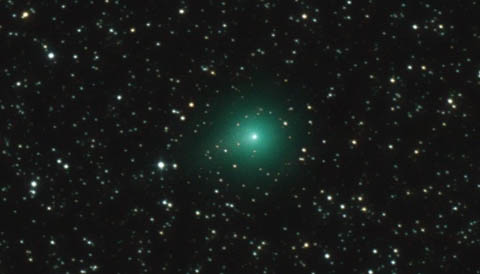
See Comet Jacques Before Dawn
It's not a showstopper, but right now Comet Jacques (C/2014 E2) is poised for telescopic viewing in the hours before dawn.

Is Mercury a Hit-and-Run Survivor?
How did the the innermost planet get its huge iron core? New computer modeling suggests that Mercury is a lucky survivor of chaotic primordial smashups.

Tour July's Sky: Moon Hugs Mars & Saturn
Sky & Telescope's audio sky tour makes it easy to discover the night sky. During July, the Moon makes very close brushes with Mars and Saturn.

Tour June's Sky: Three Planets in View
For anyone north of the equator, days are longest and nights shortest during June. But you can still get an eyeful of celestial sights, starting with a parade of Jupiter, Mars, and Saturn in the evening sky.
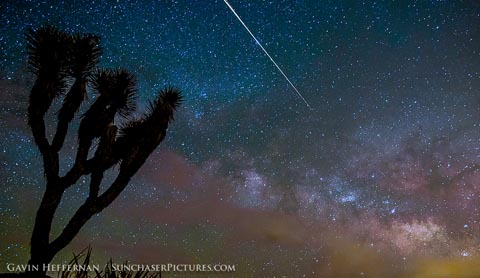
First Reports: Camelopardalids Disappoint
Dynamicists had predicted that Comet 209P/LINEAR would create an active meteor display in the early morning of May 24th. But reports from observers across the U.S. and Canada suggest that the Camelopardalid meteor shower was weak at best.
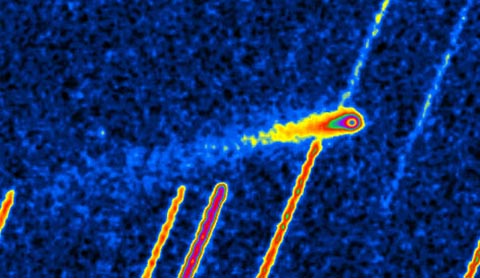
Ready for May's Surprise Meteor Shower?
The dim, obscure periodic comet 209P/LINEAR is about to pass close by Earth — and bring with it a trail of debris that could make for an exciting meteor shower during the predawn hours of Saturday May 24th for North America.
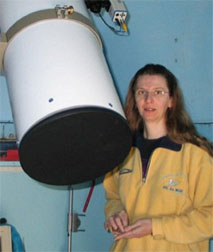
Amateur Comet Hunters Get 2013 Award
Now in its 15th year, the Edgar Wilson Award recognizes comet discoveries made by amateur observers. The 2013 awards honor seven dedicated individuals who scan the skies.

"Astronomy Day" is May 10th!
This celebration of "bringing astronomy to the people" features events across the nation and around the world.
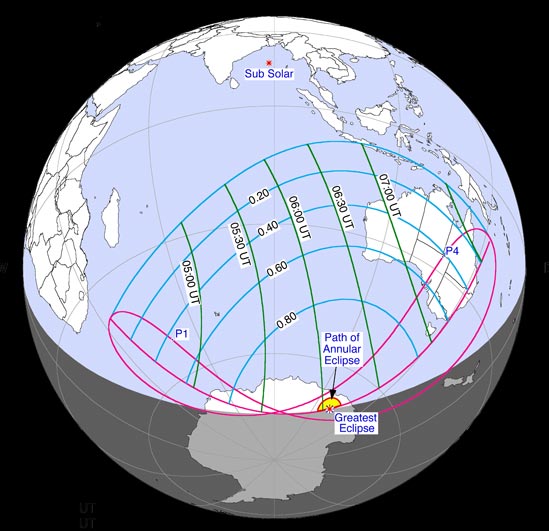
April 29th's "No Show" Annular Solar Eclipse
The first and only annular solar eclipse of 2014 has a path that just clips Antarctica, at a location so remote that no one on Earth will get to see the event. Update: Partial phases of April 29th's solar eclipse were widely seen across the southern part of Australia. See…

Tour May's Sky: Evening Planets Align
This month you have a chance to spot four planets in the evening sky at once: Mercury, Mars, Jupiter, and Saturn. As a bonus, you might be treated to a spectacular display of meteors on the morning of May 24th.
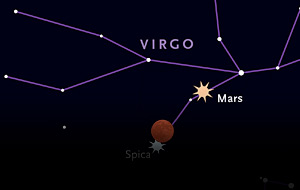
Tour April's Sky: One Last Look at Winter's Stars
It's a great month, celestially speaking: the brilliant stars of winter crowd in the southwest at nightfall, Jupiter is joined by Mars, and the first total lunar eclipse in 2½ years occurs at mid-month.

Global "Fail" for the Big Regulus Cover-up
There was widespread hope that thousands of skywatchers would see the bright star Regulus briefly occulted by an asteroid early on March 20th. In the end, likely <u>no one</u> saw it. Here's why.

The Incredible, Shrinking Mercury
Now that they've seen all of the innermost planet up close, geologists realize that Mercury's crust buckled and fractured as the planet cooled and shrank far more than previously measured.
