 SUNSET:


Witness the Northern Lights with S&T
Sky & Telescope is leading its third annual trip to Iceland this fall to explore a unique culture and witness the northern lights. Come join us!

Comet Lovejoy Shines On
Follow Comet Lovejoy high overhead while you still can. Use our February finder chart below. The comet is fading more slowly than expected.
Dawn Orbiter Reaches Dwarf-Planet Ceres
The long-distance traveler has finally arrived at the first dwarf planet (and largest asteroid) yet studied by spacecraft.

March 20th's Arctic Total Solar Eclipse
When the Moon next covers the Sun, on the equinox, its hard-to-reach path will include the North Pole but very little land.

Hubble Spots a Lensed Supernova
For the first time, astronomers are watching as a supernova’s light bends around a massive galaxy on its way to Earth.

New Stars On Strange Orbits in Milky Way
Astronomers have found two just-born star clusters an incredible 16,000 light-years above the plane of the Milky Way galaxy.

Potential Mid-size Black Hole Found
Scientists have found what seems to be an intermediate-mass black hole in a spiral galaxy 100 million light-years away. If its size is confirmed, it could provide much-needed insight into black hole evolution.

Dusty Galaxy in the Early Universe
A small galaxy 700 million years after the universe’s birth has a dust reservoir that makes it look like a much older galaxy.

New Stars in the Shadow of a Black Hole
New observations suggest that several dozen low-mass stars, and eventually perhaps even planets, are forming just 2 light-years from our galaxy’s supermassive black hole.

Bright Spots on Ceres Intrigue Scientists
Incoming views of the asteroid belt's largest body reveal spots where ice from the interior might be exposed on the surface.

Tour March's Sky: Orion and His Belt
As we transition between seasons, Orion rides high in the evening sky — easily found by spotting the row of three bright stars in his Belt.

Monster Black Hole in Early Universe
Astronomers have discovered one of the brightest quasars in the early universe. The source, SDSS J010013.02+280225.8 (hereafter J0100+2802), is powered by a supermassive black hole at a redshift of 6.3, meaning that its light left it 12.8 billion years ago.
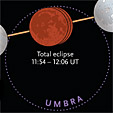
Solar and Lunar Eclipses in 2015
Two total lunar eclipses occur this year, on April 4th and September 27−28. Meanwhile, a total solar eclipse in March sweeps across remote Arctic waters on March 20th, and a partial event on September 13th is likewise poorly placed for observing. Any list of nature's grandest spectacles would certainly include…

The Mysterious Martian "Plumes"
An anomalous “cloud” imaged by amateurs in 2012 has puzzled astronomers, spurring some to suggest it was at inexplicably high altitudes above Mars’s surface.

A Star’s Closest Flyby to the Sun
A red dwarf and its brown dwarf companion buzzed through the outer Oort Cloud some 70,000 years ago, around the time when modern humans began migrating from Africa into Eurasia.

Donald C. Parker, 1939-2015
Donald C. Parker, a planetary imaging pioneer, passed away in Miami, Florida on February 22, 2015.

Cepheids Map Milky Way - and Beyond
Cepheid variable stars are helping astronomers see what our galaxy looks like from within.
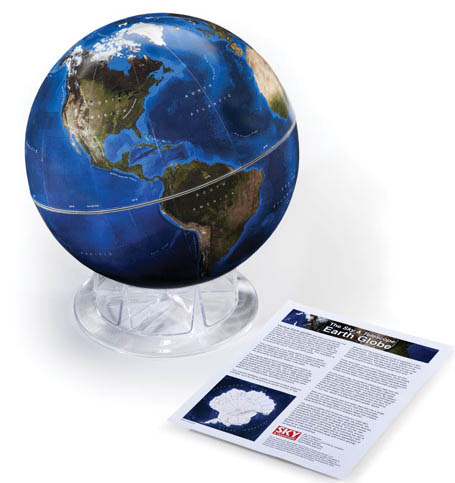
Introducing Sky & Telescope's Earth Globe
Satellite imagery and other datasets come together to show our home planet from mountaintop to ocean bottom.

Tempest in the Teacup Galaxy
New observations of the Teacup Galaxy show that even black holes with wimpy radio jets can quench a galaxy's star formation.
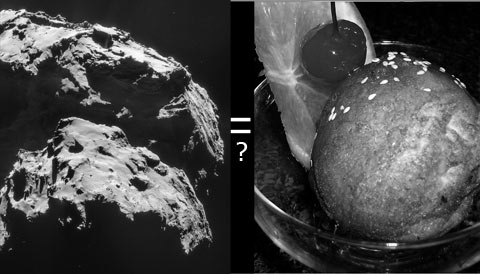
Deep Fried Comet Ice
Scientists studying ice here on Earth think they’ve confirmed why comets have hard crusts covered in hydrocarbon gunk.
