 SUNSET:


Pluto: The Last Picture Show
In his second "insider blog" about the New Horizons mission, principle investigator Alan Stern offers a look at what we might find at Pluto. It sounds like science fiction, but it's not: NASA's New Horizons spacecraft is on final approach to the Pluto system! After 112 months in flight, the…

Mysterious X-rays Spotted in Galactic Center
NASA’s NuSTAR mission has detected an unexpected haze of high-energy X-rays in our galaxy’s center, perhaps the signal of a mass stellar graveyard.
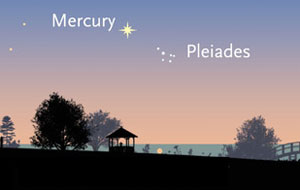
Tour May's Sky: Planet Trifecta
The three brightest planets — Venus, Jupiter, and Saturn — grace our evening skies this month. Elusive Mercury makes a brief appearance too!

Messenger Crashes, Its Results Endure
After four years at Mercury, NASA's Messenger orbiter has finished its remarkable mission and crashed into the planet.

Name the Exoworlds
Here's your chance to name an exoplanet, in a process recognized and officiated by the International Astronomical Union. Register your astronomy club or organization by June 1st!

More Discord Over Thirty Meter Telescope
Clashes over building the premier telescope in the Northern Hemisphere and preserving Mauna Kea as a sacred site have intensified.

Do Explosive Bursts Heat the Sun’s Corona?
New evidence suggests that nanoflares, small but potent bursts of energy, might heat the Sun’s atmosphere. But not everybody’s convinced.

Nova Sagittarii: What a Long, Strange Fade It's Been
A 6th-magnitude nova erupted inside the Sagittarius Teapot and reached 4th magnitude. Now it has started fading.

Hubble Telescope's Silver Anniversary
It's been 25 years since the Space Shuttle Discovery lofted the Hubble Space Telescope into orbit. Yet astronomers were not unanimous in their enthusiasm for the project, as this debate from 1990 recalls.

Runaway Compact Galaxies?
Astronomers have discovered 195 compact elliptical galaxies, upping the known number of these weird galaxies sixfold.

Celebrate Astronomy Day: May 2, 2015!
April 25th is Spring Astronomy Day, when hundreds of organizations worldwide host special family-oriented events to showcase the wonder and excitement of the night sky.

Hubble Investigates Ghosts of Quasars Past
A galaxy-size blob of gas discovered eight years ago by a Dutch schoolteacher has galvanized the study of the spectral remains of once-bright quasars.
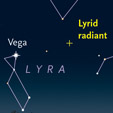
Lyrid Meteor Shower in 2015
Although typically weak, the annual Lyrid display will benefit from moonless skies. This year's peak, late on April 22nd, favors Europe over North America.

News and Views from NEAF
The Northeast Astronomy Forum (NEAF) is the world's largest astronomy trade show. As always, Sky & Telescope was there!

Amateurs Given David Dunlap Observatory
After serving as caretakers of Canada's largest telescope for years, volunteers from the RASC's Toronto club have been given the historic facility outright.

Ancient Galaxies Seen Dying Inside-Out
Astronomers have found massive galaxies 3 billion years after the Big Bang that are dying from the inside out.

Come to NEAF This Weekend!
This weekend features the world's largest astronomy expo, the Northeast Astronomy Forum (NEAF), in Suffern, New York.

Dawn Maps Ceres in False Color
Thanks to NASA’s Dawn spacecraft, we’re finally seeing more of the asteroid Ceres than a fuzzy ball.

Ring-Shaped Spyglass to Early Universe
A rare type of gravitational lens offers astronomers a close look at a young, dusty galaxy manufacturing hundreds of stars a year.

Celebrate the Night Sky During April
Amateur skygazers can satisfy their celestial cravings with Globe at Night, International Dark-Sky Week, Astronomy Day, and Global Astronomy Month.
