 SUNSET:


Novae Surprise with Gamma Rays
Astronomers have detected gamma-ray emission from three classical novae, an unexpected discovery that has left them perplexed.

Earth's Shadow Creeps Up on Us Every Night
The next time you're out watching a sunset, turn around and relish the mighty shadow of Earth looming just behind your back.
Fermi Finds "Transformer" Pulsar
NASA's Fermi Space Telescope recently spotted a pulsar in a rare transitional phase as it devours the matter of its companion star.

X-Ray Glow Evidence of Local Hot Bubble
Scientists have confirmed that the soft X-ray glow permeating the sky has two sources: one inside the solar system, one outside.

Dwarf Galaxies Packed a Mighty Punch
Light from the puniest galaxies played a bigger role in shaping the early universe than previously thought.
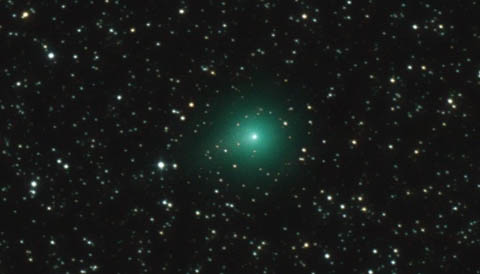
See Comet Jacques Before Dawn
It's not a showstopper, but right now Comet Jacques (C/2014 E2) is poised for telescopic viewing in the hours before dawn.

Memories of Jupiter's Bird Strike
Shoemaker-Levy 9's headline-making Jupiter impact in 1994 wasn't the only one of its kind - observations 15 years later showed such impacts might even be common.

New Radio Burst Deepens Mystery
A newly discovered radio burst places these ultrafast, ultrabright pulses on the cosmic map of unknown phenomena.

Rosetta's Comet has a Split Personality
The Rosetta spacecraft is closing in on Comet 67P/C-G, providing astronomers with an ever more detailed view of its structure. Judging by the latest photos, it actually has two components and is shaped like… a rubber ducky?
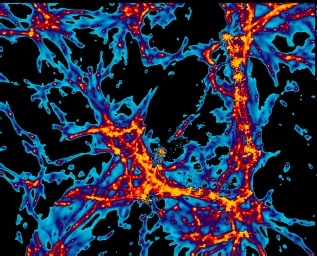
The Mystery of the Missing Light
Astronomers recently discovered that there is not nearly enough ultraviolet light from stars and quasars in the local universe to account for observations of intergalactic gas.

Comet Shoemaker-Levy 9: 20 years later
David Levy shares his recollections of that amazing day — July 16, 1994 — when the first fragment of a comet he helped discover slammed into Jupiter.

Cosmic Rays Hint at Hotspot
A cluster of detections in the Northern Hemisphere sky might point to a source for the most energetic particles bombarding Earth's atmosphere.

One Year Until New Horizons
New Horizons will reach Pluto a year from today, and the scientific community is abuzz with speculation about what the space probe might see when it gets there. Meanwhile, the New Horizons team scours the skies for a Kuiper Belt Object that New Horizons can visit after its Pluto flyby.

Is Mercury a Hit-and-Run Survivor?
How did the the innermost planet get its huge iron core? New computer modeling suggests that Mercury is a lucky survivor of chaotic primordial smashups.
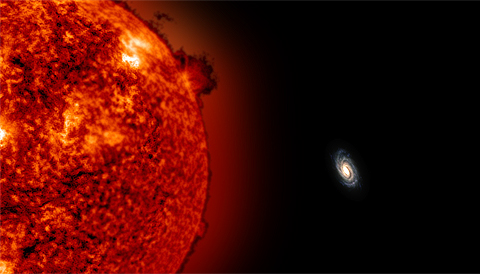
The Most Distant Milky Way Stars
Astronomers have discovered two stars that lie more than 700,000 light-years from Earth, making them the most distant stellar members of our galaxy ever detected. Blogger John Bochanski tells the story of how his team found these faraway stars.

See Summer's Best Naked-Eye Double Stars
Not every set of closely paired stars requires binoculars or a telescope to "split". Here's a guide to summertime doubles you can tackle with your eyes alone.

Mysterious X-rays Might Hint at Dark Matter
Astronomers have discovered a spike of X-ray emission in galaxy clusters — “ordinary” interpretations don’t hold up, so some are turning to dark matter for answers.

The Planet That is No More
A new analysis confirms that an exoplanet thought to orbit in the habitable zone of the star Gliese 581 actually doesn’t exist.

Gas Streamer Eclipses AGN
Astronomers have detected a high-speed, long-lasting gas streamer spewing from the active galactic nucleus of NGC 5548. This discovery might provide new insights into how supermassive black holes influence their host galaxies.

It's Star Party Season!
Whether you're a seasoned observer or a novice, star parties provide the perfect opportunity to kick back and enjoy the night sky with some fellow astronomy enthusiasts.
